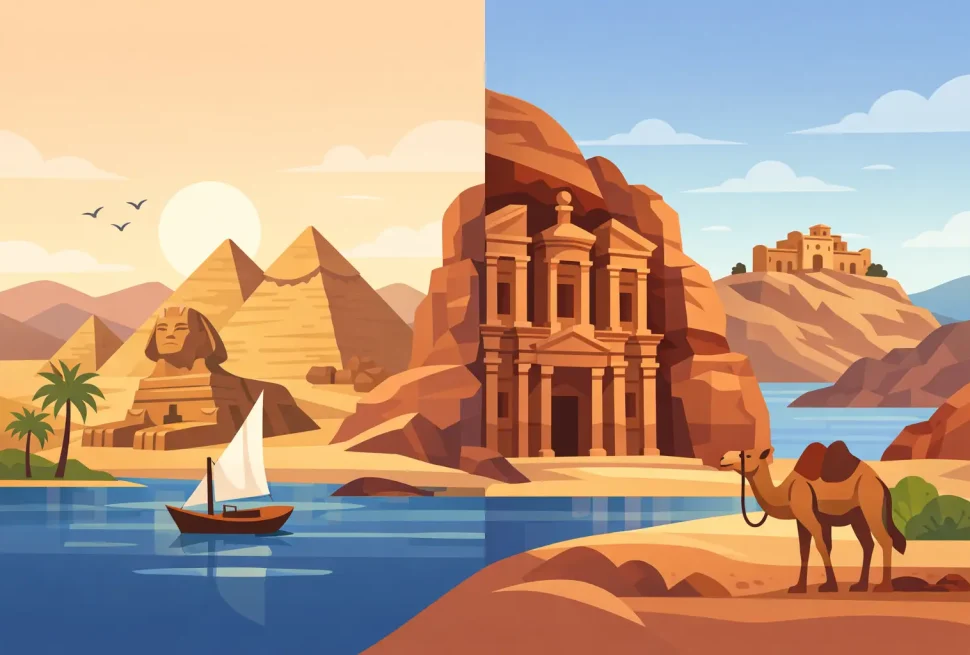

A sunrise over Petra, a family-run kitchen in Marrakech, a quiet temple path in Japan – these are the moments travelers remember. But getting to them can look very different depending on whether you choose guided travel versus independent planning. One path places the logistics, local connections, and daily decisions in capable hands. The other gives you complete control, along with complete responsibility.
For culturally curious travelers, the better choice is rarely about whether one style is inherently superior. It is about how you want to spend your time, what level of uncertainty feels exciting rather than draining, and how deeply you hope to understand a place once you arrive.
Guided travel versus independent planning: the real difference
Independent travel means you build the trip yourself: researching routes, comparing hotels, booking transport, choosing guides, managing reservations, and solving problems as they arise. It can be enormously rewarding, especially for travelers who enjoy the planning process as much as the journey itself.
Guided travel places those moving parts within a thoughtfully designed itinerary. You still travel, explore, taste, ask questions, and form your own impressions. The difference is that a tour operator and local guides have already considered the order of experiences, transit time, regional customs, reliable suppliers, and practical details that are easy to overlook from home.
This distinction matters most in destinations where language, transportation, cultural norms, or entry logistics can complicate a self-planned trip. A well-designed small-group tour does not remove discovery. It creates more room for it.
What independent planning does especially well
There is a particular satisfaction in designing a trip around your own interests. If you want three unstructured days in Istanbul, a last-minute detour to a mountain village in Armenia, or the freedom to linger over a museum until closing, independent planning offers that flexibility.
It can also work well for travelers returning to a familiar destination. Once you understand a city’s neighborhoods, transit system, and rhythm, building a trip around favorite cafés, lesser-known galleries, or personal connections becomes easier. Travelers with abundant time can absorb occasional wrong turns, schedule changes, and the trial-and-error that comes with arranging everything themselves.
Independent planning may appear less expensive at first glance, particularly when comparing only hotel rates or transportation tickets. Yet the true cost includes the value of your research time, booking fees, transfers, guide costs, missed connections, and choices made without local context. A low nightly rate is not always a good value if it places you far from the experiences you came to have.
Where guided travel earns its place
A guided journey is most valuable when it replaces friction with meaningful access. Rather than spending an afternoon deciphering train schedules or wondering which restaurant is genuinely local, you can focus on the stories, flavors, landscapes, and conversations around you.
The strongest guided tours offer more than a person holding a sign at a landmark. Local guides can explain why a religious site is approached in a particular way, how a neighborhood changed after a historic event, or which dish carries a regional tradition that visitors might otherwise miss. Those insights turn sightseeing into cultural connection.
Small groups also change the feel of a guided trip. With a maximum of 10 travelers, there is more space to ask questions, adapt to the group’s interests, and share experiences without feeling like part of a moving crowd. You might visit celebrated UNESCO sites, but the day can also include a market tasting, a conversation with an artisan, or a quiet stop that would be difficult to arrange independently.
Planning support is not the same as a rigid schedule
Some travelers hear “guided tour” and picture rushed photo stops, large buses, and little personal choice. That model exists, but it is not the only model. A carefully paced small-group itinerary can provide structure while leaving room to wander, rest, or choose a meal on your own.
The key is thoughtful design. A guide who understands local conditions can adjust timing around weather, crowds, holidays, and unexpected closures. That kind of flexibility is often more useful than a completely open schedule, especially when your vacation days are limited.
Safety and confidence without losing adventure
Every international trip involves some uncertainty. Flights shift, luggage goes missing, roads close, and plans change. Independent travelers handle those moments alone, often from a different time zone and sometimes in an unfamiliar language.
With guided travel, there is a clear point of contact when plans need to change. Reliable operators coordinate with trusted local partners, communicate expectations before departure, and help travelers respond calmly if a situation arises. This is not about removing every surprise from travel. It is about ensuring that a logistical problem does not overshadow the journey.
For solo travelers, that reassurance can be particularly meaningful. A small group offers companionship without requiring you to travel with a friend, while local support helps you feel comfortable navigating destinations that may be new to you. Couples and friends benefit, too: they can be present with one another instead of taking turns managing reservations and directions.
Consider the destination, not just your travel style
Your preferred travel style may change by region. Planning a long weekend in London or Paris independently can feel straightforward, especially if you are comfortable with public transportation and online bookings. Coordinating a multi-country journey through Egypt and Jordan, rural India and Nepal, or Morocco’s medinas and desert routes asks for a different level of expertise.
In places with complex internal transportation, significant distances between highlights, or cultural practices that reward thoughtful interpretation, a guide can add substantial value. The same is true when you want to visit beyond the most obvious stops. Local knowledge can reveal the timing, etiquette, and relationships needed for experiences that do not appear in a quick online search.
That does not mean independent travel is incapable of depth. It means depth takes time to research and relationships to build. A guided journey gives you access to that groundwork from the start.
How to choose the right approach for your next trip
Ask yourself a few honest questions. Do you enjoy comparing hotels, mapping transfer routes, and researching every day’s options? Do you have enough time to recover from a disrupted plan? Are you comfortable negotiating transportation and navigating cultural differences without local support?
If your answer is yes, independent planning may be part of the pleasure. You may enjoy the freedom of setting your own pace and creating a highly personal itinerary.
If you would rather invest your energy in the destination itself, guided travel is likely the better fit. This is especially true when you want meaningful local insight, a balanced route, dependable accommodations, and the comfort of knowing that major details have been carefully handled.
Price should be evaluated in the same spirit. Look beyond the headline cost and compare what is included: accommodations, internal transportation, entrance fees, guided experiences, select meals, airport support, and the value of experienced coordination. A transparent itinerary makes it easier to understand what you are receiving and where you may want to budget for personal time or optional experiences.
The value of traveling with intention
The best trip is not the one with the most packed schedule or the greatest number of pins on a map. It is the one that lets you return home with a clearer sense of the people, history, and daily life behind the places you visited.
Atlas Global Tours is built for travelers who want that cultural depth without carrying every logistical burden themselves. Intimate group sizes and knowledgeable local guides create space for both confidence and genuine discovery, from landmark moments to the unexpected details that make a destination feel real.
Choose independent travel when the act of building the journey is part of your joy. Choose guided travel when you want expert planning to open the door to a richer, more connected experience. Either way, leave room for the conversations and small surprises that no itinerary can fully predict.