
A mosque is not simply a landmark to admire between stops. It is an active place of worship, community, learning, and quiet reflection. Knowing how to respect mosque etiquette helps you enter with genuine curiosity while honoring the people who pray there. It also turns a visit into something more meaningful than a photo opportunity: a chance to understand the living traditions that shape daily life across much of the world.
For travelers visiting destinations such as Morocco, Egypt, Jordan, Oman, Turkiye, Tunisia, India, or the Balkans, mosques may be among the most memorable places on an itinerary. Their architecture can be extraordinary, but the most respectful approach begins before you step through the door.
How to Respect Mosque Etiquette Before You Enter
Start by treating your visit as an invitation, not an entitlement. Some mosques warmly welcome non-Muslim visitors outside prayer times; others are reserved for worshippers or have specific visitor entrances and hours. A local guide, posted sign, or mosque attendant can clarify what is appropriate that day.
Prayer times matter. The Friday congregational prayer, known as Jumu’ah, is especially significant and often draws large crowds. Unless you are attending as a worshipper, it is usually best to visit at another time. During any call to prayer or active prayer service, lower your voice, pause sightseeing, and follow the direction of staff or your guide.
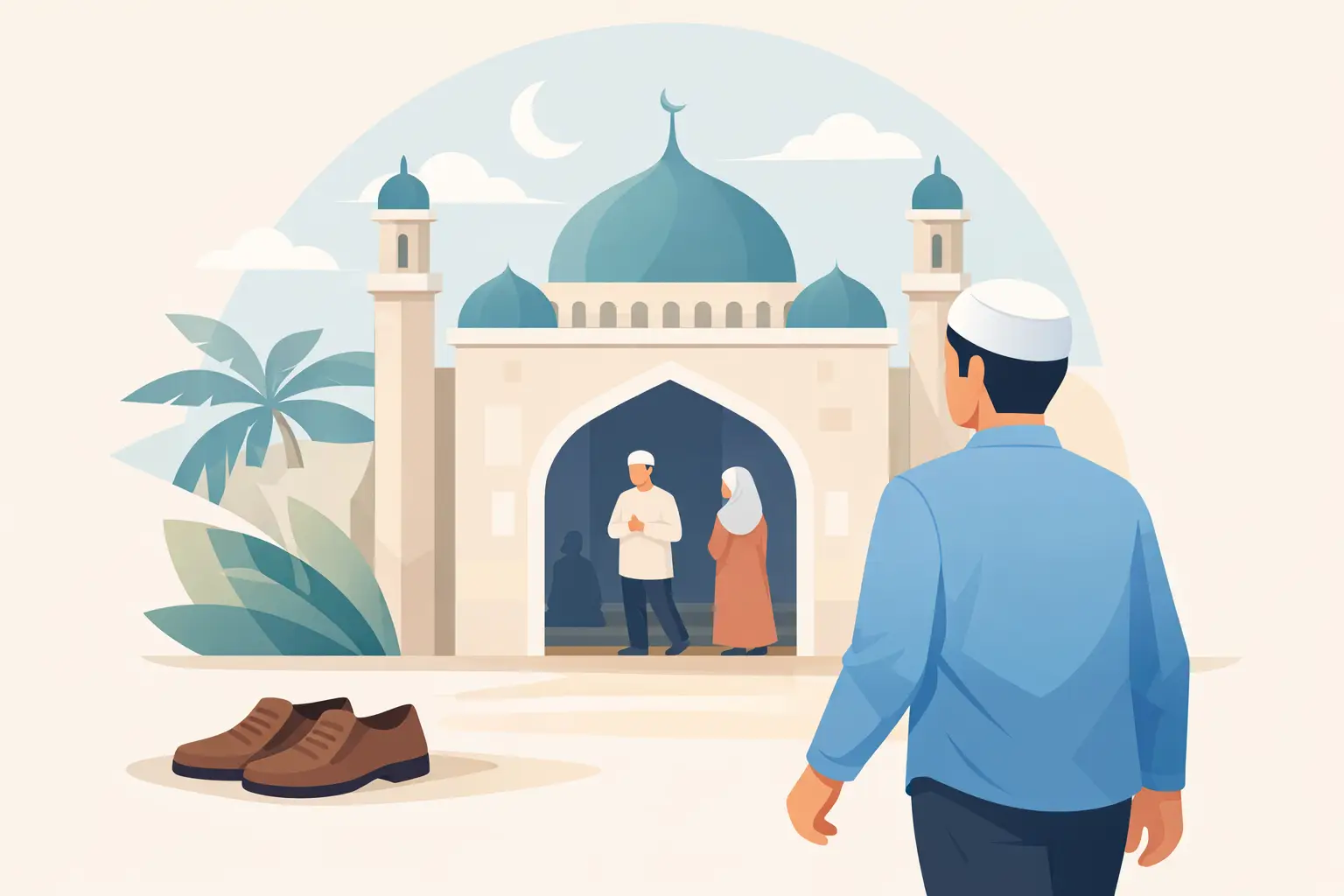
Before entering the prayer hall, you will generally remove your shoes. Wear clean socks and choose footwear that is easy to take off and put back on. Place your shoes where directed rather than leaving them in a walkway. In some places, shoe covers or a designated storage area may be provided.
Dress modestly, with local expectations in mind
Modest dress is a practical sign of respect, not a costume for travelers. Clothing should cover shoulders, knees, and chest, and should not be overly tight or transparent. Long pants, a long skirt, or a loose dress paired with sleeves are dependable choices for all visitors.
Women may be asked to cover their hair before entering a mosque, especially in more conservative settings. Carrying a lightweight scarf in your day bag makes this easy. Men should also avoid sleeveless tops and shorts. Requirements vary by mosque and country, so follow posted instructions without debating them. If robes, scarves, or wraps are offered at the entrance, use them graciously.
Move Through the Mosque With Awareness
Once inside, let the rhythm of the space guide you. Mosques are often peaceful even when busy, and worshippers may be reading, praying, resting, or speaking quietly with family members. Keep conversations low, silence your phone, and avoid taking calls in or near the prayer area.
Do not walk directly in front of someone who is praying. If you need to pass through the room, move around the edges or wait for a natural opening. Avoid stepping on prayer rugs, leaning against religious objects, or placing bags where people may need to pray. Sitting on the floor may be welcome in some areas, but wait for guidance and avoid stretching your feet toward the qibla wall or other people.
Many mosques have separate prayer spaces for men and women. These arrangements reflect local religious practice and can look different from place to place. Follow the signs and directions you are given, even if the layout is unfamiliar. Respect is often expressed through small, observant choices.
Know what you may see
The front of a mosque typically includes a mihrab, a niche indicating the direction of Mecca, and often a minbar, a raised pulpit used for sermons. You may notice worshippers washing before prayer at an ablution area. This ritual preparation, called wudu, is personal and should not be photographed or observed at close range.
You may also hear Arabic recitation or see people using prayer beads, reading the Quran, or praying in lines. You do not need to understand every detail to be respectful. Quiet attention is enough. If questions arise, save them for your guide or a host after the service rather than interrupting someone at worship.
Photography Requires Extra Care
Mosques can be visually striking, and photography may be permitted in certain areas. Permission, however, is never automatic. Look for signs, ask an attendant when possible, and accept a no without disappointment.
Even where photography is allowed, do not photograph people praying, making ablution, or grieving unless they have clearly agreed. Avoid flash, drones, tripods, and posed shots that block entrances or disturb the atmosphere. If children or families are present, be especially cautious about taking images.
A good rule is simple: photograph the building only when it does not interfere with its purpose. Put the camera down during prayer, keep a respectful distance from worshippers, and avoid treating sacred details as props. The strongest travel memories are not always the ones that fit in a gallery.
Greetings, Questions, and Cultural Sensitivity
A warm greeting can go a long way. In many Muslim-majority destinations, you may hear “As-salamu alaykum,” meaning “peace be upon you.” If you feel comfortable, you can return the greeting with “Wa alaykum as-salam,” meaning “and peace be upon you.” A friendly hello in the local language is equally welcome.
Be mindful of personal space and physical contact. In some communities, men and women who do not know each other may not shake hands. Let the other person initiate. If they do not offer a hand, a smile, nod, or hand over your heart is a courteous alternative.
Questions about Islam, prayer, or local customs can lead to meaningful conversations when asked with humility. Phrase questions openly rather than assuming one person speaks for all Muslims. Practices differ across countries, communities, generations, and individual families. What you experience in a historic mosque in Istanbul may not mirror a neighborhood mosque in Muscat, Cairo, or Sarajevo.
What to Do If You Make a Mistake
Most visitors are learning, and most communities recognize that. If you enter an area you should not have, forget to remove your shoes, speak too loudly, or take a photo where you should not, respond calmly. Apologize, correct the behavior, and move on without making the moment larger than it needs to be.
A respectful traveler does not need to perform perfect knowledge. What matters is a willingness to listen. Local guides are especially valuable here because they can explain expectations before arrival, read the atmosphere on the day, and help travelers ask thoughtful questions without disrupting worship.
Plan for a More Comfortable Visit
A little preparation makes cultural etiquette feel natural rather than stressful. Keep a scarf or light layer available, wear easy-to-remove shoes, and carry a small bag that can be kept close without cluttering the floor. Avoid bringing food or drinks into a mosque unless you have been told it is permitted.
If you are visiting during Ramadan, be sensitive to those fasting. In some places, eating, drinking, or smoking in public during daylight hours may be discouraged or restricted. Mosque visits can be especially moving during this month, but schedules, crowds, and access may change. Flexibility is part of traveling well.
For travelers who prefer cultural depth with clear guidance, a thoughtfully planned small-group experience can remove uncertainty without removing discovery. The right local guide does more than point out architectural details. They help you understand when to enter, where to stand, when to be quiet, and why those choices matter.
A mosque visit is an opportunity to slow down and be present. Arrive with modesty, follow the lead of the community, and let reverence shape your experience. You may leave with beautiful photographs, but the more lasting souvenir is the understanding that sacred places ask us to travel with care.