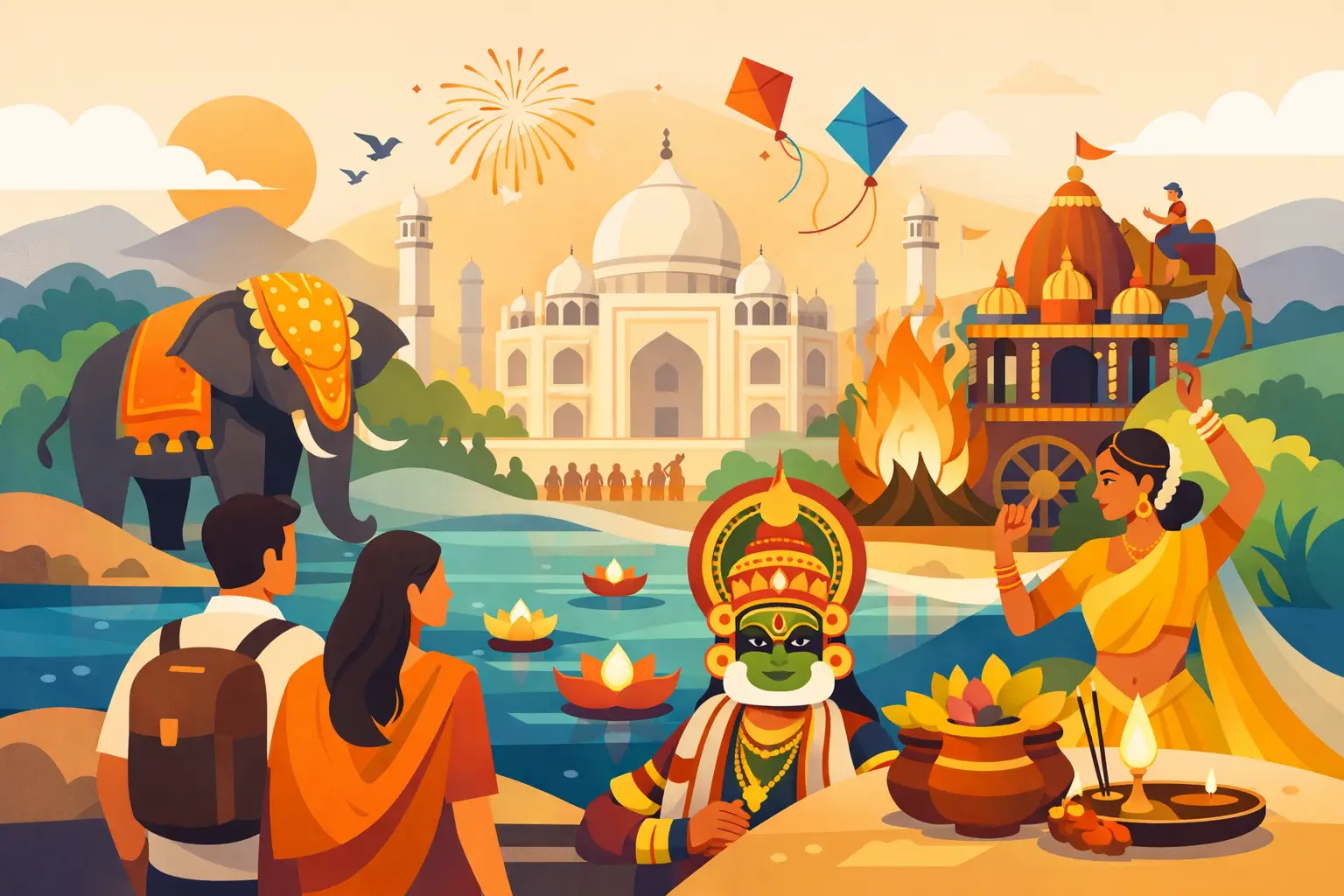
A festival in India is not a performance staged for visitors. It is family reunions, temple rituals, market runs, music that carries down a neighborhood street, and traditions that can make an ordinary place feel entirely transformed. This India festival travel guide is designed for travelers who want to experience that energy with genuine context, thoughtful planning, and room to be present rather than simply passing through.
The reward is extraordinary, but festival travel asks more of an itinerary than a standard sightseeing trip. Hotels fill early, transport becomes busy, and local rhythms change. With the right timing, knowledgeable local guidance, and a small group that can move with care, these moments can become the most vivid memories of a journey through India.
Choose the Festival That Fits Your Travel Style
India’s festival calendar is vast, regional, and shaped by lunar dates that shift from year to year. There is no single “best” celebration. The right choice depends on whether you are drawn to color and spontaneity, devotional tradition, food, crafts, or a deeper look at a particular region.
Holi: Color, Joy, and Controlled Chaos
Holi, usually held in February or March, is India’s famous festival of color. In cities such as Jaipur, Mathura, and Vrindavan, the celebration can be exhilarating: streets fill with music, colored powder, laughter, and water. It is also one of the festivals where thoughtful planning matters most.
For many travelers, a curated celebration in a hotel courtyard, heritage property, or community setting is more enjoyable than entering the busiest public crowds without context. You can participate fully while having a place to clean up, rest, and understand the customs behind the celebration. Wear clothes you are comfortable staining, protect your phone and camera, and use sunglasses to keep color out of your eyes.
Holi is ideal for active travelers who welcome a lively, social atmosphere. Those who prefer quiet reflection, predictable schedules, or personal space may find Diwali or a regional cultural festival a better fit.
Diwali: Light, Food, and Family Tradition
Diwali, generally observed in October or November, brings a warmer and more intimate kind of celebration. Homes, shops, and temples glow with lamps and decorative lights; markets are filled with sweets, flowers, and gifts. In Rajasthan, Delhi, and parts of northern India, it can be a beautiful time to see cities at their most festive.
The experience often happens in family homes and local neighborhoods rather than at one central event. That makes local insight especially valuable. A guide can explain the stories associated with the festival, help you recognize meaningful rituals, and steer you toward markets or community celebrations where visitors are welcome.
Travelers should be aware that fireworks can be common during Diwali. This adds excitement for some and can be challenging for people sensitive to noise or air quality. A well-paced itinerary with comfortable accommodations gives you the flexibility to enjoy the evening atmosphere without overextending the day.
Durga Puja, Navratri, and Regional Celebrations
For travelers eager to understand how regional identity shapes India, Durga Puja in Kolkata is unforgettable. Held in September or October, it fills the city with elaborate temporary shrines, artistic installations, processions, food stalls, and a strong sense of collective pride. It is an exceptional choice for travelers interested in art, photography, Bengali cuisine, and urban culture.
Navratri, celebrated across many parts of India, has a different character depending on where you go. In Gujarat, evenings of garba and dandiya dancing create an electric communal atmosphere. In other regions, the festival is more devotional or family-centered. It is a reminder that India’s festivals cannot be reduced to a single national experience.
The Pushkar Camel Fair in Rajasthan, usually held in late fall, offers another compelling option. While it includes religious observance, it is also a major gathering of traders, herders, artisans, musicians, and travelers. Its desert setting and colorful visual traditions make it especially appealing for those combining Jaipur, Jodhpur, Udaipur, and rural Rajasthan in one journey.
Build Your India Festival Travel Guide Around Timing
Festival dates are only the beginning. The days before and after a celebration often reveal just as much. Markets become busy with preparations, homes are decorated, and families shop for special foods and clothing. Arriving a day or two early lets you see anticipation build rather than appearing only for the headline event.
At the same time, allow breathing room after the festival. Roads may be congested, trains and domestic flights can be full, and businesses may operate on altered hours. A rushed itinerary that schedules a long transfer immediately after a major celebration can turn an inspiring day into a logistical strain.
For a first festival trip to India, it is wise to pair one major celebration with a balanced route. Spend time at iconic sites such as the Taj Mahal, Jaipur’s Amber Fort, or Udaipur’s lakes, but make space for cooking, crafts, neighborhood walks, and conversations that put the festival in context. The celebration becomes more meaningful when it is part of a larger understanding of place.
Prepare for Crowds Without Missing the Magic
Crowds are not a flaw in festival travel. They are often the point. But they should be managed with realistic expectations, especially for travelers accustomed to tightly timed sightseeing.
Book well ahead, particularly for Diwali, Holi, Durga Puja, and major holiday weekends. The most convenient hotels and well-located heritage properties often sell out early, and the best choice may not be the largest or most obvious one. Staying close to key experiences can save hours of travel when traffic is heavy.
A small group has a practical advantage here. It can enter a local restaurant, adjust a walking route, or change the timing of a market visit far more easily than a large coach tour. Atlas Global Tours keeps groups intimate for this reason: cultural travel is better when the day has structure, but still leaves room for the unexpected.
Build in simple safeguards as well. Carry a copy of your passport, use a cross-body bag that closes securely, and keep a portable charger with you. Agree on meeting points if your group separates. During the most active moments, follow your local guide’s instructions on where to stand, when to move, and which areas are best avoided.
Participate With Respect and Curiosity
The best festival travelers are not spectators looking for a dramatic photo. They are guests in a living tradition. Ask before photographing people, especially during prayer, in homes, or near ritual spaces. Remove shoes when requested, dress modestly around temples, and do not step over offerings, lamps, or religious objects.
Food is one of the most welcoming ways to participate. Accepting a sweet offered during Diwali, trying festival snacks at a trusted local shop, or sharing a meal with hosts can create a more meaningful connection than any landmark. If you have dietary needs, communicate them clearly and early. India offers extraordinary vegetarian food, but ingredients and preparation methods vary by region and household.
It also helps to let go of the expectation that every moment will run precisely on schedule. A procession may pause. A road may close. A planned visit may take longer because a temple is especially busy. These are not necessarily disruptions. With an experienced guide and a flexible plan, they can become invitations to notice what is happening around you.
Pack for Comfort, Coverage, and Celebration
Festival packing should be practical, modest, and adaptable. Lightweight clothing is useful in many regions, but bring a layer for cool evenings in northern India between October and March. Comfortable closed-toe walking shoes are often more useful than sandals in crowded streets, even during warm weather.
For Holi, pack an inexpensive white or light-colored outfit if you want the full visual effect, plus clothing reserved for afterward. For temple visits and more conservative settings, carry a scarf or shawl that can cover shoulders when needed. Hand sanitizer, tissues, sunscreen, a refillable water bottle, and any personal medications are sensible additions.
Do not bring your most delicate camera gear into powder, water, or tightly packed crowds. A simple protective pouch can make a real difference. Your local guide can often advise when it is worth carrying equipment and when the better choice is to experience the moment without it.
Let the Festival Be More Than a Date on the Calendar
A well-planned festival journey gives you access, but it should never manufacture intimacy. The goal is not to claim you have “done” Holi or Diwali after one evening. It is to leave with a clearer sense of how faith, season, family, food, and community shape everyday life across India.
Choose a celebration that genuinely interests you, arrive with patience, and travel with people who understand both the cultural setting and the practical realities on the ground. When the lamps come on, the drums begin, or a market fills with color, you will have the confidence to step closer – and the space to appreciate why the moment matters.