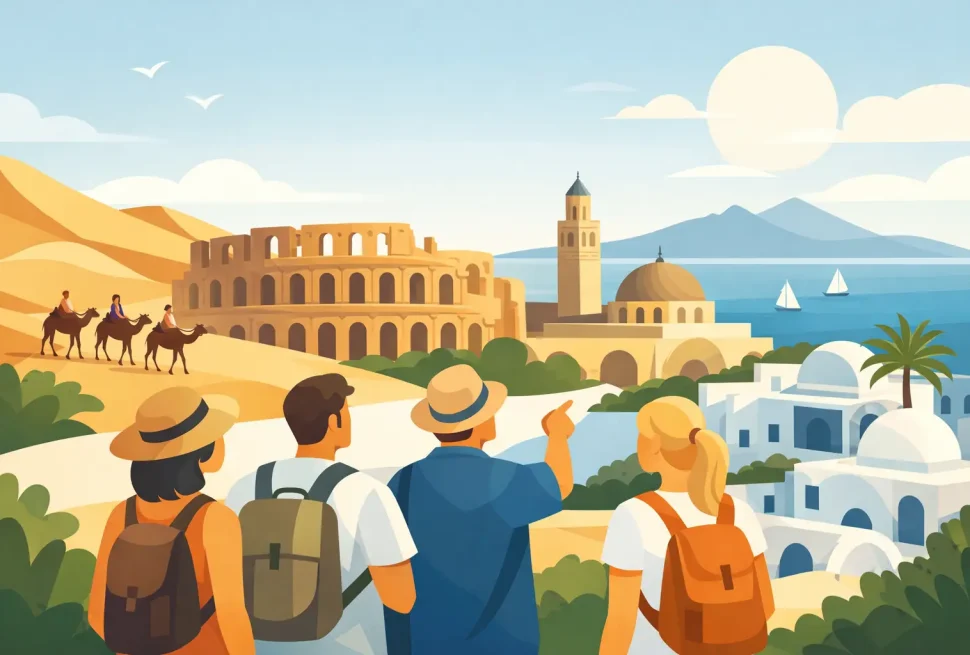
A 40-seat coach pulls up outside a landmark, and the day’s schedule begins to run on the clock: unload, gather, listen, photograph, return. Small group tours vs large tours is not simply a question of how many people travel together. It shapes the rhythm of every day, the places you can reach, the conversations you have, and how much room there is for the unexpected.
For travelers who want to see major sights without feeling carried through a destination at arm’s length, group size deserves more attention than it usually gets. Both formats can be well organized, professionally guided, and enjoyable. The better choice depends on what you want your trip to feel like once you are there.
Small Group Tours vs Large Tours: The Real Difference
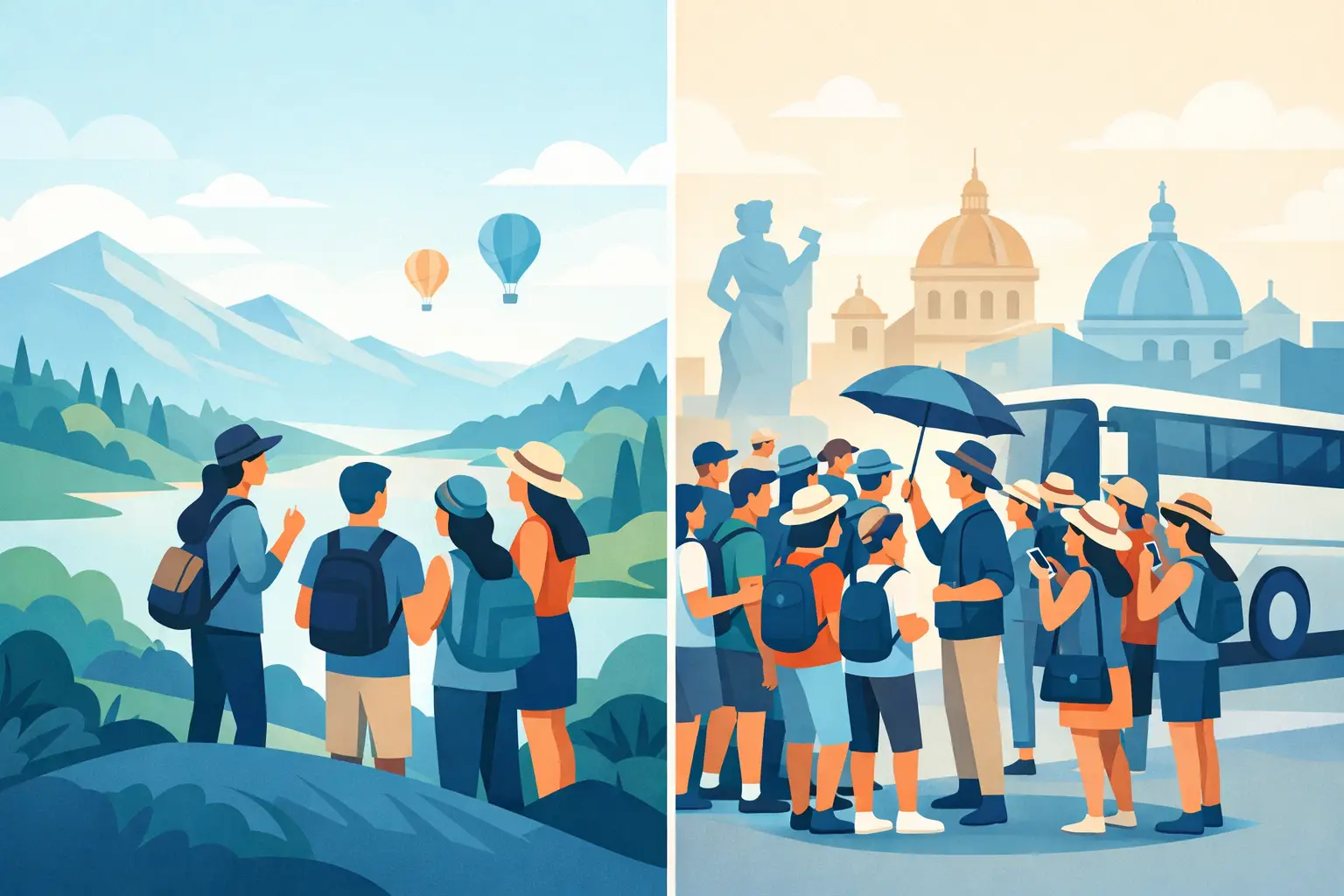
Large tours are built for efficiency at scale. They often use full-size coaches, follow highly standardized schedules, and accommodate a broad range of travelers at once. This can make them a practical choice for people who prefer a more structured social setting, are comfortable moving with a crowd, or are focused on visiting a destination’s headline attractions.
Small group tours take a different approach. With fewer travelers, the experience can be more responsive to local conditions and individual needs. A group of up to 10 people can check into a small riad in Morocco, share a table in a family-run restaurant in Jordan, or take a quieter road through rural Armenia more easily than a coach carrying dozens of guests.
Neither style is automatically better. A large group may suit a traveler seeking a lower price point or a highly predictable itinerary. But when cultural access, personal attention, and a more relaxed pace are priorities, a smaller group has meaningful advantages.
The Pace Feels Different From Day One
The most immediate difference is logistical. Every added traveler means more time gathering, boarding, checking in, ordering meals, and making sure no one has been left behind. On a large tour, a short stop can become an extended operation. That is not a flaw in the guide or the travelers. It is simply the reality of moving a crowd.
Smaller groups tend to spend less time managing the group itself. A local guide can answer questions while walking through a market rather than speaking only through a headset. If a museum entry line is unexpectedly long or a favorite neighborhood café is full, it is often easier to adjust the plan without disrupting the entire day.
This flexibility should not be confused with an unplanned trip. The strongest small-group itineraries remain carefully organized, with transportation, accommodations, key visits, and support thoughtfully arranged. The difference is that the schedule has more breathing room. You can pause for a memorable view, linger over tea, or make a brief detour when local knowledge points to something special.
Access Goes Beyond the Major Sights
Iconic places matter. The Pyramids of Giza, Petra, the Taj Mahal, Istanbul’s historic treasures, and Japan’s temples deserve their place on a well-designed itinerary. Yet many of the moments travelers remember most happen between the landmarks: a home-style meal, a conversation with an artisan, a village bakery, or a scenic route that would be inaccessible to a large vehicle.
Large tours often need restaurants, hotels, and stops that can serve a high volume of people at the same time. This naturally limits the choices available. A small group can fit into independently owned restaurants, boutique hotels, local workshops, and smaller cultural spaces where a busload would be difficult to accommodate.
That access can make a destination feel less like a series of scheduled stops and more like a place with texture and daily life. It also allows guides to share their home regions with greater nuance. Rather than delivering the same commentary to a large crowd, they can respond to questions, explain local customs in context, and help travelers notice details they might otherwise pass by.
More room for meaningful conversations
In a smaller group, there is space for genuine exchange. Travelers can ask about religious traditions in Oman, daily life in Tunisia, food culture in Turkiye, or contemporary issues alongside the history of an ancient site. A knowledgeable local guide becomes more than a person holding a sign at the front of the group. They become a cultural ambassador who helps make unfamiliar places feel understandable and welcoming.
This matters particularly in destinations where history, language, etiquette, or transportation can feel complex to navigate independently. Good guidance provides perspective as well as practical help.
Comfort and Personal Attention
The phrase “small group” should not imply roughing it. For many travelers, the appeal is the balance of immersion and reassurance. You can enjoy a meal in a tucked-away neighborhood while knowing that your lodging, transport, and next day’s plans are in capable hands.
With fewer guests, tour leaders and local guides can better recognize individual needs. Perhaps someone has a food restriction, wants help pacing a walk through a historic medina, or needs clarity about a local custom before entering a sacred space. Personal attention does not mean every moment revolves around one traveler. It means questions are less likely to disappear in a crowd.
Large tours can also offer capable support, especially with experienced operators. However, the guide’s attention is necessarily divided among many more people. Travelers who value clear communication, approachable guidance, and a sense that someone knows who they are often find small groups more comfortable.
The Social Experience Is More Intimate
A large tour can bring energy. There may be many personalities, frequent conversations, and a built-in feeling of activity. For a traveler who enjoys meeting as many people as possible, that can be a real draw.
The trade-off is that social connections may remain more surface-level. With a large group, people often form smaller clusters, and there may be limited opportunity to speak with everyone. Dining arrangements and coach seating can reinforce those divisions.
A small group usually creates a more familiar atmosphere over a multi-day journey. By the third or fourth day, travelers often know each other’s stories, preferences, and sense of humor. Solo travelers may appreciate that built-in companionship, while couples can enjoy social time without feeling swallowed by a crowd. The goal is not forced closeness. It is a setting where connection can develop naturally.
Cost Matters, but Value Matters More
Large tours can sometimes offer lower advertised prices because transportation, guides, and group arrangements are spread across more travelers. If budget is the leading factor and a high-volume format feels comfortable, that can be a sensible choice.
Small group travel may cost more, particularly when it includes thoughtfully selected accommodations, more specialized local experiences, and a lower guest-to-guide ratio. The more useful question is what the price includes in the lived experience of the trip. Are you spending long portions of the day waiting for a large group? Are meals designed around convenience for a crowd? Can the itinerary reach places that feel personal rather than packaged?
Value is also found in peace of mind. On an international journey, skilled planning, reliable local partners, and responsive support can remove much of the stress that comes with coordinating unfamiliar logistics. For travelers who want cultural depth without taking on every detail alone, that confidence has real worth.
Who Should Choose a Large Tour?
A large tour may be the right fit if you enjoy a busy group atmosphere, want the broadest possible social circle, or are primarily interested in seeing major attractions on a fixed schedule. It can also work well for travelers who prefer the familiarity of a large coach and do not mind a more standardized experience.
Be realistic about your own travel style. If you are content with a brisk pace, scheduled meal stops, and less one-on-one interaction with guides, a large group can deliver a dependable overview of a destination.
Who Benefits Most From a Small Group Tour?
Small groups are especially well suited to travelers who want to experience a destination rather than simply pass through it. They appeal to culturally curious couples, solo travelers, friends, and independent-minded guests who appreciate having the details handled without giving up the feeling of discovery.
They are also a strong choice for people visiting regions where local insight adds significantly to the journey. In places such as Egypt, Morocco, India, Nepal, Jordan, or the Balkans, a guide who can connect history, customs, food, and everyday life turns a well-planned itinerary into something far more memorable.
Atlas Global Tours caps groups at 10 travelers because intimacy is not an added feature. It is the foundation for better access, more thoughtful guidance, and the confidence to experience a place with curiosity rather than caution.
When you picture your next journey, think beyond the number of destinations on the itinerary. Consider the kind of moments you hope to bring home: a guide’s story that changes how you see a historic site, a shared meal that stretches into conversation, or the freedom to notice something remarkable before the group has already moved on.