
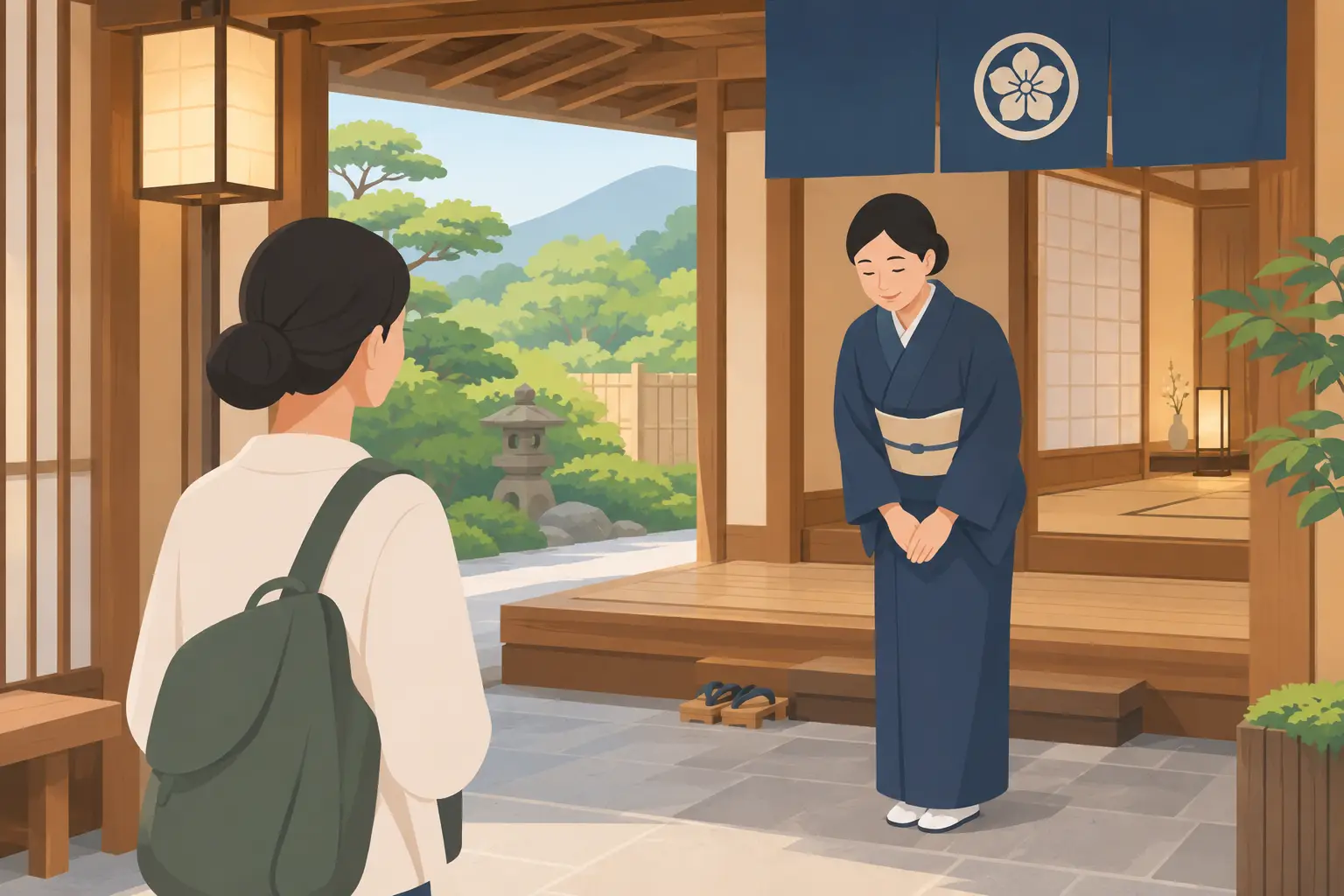
A ryokan stay is one of Japan’s most memorable travel experiences: tatami floors beneath your feet, a carefully prepared seasonal dinner, and the calm ritual of a hot bath at day’s end. This Japan ryokan etiquette guide will help you arrive prepared, so you can focus less on second-guessing the customs and more on enjoying the extraordinary care behind them.
A ryokan is not simply a hotel with Japanese décor. It is a traditional inn built around hospitality, quiet consideration, and a rhythm that may feel more structured than an American hotel stay. The expectations are generally gentle rather than intimidating. A respectful attitude, a willingness to follow the house rules, and attention to a few practical details go a long way.
What to Expect When You Arrive at a Ryokan
Many ryokan ask guests to remove their shoes at the entrance. Look for a step up from the entryway, often called the genkan, and a row of slippers nearby. Leave your outdoor shoes neatly where the staff indicates, toes facing outward if you are placing them yourself. This small gesture keeps the living spaces clean and signals respect for the inn’s home-like atmosphere.
You may be welcomed with tea and a sweet before being shown to your room. Staff members often explain meal times, bath hours, and the features of your room. If the explanation is in Japanese or moves quickly, do not worry. It is perfectly appropriate to politely ask for clarification, use a translation app, or confirm the essential details: when dinner is served, whether your room has a private bath, and which onsen facilities are available to you.
Your room may have a low table, floor cushions, sliding paper screens, and futon bedding that staff prepare while you are at dinner. These elements are part of the experience, not a compromise in comfort. Treat the room as you would a gracious host’s home: keep luggage orderly, avoid loud calls, and take care with delicate screens and furnishings.
Slippers Have Rules, but They Are Easy to Follow
Most ryokan provide indoor slippers, but they are not worn everywhere. Remove them before stepping onto tatami mats. Tatami is a woven floor covering, and walking on it in slippers is considered impolite. You will usually leave slippers at the edge of the tatami area and continue in socks or bare feet.
You may also find a separate pair of toilet slippers inside the restroom. These stay in the restroom only. It is an easy detail to miss, especially after a relaxing bath, but changing back into regular slippers when you leave is a thoughtful habit.
Japan Ryokan Etiquette Guide to Onsen Baths
For many travelers, the communal bath is the highlight of a ryokan stay. It can also be the part that causes the most uncertainty. The central rule is simple: wash thoroughly before entering the bath. The soaking pool is for relaxation, not cleaning.
After changing in the locker area, carry the small wash towel provided. At a shower station, sit on the low stool, rinse yourself, wash with soap and shampoo, then rinse again completely. Only then should you enter the hot water. Keep your small towel out of the bath itself – many guests fold it and place it on their head or set it on the pool’s edge.
The water may be hotter than expected, often around 104°F or more. Enter slowly, especially if you are not used to soaking. A shorter soak is perfectly fine. Drink water afterward, and skip the bath if you feel unwell, dehydrated, or overly tired from a long travel day.
Quiet is part of the atmosphere. Soft conversation is usually welcome, but splashing, swimming, and phone use are not. If you are traveling with companions, this is a lovely opportunity to slow down rather than fill every moment with conversation.
Tattoo policies vary. Some ryokan welcome tattooed guests without concern, while others restrict access to shared baths because of longstanding cultural associations. Smaller tattoos may be covered with a patch at some properties, and private baths can be an excellent alternative. If this applies to you, confirming the policy before arrival provides peace of mind and avoids an awkward surprise.
Private Baths and Modesty
A private in-room bath or reservable family bath offers more privacy, but the washing rule still applies. Shower before soaking, keep the space tidy, and follow any timing instructions closely if the bath is reserved by the hour.
In communal baths, nudity is standard. Swimsuits are generally not permitted, even when the bath is separated by gender. This can feel unfamiliar to first-time visitors, yet the environment is typically matter-of-fact and nonjudgmental. Most guests are focused on relaxing, not observing anyone else.
Meals Are a Carefully Timed Experience
Dinner at a ryokan is often kaiseki-style, a multi-course meal shaped by seasonality, local ingredients, and visual presentation. It may be served in your room, a private dining room, or a shared restaurant space. Arrive on time. The kitchen and service team coordinate many courses, and a late arrival can disrupt the flow for everyone.
You do not need to recognize every ingredient or eat every bite. Japan’s regional cuisine can be delightfully unfamiliar, from mountain vegetables and pickles to grilled river fish and delicately prepared raw seafood. Try what you can, and ask politely if you have a dietary concern. Advance notice is essential for allergies, vegetarian needs, or restrictions. Many traditional ryokan menus are planned well ahead and may be difficult to alter at the last minute.
A few table manners make the meal feel more comfortable. Say itadakimasu before eating if you wish, a customary expression of gratitude for the meal. Use chopsticks to pick up food rather than spear it, and never leave them standing upright in a bowl of rice, as this resembles a funeral ritual. When you are finished, placing your chopsticks neatly on their rest is a considerate touch.
Breakfast is often substantial and may include rice, soup, grilled fish, eggs, vegetables, and pickles. For travelers accustomed to a quick coffee and pastry, it can be a welcome change. If a traditional Japanese breakfast is outside your comfort zone, eat what appeals to you and enjoy the chance to experience a local morning routine.
Wearing Yukata With Confidence
Most ryokan provide a yukata, a light cotton robe, often worn in the room, to the bath, and sometimes to dinner. Put the left side over the right side when wrapping it. Right over left is associated with dressing the deceased, so this is one detail worth remembering.
The yukata is meant to be comfortable, not formal. Wear the belt around your waist, and use the outer jacket if one is provided during cooler weather. At some traditional inns, guests walk through common areas in their yukata and slippers. At others, especially more modern properties, it is best reserved for the room and bath areas. When unsure, observe other guests or ask the staff.
Thoughtful Habits That Make a Difference
Ryokan stays reward a slower, more attentive style of travel. Keep voices low in corridors, particularly early in the morning and after dinner. Avoid bringing wet towels back to your room unless instructed. If you need help, contact the front desk rather than trying to solve a problem quietly and hoping for the best – attentive service is a defining part of the ryokan experience.
Tipping is generally not expected in Japan and can create confusion. Exceptional hospitality is built into the culture of service and the cost of your stay. A sincere thank-you, a smile, and a respectful departure are the right response.
For travelers joining a thoughtfully planned small-group journey, a ryokan night is especially rewarding because the practical details are easier to navigate with trusted local guidance. Atlas Global Tours values these moments not as a performance of “traditional Japan,” but as a genuine chance to participate in its living customs with care.
When you leave, take a final moment to notice what made the stay feel different: the quiet hallway, the seasonal dish you had never tasted, the warm mineral water, the precision in a folded futon. Ryokan etiquette is ultimately less about getting every rule perfect and more about meeting that care with care of your own.