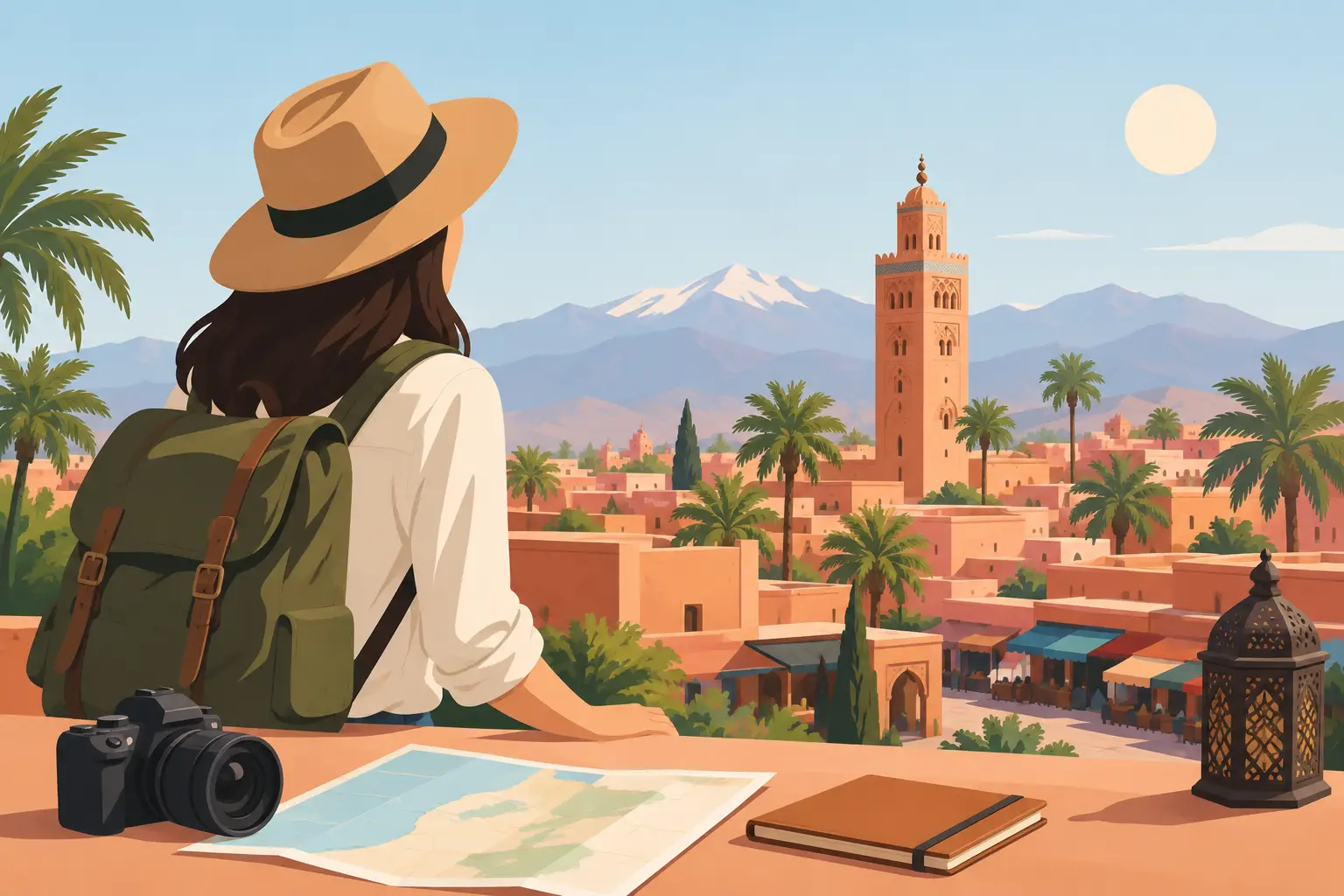
Morocco rewards travelers who arrive ready to participate, not simply observe. A morning may begin with fresh orange juice in a Marrakech riad, continue through a maze of artisan workshops, and end over a long, generous dinner with new friends. Knowing how to prepare for Morocco means making room for those moments while handling the practical details that create real peace of mind.
For many American travelers, Morocco feels wonderfully different without being difficult. Its cities are energetic, its landscapes change quickly from coast to mountains to desert, and its hospitality is deeply felt. A little advance planning helps you move through that richness with confidence, curiosity, and respect.
Start Your Morocco Travel Preparation Early
Begin with your travel documents before turning your attention to packing. U.S. citizens visiting Morocco for tourism can generally enter without a visa for stays of up to 90 days, but entry rules can change. Confirm current requirements through official government sources before booking, especially if you hold a non-U.S. passport, are traveling with minors, or have an itinerary that includes another country.
Your passport should have sufficient validity beyond your planned departure date. Many travelers use six months as a sensible benchmark, even when a destination’s stated rule is different. Check that it has blank pages, make printed and digital copies of your passport and travel insurance details, and leave one copy with a trusted contact at home.
Travel insurance is worth considering for international trips, particularly when your itinerary includes domestic flights, mountain roads, camel trekking, or other active experiences. Look beyond trip cancellation coverage. Medical care, emergency evacuation, missed connections, and baggage delays can matter just as much when you are far from home.
Build a Flexible Arrival Plan
Most international visitors arrive in Casablanca, Marrakech, Rabat, or Fes. If your flight lands late, avoid planning a long transfer, a complex train connection, or an ambitious sightseeing schedule for the same day. Morocco runs on a different rhythm than home, and giving yourself a gentle first evening makes the transition easier.
On a thoughtfully organized small-group journey, airport logistics and key transfers are arranged in advance. That structure is especially valuable after an overnight flight, leaving you free to focus on your first impressions rather than negotiating transportation while tired.
Understand Money, Phones, and Everyday Logistics
Morocco uses the Moroccan dirham. It is a cash-friendly destination, although cards are widely accepted at many hotels, restaurants, and established shops in larger cities. Small purchases, market finds, café stops, tips, and rural services often call for cash.
Bring a debit card that works internationally and a credit card with no foreign transaction fees if possible. Tell your bank about your trip, keep some U.S. dollars available for emergencies, and withdraw or exchange money after arrival. Do not rely on a single card. Keeping a small amount of cash separate from your main wallet is a simple safeguard.
Mobile data makes travel smoother for maps, translation, and staying in touch. Your U.S. provider may offer an international plan, though a local SIM or eSIM can be more economical depending on the length of your stay and your phone’s compatibility. Download offline maps before departing and save the address and phone number of your accommodations.
Electricity in Morocco typically uses 220V outlets with European-style two-round-pin plugs. Pack a plug adapter and check whether your devices are dual voltage. Most modern phones and laptops are, but hair tools often are not.
Pack for Morocco’s Climate and Cultural Setting
Packing for Morocco is less about dressing a certain way and more about comfort, context, and versatility. Weather varies dramatically by season and region. Marrakech can be hot during the day and cool after sunset. The Atlas Mountains demand layers. Desert evenings can feel surprisingly cold, while coastal cities may be breezy even in warmer months.
Modest, breathable clothing will serve you well in nearly every setting. Women do not need to cover their hair unless visiting a place that specifically requests it, but clothing that covers shoulders, chest, and knees often feels comfortable and respectful in medinas, villages, and religious areas. Men will find lightweight pants and shirts more useful than athletic shorts for many cultural sites and evenings out.
Bring four practical categories of clothing and gear:
- Lightweight layers, including a warm sweater or jacket for cool evenings and mountain areas
- Comfortable, closed-toe walking shoes with grip for uneven medina lanes and historic sites
- Sun protection, including sunglasses, sunscreen, and a hat
- A small day bag for water, tissues, hand sanitizer, and a light scarf or shawl
A scarf is particularly useful. It can add warmth on a chilly drive, offer sun protection, or provide extra coverage when you prefer it. Keep luggage manageable, though. Many traditional riads and historic accommodations have stairs, narrow entrances, or no elevator.
How to Prepare for Morocco’s Culture and Customs
Morocco is not a single experience. Amazigh, Arab, Andalusian, African, Jewish, French, Spanish, and Islamic influences all shape the country’s language, food, architecture, and daily life. Approaching that complexity with openness is more rewarding than trying to fit Morocco into a familiar travel category.
A few French phrases can be helpful in cities, while Moroccan Arabic, known as Darija, and Amazigh languages are widely spoken. English is common in tourism settings, but not everywhere. Simple greetings go a long way. Learn hello, thank you, and please, then use them generously.
Ask before photographing people, particularly artisans, elders, families, and anyone in a rural community. In markets, a little bargaining can be expected, but it should remain friendly. If you are not interested in buying, a warm, clear no is better than prolonged negotiation. When you are interested, take your time. A handwoven textile, spice blend, or piece of pottery becomes more meaningful when you understand the person and tradition behind it.
Alcohol is available in some hotels, restaurants, and licensed venues, but Morocco is a Muslim-majority country. Be thoughtful about where and how you drink. During Ramadan, travelers should be especially considerate of people who are fasting and of local customs around public eating and drinking during daylight hours. Restaurants serving visitors remain available in many places, but schedules and atmosphere may shift.
Eat Adventurously, With Sensible Care
Food is one of Morocco’s great invitations. Tagines, couscous, grilled meats, fresh salads, preserved lemons, dates, mint tea, and regional breads are part of daily life, not a performance for visitors. Say yes to a cooking demonstration, a market visit, or a meal in a family-run setting when possible. These experiences reveal the care behind flavors that can seem simple at first bite.
Use the same judgment you would anywhere abroad. Choose busy food stalls with visible turnover, wash or sanitize hands before eating, and drink bottled or reliably filtered water. If you have allergies or dietary restrictions, communicate them clearly before you travel and again at meals. Vegetarian options are often available, but they may be prepared with meat broth, so specific questions are useful.
Mint tea is a sign of welcome. If it is offered, accepting a small glass can be a lovely gesture when appropriate. It is also usually quite sweet, so travelers managing sugar intake may want to ask for less sugar when possible.
Plan for Movement, Not Just Sightseeing
Morocco’s distances can be deceiving on a map. A route between two destinations may include mountain passes, scenic stops, traffic, or winding roads. The journey is often part of the experience, but it calls for realistic expectations. Build in time to pause, stretch, and appreciate the changing landscape rather than treating every transfer day as lost time.
This is where a well-paced itinerary makes a meaningful difference. Atlas Global Tours keeps groups intentionally small, allowing more flexibility at cultural sites, more personal support on travel days, and opportunities to experience Morocco beyond a quick photo stop. A knowledgeable local guide can also add context that turns a medina walk or village visit into a genuine cultural exchange.
If you are prone to motion sickness, bring the medication that works for you. Stay hydrated, especially in hot weather, and do not underestimate the effect of jet lag on your first few days. Morocco is best experienced with enough energy to linger over details: tilework in a courtyard, the call of a vendor in the souk, the changing light across desert dunes.
Give Yourself Permission to Slow Down
The most memorable moments in Morocco are not always the famous ones. They may be a conversation with a local guide, a quiet cup of tea after a busy market, or the unexpected generosity of someone helping you find your way. Prepare carefully, then leave room for Morocco to surprise you.