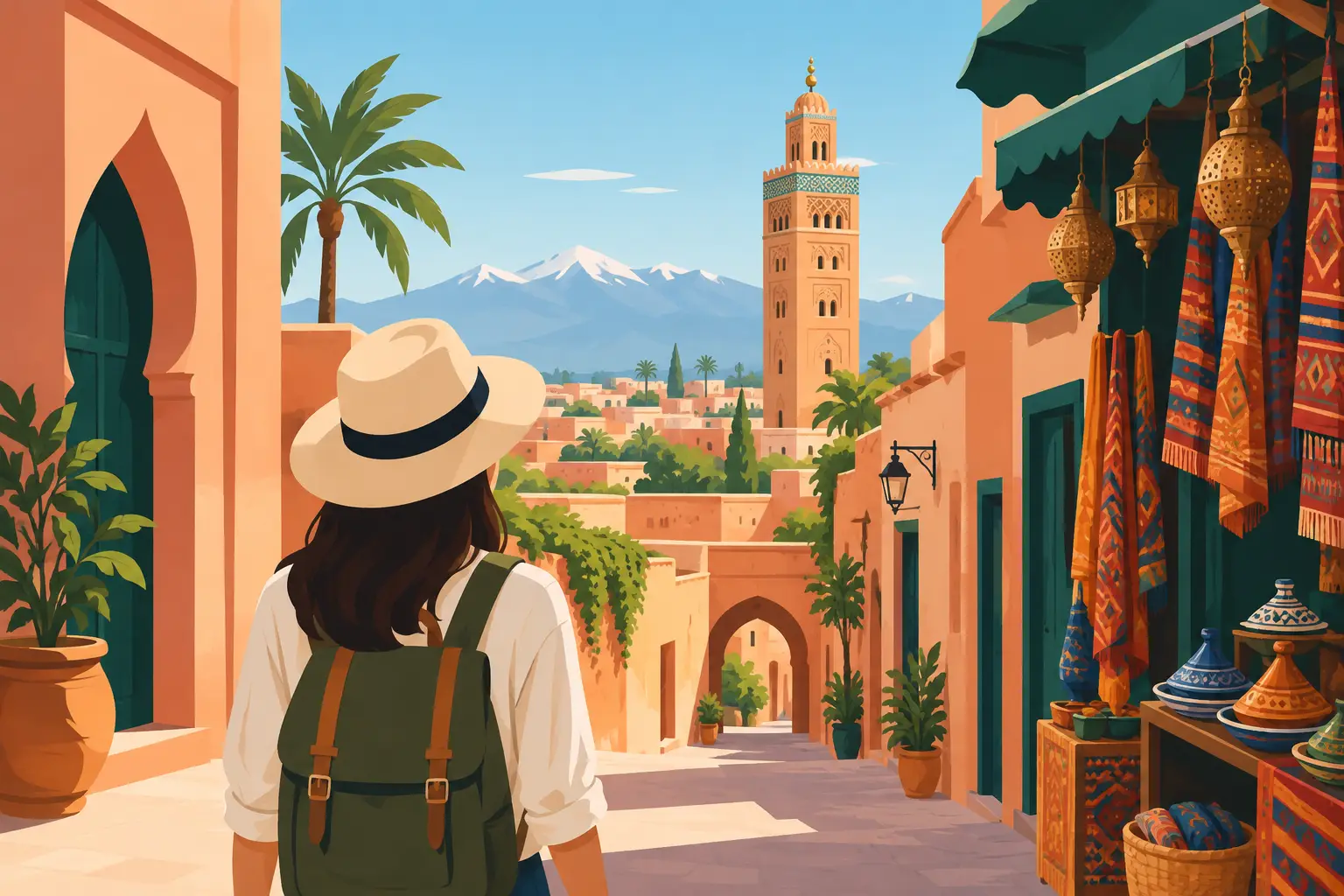
A medina announces itself by sensation before you fully understand its layout: the tap of a coppersmith’s hammer, warm bread carried through a narrow lane, cedar shavings outside a workshop, a motorbike appearing where a car could never fit. This Morocco medina guide is for travelers who want more than a quick photo stop. With a little orientation and the right local context, Morocco’s historic quarters become places to slow down, notice skilled work, and meet daily life on its own terms.
What a Medina Is – and Why It Rewards Patience
A medina is the old, traditionally walled heart of a Moroccan city. Its streets were shaped for walking, shade, neighborhood life, and trade, not modern traffic. That is why they can feel wonderfully alive and occasionally disorienting. A lane that seems to lead nowhere may open onto a fountain, a small mosque, a family bakery, or a busy market square.
The goal is not to see every lane. It is to understand the rhythm of the place. Major routes connect gates, souks, religious landmarks, and public squares, while quieter side streets lead to homes, hammams, workshops, and riads. Let yourself wander, but keep a clear reference point in mind, such as your riad, a major gate, or a well-known square.
Medinas vary considerably. Marrakech feels theatrical and fast-moving, with broad market energy around Jemaa el-Fna and a constant flow of visitors. Fes is denser, older in character, and more intricate, with a remarkable concentration of craft traditions and religious architecture. Essaouira’s compact, breezy medina is easier to navigate and carries a distinctive coastal atmosphere. A thoughtful itinerary allows for all three experiences rather than treating every medina as interchangeable.
A Morocco Medina Guide to Getting Oriented
Start your first visit in daylight, ideally with a knowledgeable local guide. This is not because medinas are inherently unsafe, but because a good guide helps turn confusion into context. They can explain why a particular doorway is decorated in zellij tile, distinguish genuine artisan work from mass-produced souvenirs, and lead you to places you might otherwise pass without noticing.
Once you have the basic layout, independent wandering becomes far more enjoyable. Save your accommodation location offline, carry the address written down, and bring a small amount of cash in Moroccan dirhams. GPS can be useful, although narrow covered lanes and tall walls can make it unreliable. When in doubt, step into a shop, café, or pharmacy and ask politely for help.
Expect the occasional offer to guide you. A warm “no, thank you” is usually enough. If you do want assistance, agree on the price and duration before setting off. Travelers who prefer every detail handled should consider a small-group journey with established local guides, where the day’s routes, timing, and cultural introductions are thoughtfully arranged without removing the pleasure of discovery.
Walk with awareness, not anxiety
Medina lanes are shared spaces. Pedestrians, handcarts, bicycles, scooters, and delivery workers all move through remarkably tight corridors. Listen for a shouted warning or a bell, then step to the side. Keep bags zipped in crowded areas, avoid displaying large amounts of cash, and use the same sensible awareness you would in any busy historic city.
Dress respectfully, especially when walking away from tourist-heavy streets. Lightweight clothing that covers shoulders and knees is a comfortable, considerate choice for many travelers. Closed-toe shoes or supportive sandals matter more than fashion here. Uneven stone, stairs, and long walking days can be demanding.
Shopping in the Souks Without Losing the Experience
Shopping is part of the medina’s social fabric, not simply a transaction. You may see leather goods, handwoven textiles, painted ceramics, spices, lanterns, slippers, carved wood, and metalwork within a few minutes’ walk. The most meaningful purchases often come from understanding the process behind them.
Ask where and how an item was made. Look for evidence of craftsmanship: variations in hand-painted tile, the weight and finish of metalwork, a maker actively working, or a shop that can explain materials without rushing you. Be especially careful with claims about antiques, precious stones, saffron, or handwoven rugs. Quality exists, but so do inflated stories designed for hurried visitors.
Bargaining is common in many souks, and it works best as a friendly conversation rather than a contest. If you are interested, ask the price, offer an amount you would genuinely feel good paying, and remain prepared to walk away courteously. Prices are often more fixed in cooperatives, contemporary boutiques, and shops with clearly marked tags. Neither approach is more authentic – they simply offer different shopping experiences.
Do not feel obligated to buy because you accepted mint tea or spent time talking. Hospitality is real, but your decision should remain your own. Likewise, avoid blocking narrow shop entrances while comparing goods, and ask before photographing artisans or displays. A small gesture of respect goes a long way.
Eat Where the Medina Eats
Some of Morocco’s best meals are found behind modest doors, at market counters, or in family-run dining rooms rather than the most polished restaurant frontage. Follow the clues of a busy lunch crowd, bread arriving fresh from the oven, and a concise menu prepared with confidence.
Try regional specialties when you can. In Fes, that may mean a slow-cooked tagine, savory pastries, or traditional sweets. In Marrakech, market stalls and neighborhood kitchens offer everything from grilled meats to fragrant vegetable dishes. Along the coast, fresh fish is often the natural choice. Moroccan mint tea is more than a drink – it is an invitation to pause.
For peace of mind, choose food that is freshly cooked and served hot, drink bottled or properly treated water, and use care with raw foods if you have a sensitive stomach. Travelers with allergies or dietary needs should learn a few key phrases and communicate them clearly. A guide can be particularly valuable here, helping confirm ingredients rather than relying on assumptions.
Respect the Living City
A medina is not an open-air museum. Families live there, children go to school there, worshippers attend mosques there, and merchants rely on its streets for their livelihoods. That perspective changes how you move through it.
Mosques are central to community life, but non-Muslims are generally not permitted inside active mosques in Morocco, with limited exceptions. Admire exterior architecture respectfully and follow local guidance. When the call to prayer begins, keep your voice low near religious spaces and allow foot traffic to continue naturally.
Photography deserves the same consideration. Public scenes can be compelling, yet people are not props. Ask before taking close portraits, be especially cautious around children, and never photograph someone who declines. In workshops, a simple request can lead to a much richer exchange than a hurried snapshot.
Leave room for the unplanned
The medina’s magic often arrives between planned stops: a spice seller explaining ras el hanout, a quiet courtyard catching afternoon light, a craftsman repairing something rather than replacing it. Build free time into your day, but avoid trying to cover a major medina in an hour. The trade-off is simple: a packed checklist may produce more landmarks, while a slower pace creates more connection.
Early morning is ideal for calm walks and photographs, before the busiest hours build. Late afternoon brings a different energy as shoppers, workers, and visitors fill the lanes. In summer, plan active exploring for cooler parts of the day and return to your riad for a midday rest.
The Value of Local Insight
Independent travelers can enjoy Morocco’s medinas deeply, but local expertise changes what you notice. The right guide offers more than directions. They interpret etiquette, introduce trusted craftspeople, explain history without reducing it to dates, and help you spend your time where it matters most.
That is especially valuable in Fes, where the labyrinthine streets hold centuries of intellectual, spiritual, and commercial history. It also matters in Marrakech, where a guide can steer an experience beyond the most crowded corridors toward gardens, food traditions, and quieter artisan quarters. Atlas Global Tours designs small-group Morocco journeys around that balance: room for personal discovery, supported by local knowledge and reliable planning.
Bring curiosity, comfortable shoes, and enough flexibility to follow an interesting turn. The best medina memories rarely come from getting everything exactly right. They come from being present enough to recognize a place that is still making, selling, cooking, praying, and welcoming – one narrow lane at a time.