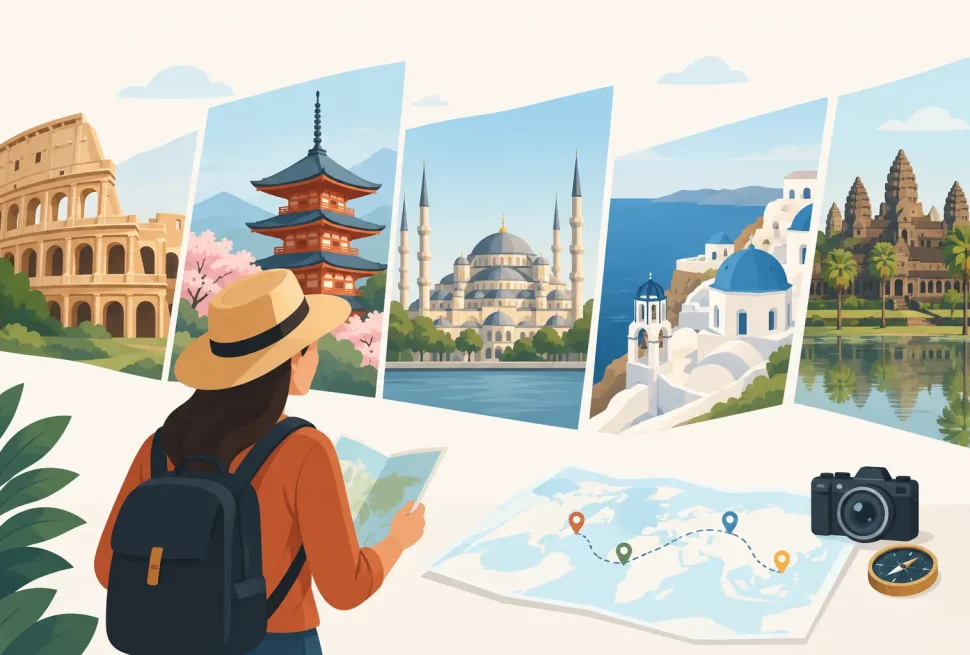

A temple can be beautiful from a distance. But hearing why families still bring offerings there, learning the etiquette before you enter, and sharing tea with someone who calls the neighborhood home changes the experience entirely. So, are cultural tours worth it? For travelers who want more than photographs and a packed checklist, they often are.
The right cultural tour does not simply move you efficiently between famous places. It gives context to what you see, makes room for human connection, and removes much of the uncertainty that can make independent international travel feel more demanding than restorative. That said, value depends on the tour design, the group size, the local expertise, and the kind of traveler you are.
What Makes a Cultural Tour Different?
A cultural tour is built around understanding a destination, not just passing through it. Landmark visits still matter. Standing before the Pyramids of Giza, walking through Petra, or seeing Kyoto’s historic temples deserves time and thoughtful guidance. Yet the deeper value comes from what surrounds those moments: a conversation with a local guide, a regional meal explained course by course, a neighborhood walk, or time in a workshop where a traditional craft is still practiced.
This approach turns a destination from a series of sights into a place with living traditions, contradictions, and daily rhythms. It also helps travelers recognize that culture is not a performance arranged for visitors. It is the real life of the people who live there.
A well-designed tour balances the celebrated highlights with experiences that are harder to arrange alone. In Morocco, that may mean understanding the social rituals behind a shared meal in a family-run home. In Japan, it may mean seeing how history, spirituality, and modern city life sit alongside one another. In Jordan or Oman, it may mean learning how geography and hospitality have shaped communities for centuries.
Are Cultural Tours Worth It for Independent Travelers?
Even confident independent travelers can find cultural tours worthwhile. Planning a multi-country or multi-stop journey requires more than reserving hotels and mapping attractions. You need to judge transit times, navigate local customs, identify reliable providers, make restaurant choices, and leave enough room for the unexpected.
A guided cultural tour absorbs much of that work. Transportation, accommodations, major entry arrangements, and day-to-day logistics are coordinated in advance, so your attention can stay on the place itself. Instead of spending an afternoon troubleshooting a missed connection or wondering whether a distant site is realistically accessible, you can focus on the story unfolding around you.
That convenience should not mean surrendering every moment of independence. The best tours build in free time for personal discoveries, whether that is lingering in a museum, finding a quiet café, or taking an evening stroll. Structure is valuable when it creates freedom, not when it makes every day feel like a march from one stop to the next.
Local Guides Turn Information Into Understanding
Guide quality is often the deciding factor in whether a cultural tour feels meaningful or generic. A guide can point out dates, names, and architectural details. A great local guide does more: they explain the customs behind the details, answer the questions visitors hesitate to ask, and offer perspective shaped by lived experience.
That insight can be especially valuable in destinations where etiquette, religion, history, or language may feel unfamiliar. Knowing when to dress modestly, how to greet a host, what is appropriate to photograph, or why a particular site matters to local people helps travelers participate with respect and confidence.
Local guidance also brings nuance. No country can be understood through one monument, one meal, or one conversation. An informed guide can place a historic site in context while also helping visitors see the present-day realities of the destination. That is a more honest and rewarding form of travel than collecting simplified impressions.
Small Groups Make the Experience More Personal
Group travel has a reputation problem, and sometimes deservedly so. Large coaches, rushed stops, fixed seating, and impersonal schedules can make travelers feel like they are being processed rather than welcomed.
Small-group cultural travel works differently. With a group capped at around 10 travelers, there is more room to ask questions, adjust the pace when practical, and enter places that cannot accommodate a crowd. A smaller group also makes it easier to share meals at local restaurants, visit artisan workshops, and form genuine rapport with guides and fellow travelers.
For solo travelers, this can be particularly reassuring. You have companionship when you want it, without the pressure of navigating unfamiliar settings alone. Couples and friends benefit, too, because they can enjoy a carefully organized trip without becoming responsible for every decision and detail.
The trade-off is that small groups are not private trips. You will share some schedules, meals, and experiences with others. For many travelers, the conversations and shared discoveries become part of the memory. For those who want complete control over every hour, a private journey may be a better fit.
The Cost Question: What Are You Actually Paying For?
Cultural tours can look more expensive than booking each component yourself. That comparison is useful, but it should be complete. The price of a thoughtfully planned trip often includes accommodations selected for location and comfort, private or reliable transportation, experienced local guides, entrance arrangements, coordinated logistics, and on-the-ground support.
It also includes time. Researching a destination in depth can be enjoyable, but it takes real effort to create an itinerary that is efficient, balanced, and dependable. Travelers should consider not only the cost of individual bookings, but also the value of avoiding poor connections, tourist traps, confusing transfers, and missed opportunities that are difficult to recover once abroad.
Still, a higher price does not automatically equal a better tour. Look closely at what is included, how large the groups are, whether the itinerary allows adequate time at key sites, and who will lead the experience locally. Ask whether the journey includes meaningful cultural encounters or merely uses the word “cultural” to describe standard sightseeing.
When a Cultural Tour May Not Be the Best Choice
Cultural tours are not the right answer for every trip. If your greatest pleasure comes from changing plans every morning, spending a week in one neighborhood, or traveling with no schedule beyond a return flight, independent travel may suit you better.
They may also disappoint travelers who expect constant entertainment or a polished cultural show at every stop. Real connection can be quiet. It might be a guide explaining a family tradition, a morning market visit, or a thoughtful conversation over lunch. The most memorable moments are not always the most dramatic.
A cultural tour is most valuable when you are open to learning, willing to be present, and interested in the people behind the places. Curiosity matters as much as the itinerary.
How to Choose a Tour Worth Taking
Start with the itinerary, but do not stop there. A promising journey pairs major sites with time to absorb them. It avoids exhausting travel days where possible and makes clear what experiences are included. Look for a company that describes its local guides, group size, accommodations, and support plainly rather than relying on vague promises of authenticity.
It is also wise to consider the pace. A traveler who loves full days of exploration may thrive on a route through India, Egypt, or the Balkans with multiple cities and historic sites. Someone seeking a more reflective experience may prefer an itinerary with longer stays, scenic drives, and fewer hotel changes. Neither preference is better. The right choice is the one that lets you return home energized rather than simply relieved.
For travelers who value both immersion and peace of mind, companies such as Atlas Global Tours build journeys around small groups, knowledgeable local partners, and carefully considered cultural experiences. That combination can make unfamiliar places feel accessible without making them feel overpackaged.
The best cultural tours do not tell you what to think about a destination. They give you the access, context, and confidence to form a more personal connection with it. Choose one with care, arrive curious, and leave enough space for the moments you could never have planned.