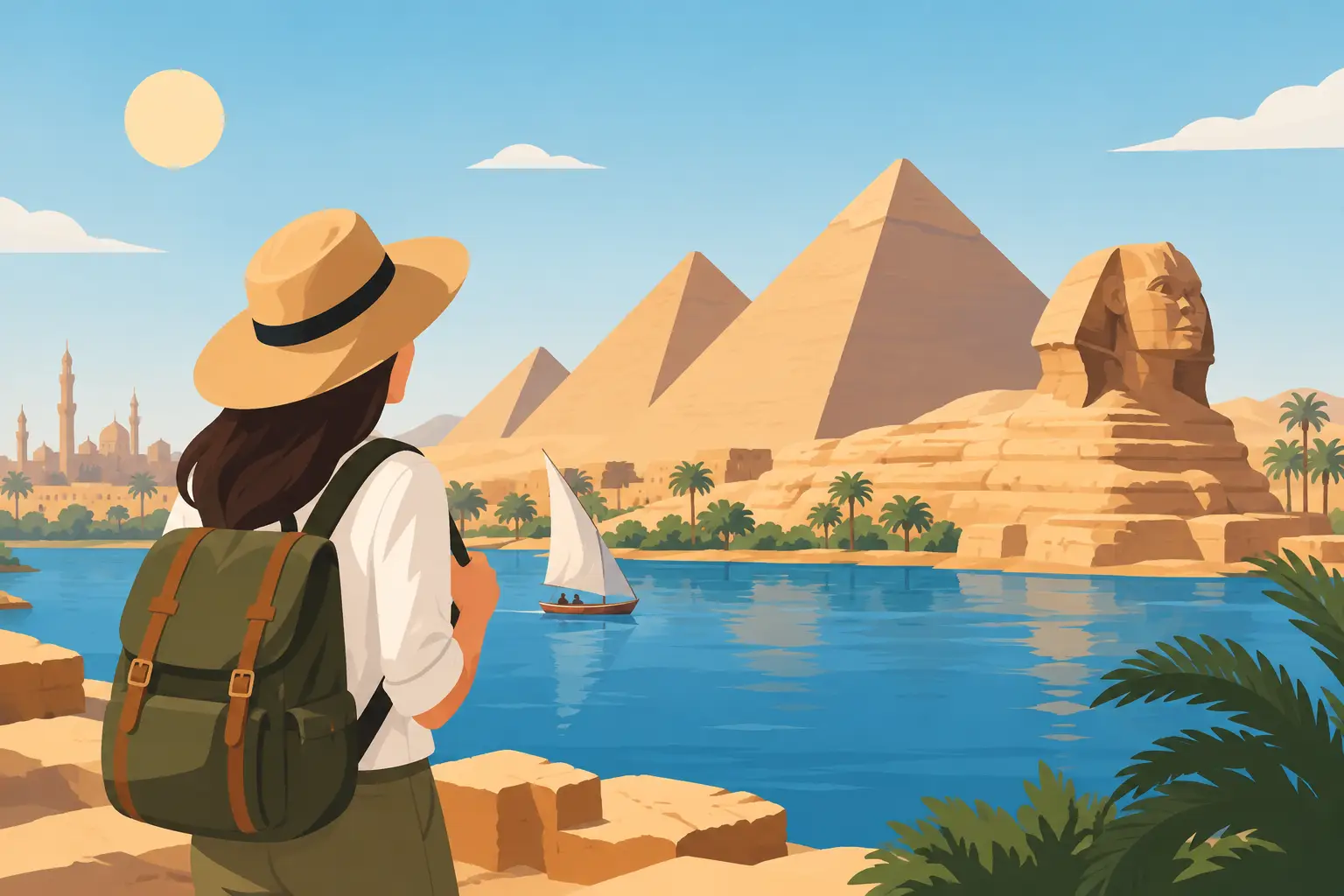
The first glimpse of the Great Pyramid is often quieter than travelers expect. The scale is overwhelming, but the moment also makes one thing clear: Egypt is not a place to rush through between photo stops. It rewards context, patience, and a well-paced plan. This first time Egypt travel guide is designed for travelers who want to see the defining sites while also feeling connected to the living culture around them.
Egypt can feel wonderfully intense – ancient temples, busy city streets, the call to prayer, Nile breezes, and warm conversations all arrive at once. A thoughtfully organized itinerary turns that energy into a meaningful journey rather than a logistical puzzle.
Start with the right expectations
Egypt is a destination of contrasts. Cairo is large, lively, and often traffic-heavy. Luxor and Aswan move at a different rhythm, shaped by the Nile and the extraordinary concentration of ancient sites nearby. You may spend a morning inside a pharaoh’s tomb and an evening sharing a meal in a neighborhood restaurant where families gather late into the night.
For a first visit, trying to cover every corner of the country can dilute the experience. Most travelers should focus on Cairo and Giza, Luxor, Aswan, and a Nile cruise or Nile-based journey between the two. This route offers Egypt’s most significant archaeological highlights while giving you a clearer sense of the country’s geography and daily life.
Allow at least eight to ten days if possible. A shorter trip can work, but Egypt’s distances, flight schedules, and full days of sightseeing make breathing room valuable. An extra night in Cairo or Aswan can protect the trip from a delayed flight and give you time to absorb what you have seen.
When to go to Egypt
October through April is generally the most comfortable period for sightseeing, especially in Upper Egypt, where Luxor and Aswan can be extremely hot from late spring through early fall. December and January bring pleasant daytime temperatures and the busiest visitor season, so popular sites may feel more crowded.
Shoulder months, particularly October, November, February, March, and April, can offer an appealing balance of manageable weather and fewer crowds. Summer can mean lower rates and quieter monuments, but the heat is serious. If you travel between May and September, plan early starts, long midday breaks, and light expectations for afternoons outdoors.
Ramadan can be a memorable time to visit, with special evening energy and generosity around shared meals. It can also affect business hours and dining routines. That is not a reason to avoid it, but it is a reason to travel with flexibility and respect for local customs.
Entry requirements, money, and trip protection
U.S. travelers should review current passport, visa, and entry requirements before booking and again shortly before departure, as regulations can change. Your passport should have sufficient validity beyond your travel dates. Keep digital and printed copies of your passport, travel insurance details, flight information, and hotel contacts in separate places.
The Egyptian pound is the local currency. Cards are accepted at many hotels, larger restaurants, and upscale shops, but cash remains useful for small purchases, tips, and local markets. Carry small bills when possible. Tipping, often called baksheesh, is part of everyday service culture, from restroom attendants to luggage help. It should feel like a courteous acknowledgment, not a stressful calculation. A knowledgeable local guide can make customary amounts clear.
Comprehensive travel insurance is a wise choice for Egypt, particularly for medical care, trip interruption, and baggage delays. The best travel planning combines excitement with practical safeguards, so you can stay present when the journey begins.
Dress with respect and comfort
Egypt is welcoming to international visitors, and major tourism areas are accustomed to a wide range of clothing. Still, modest, breathable attire is the most comfortable and culturally considerate choice. Loose linen or cotton, lightweight long pants or skirts, and tops that cover shoulders work well in cities and at religious sites.
Women may want a light scarf for mosque visits or extra sun protection. Men should avoid relying on shorts for every day, especially when visiting more traditional neighborhoods or religious spaces. Comfortable walking shoes are essential. Temple floors are uneven, tombs can have narrow passages, and a day at Giza involves much more walking than many travelers anticipate.
Pack a refillable water bottle, sunscreen, sunglasses, a hat, a light layer for cool mornings or air-conditioned interiors, and modest clothing for sacred places. Bring any prescription medications in their original containers, along with a small supply of basic remedies for stomach upset. There is no prize for packing heavy – laundry is often available, and a lighter bag makes domestic flights and hotel changes easier.
Let Cairo be more than a gateway
Cairo deserves more than one hurried night before heading south. The Giza Plateau is essential, of course, but its monuments become far more compelling when you understand the beliefs, labor, politics, and artistry behind them. A strong guide helps distinguish the story from the myth and chooses the best timing for the site.
Build time for the Grand Egyptian Museum when schedules permit, as well as the historic neighborhoods and markets that reveal a different side of the city. Khan el-Khalili can be lively and commercial, but it is also part of a much larger historic district of mosques, workshops, cafés, and layered architecture. The key is to approach it with curiosity rather than treating it as a quick souvenir stop.
Traffic and distances in Cairo can be unpredictable. Plan one or two major experiences per day instead of plotting attractions across the city like pins on a map. This is one place where local logistics matter as much as your wish list.
Luxor, Aswan, and the Nile
If Cairo introduces Egypt’s scale, Luxor and Aswan reveal its depth. Luxor’s East Bank includes Karnak Temple and Luxor Temple, while the West Bank holds the Valley of the Kings, the Temple of Hatshepsut, and the tombs and villages that shaped ancient Thebes. These are not sites to race through. Even a single well-explained temple can leave a stronger impression than five rushed stops.
A Nile cruise between Luxor and Aswan offers a graceful way to connect the major monuments. It removes repeated hotel check-ins, adds quiet time on the water, and lets the landscape become part of the experience. It is not the only way to travel – private transfers and internal flights may suit tighter itineraries – but for many first-time visitors, the river provides a welcome pause between ambitious sightseeing days.
Aswan feels calmer and more intimate than Cairo or Luxor. A visit to a Nubian community, when arranged respectfully with local hosts, can add vital perspective to a trip centered on ancient Egypt. Modern Egyptian identity is richly varied, and the country is far more than its pharaonic past.
Why local guidance changes the experience
Egypt is possible to navigate independently, but first-time visitors often find that expert local guidance improves both ease and meaning. The practical benefits are clear: coordinated transfers, help with site timing, reliable hotel arrangements, and support if plans shift. The deeper benefit is interpretation.
A skilled guide can explain why a temple was built where it was, what a scene on a tomb wall reveals about ordinary life, and how Egypt’s many historical periods connect. They can also help you engage appropriately in markets, restaurants, and villages without reducing those encounters to staged tourism.
Small-group travel offers a particularly balanced approach. You have companionship and organized support without feeling absorbed into a large coach itinerary. With groups capped at 10 travelers, Atlas Global Tours can create room for questions, adjust the pace when practical, and make local experiences feel personal rather than processed.
A few cultural habits that go a long way
Egyptian hospitality is genuine, and friendly conversation is common. Learn a few simple Arabic greetings, accept tea when time allows, and ask before photographing people, especially in markets, places of worship, or rural communities. A warm, direct request is usually appreciated.
Negotiate kindly in markets when prices are not fixed, but do not treat every interaction as a contest. If you are not interested, a polite “no, thank you” is enough. At temples and museums, follow photography rules closely. Some tombs and galleries restrict cameras or charge separately for photo access to protect fragile art and surfaces.
Food is another meaningful route into the country. Try koshari, ful medames, taameya, grilled meats, fresh bread, and seasonal fruit. Choose busy, reputable restaurants and drink bottled or properly treated water. Many travelers enjoy Egyptian cuisine without issue, but moderation on the first few days is sensible while your body adjusts.
Make room for the unexpected
The best Egypt trip is not the one with the longest checklist. It is the one that leaves space for a sunset felucca ride in Aswan, a conversation with a guide that reframes a monument, or a quiet moment watching the Nile pass from a hotel terrace. Arrive prepared, travel respectfully, and let the country reveal itself at a human pace.