
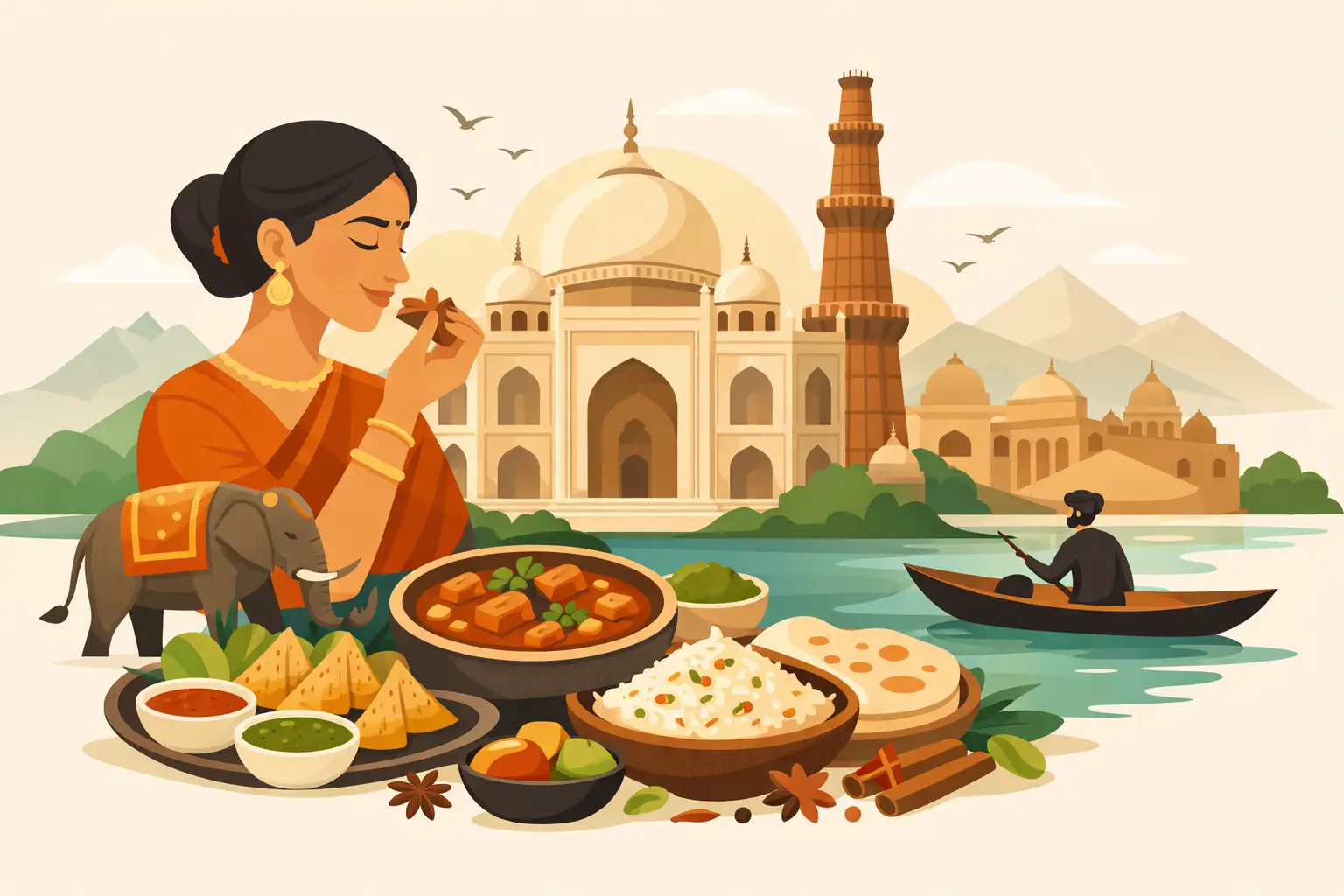
At dawn in Old Delhi, the air carries cardamom, wood smoke, frying bread, and the first calls of the day. A few hours later, the red sandstone walls of a Mughal fort can make the city’s layered past feel equally immediate. That is the appeal of India food and history tours: meals are not breaks between monuments. They are part of the story, revealing who shaped a place, what moved through its markets, and how traditions continue at the table.
For travelers who want more than a checklist of famous sights, India rewards a slower, more connected approach. Its cuisines change dramatically across regions, languages, climates, faiths, and former kingdoms. Its historic sites are not isolated relics, either. They sit beside living neighborhoods, active temples, family-run workshops, and markets where recipes carry memories across generations.
Why food is one of India’s best history lessons
India’s food cannot be reduced to one menu or one level of spice. Northern cooking often reflects the legacy of royal Mughal kitchens, with fragrant rice dishes, slow-cooked meats, rich gravies, and tandoor breads. In Rajasthan, a dry landscape encouraged ingenious preservation techniques, from dried vegetables to long-lasting snacks. Along western and southern coasts, coconut, seafood, tamarind, and black pepper speak to monsoon weather and centuries of maritime trade.
A thoughtful meal gives historical context a human scale. Sampling kebabs near a Mughal-era market, for example, can lead naturally into a conversation about Central Asian influences on North Indian cuisine. Sharing a vegetarian thali can illuminate the role of seasonality, regional agriculture, and religious practice. A cup of chai offers a quieter lesson in colonial trade, adaptation, and the daily rituals that bind neighborhoods together.
The strongest experiences also make room for the people behind the food. A local guide may explain why one household uses ghee while another favors mustard oil, or why a festival sweet appears at a particular time of year. A cook may describe a family technique that would never appear on a museum placard. These encounters turn tasting into understanding.
The cities that bring India food and history tours to life
For a first journey, the Golden Triangle is often an excellent foundation. Delhi, Agra, and Jaipur offer major architectural landmarks while presenting three very different culinary personalities. The right itinerary uses these cities as gateways rather than treating them as a rush from one photo stop to the next.
Delhi: empires, markets, and everyday appetite
Delhi is a city of successive capitals, where medieval lanes, Mughal monuments, British imperial planning, and contemporary life overlap. In Old Delhi, the Jama Masjid area and surrounding market streets offer a vivid introduction to the food cultures that developed around trade, worship, and dense urban communities. Rich curries, breads fresh from the tandoor, sweets, and street snacks are all part of the landscape.
Food exploration here needs good judgment. The most rewarding stalls are not always the most obvious, and hygiene standards vary. A knowledgeable local guide helps travelers choose well-established vendors, understand ingredients, and pace tastings so the experience remains enjoyable rather than overwhelming. That practical care matters, especially for travelers balancing culinary curiosity with peace of mind.
Agra: beyond the Taj Mahal
The Taj Mahal deserves its place in every well-planned India itinerary, but Agra holds more than one magnificent chapter of Mughal history. Agra Fort and nearby gardens help show the political and artistic world that produced the monument. At the table, the city is known for petha, a translucent confection traditionally made from ash gourd, as well as North Indian dishes shaped by the broader Mughal culinary tradition.
An unhurried visit changes the experience. Seeing the Taj in the softer light of morning or late afternoon, then sitting down to a regional meal, gives travelers room to absorb what they have seen. History feels less distant when it is connected to the ingredients, crafts, and daily rhythms of the city around it.
Jaipur: royal kitchens and Rajasthani resilience
Jaipur’s pink facades, hilltop forts, and carefully planned streets make it one of India’s most visually memorable cities. Its cuisine offers a useful counterpoint to its royal architecture. Rajasthan’s desert environment shaped dishes that are concentrated, resourceful, and deeply satisfying, often using lentils, chickpea flour, yogurt, millet, dried ingredients, and warming spices.
A meal of dal baati churma or a carefully prepared vegetarian spread says as much about climate and community as a guidebook description of the Aravalli hills. Jaipur also offers a chance to connect food with artisan traditions, whether through spice markets, block-printing neighborhoods, or family-run kitchens. The experience is best when there is time to ask questions, not simply taste and move on.
What makes a food-focused itinerary worth your time
Not every tasting stop adds cultural depth. A meaningful tour balances iconic dishes with context, pacing, and variety. It should include celebrated landmarks, but it should also create opportunities to visit a market, learn how regional ingredients are used, and sit down for meals that are more than tourist performances.
Small groups make a real difference in India. A group of no more than 10 can move through a busy bazaar more comfortably, fit into a neighborhood restaurant, and have genuine conversations with guides and hosts. There is more flexibility to adjust a meal for dietary needs or take an extra moment when a place sparks interest. Large coach groups often have to prioritize speed and predictability over those details.
It also helps to be realistic about the trade-offs. Street food can be exciting, but it is not essential to experiencing Indian cuisine, and travelers with sensitive stomachs may prefer guided tastings from trusted kitchens or sit-down restaurants. Spice is highly variable, and “Indian food” in the United States may not prepare you for the regional styles found on the ground. Vegetarian travelers will usually find abundant options, while vegan, gluten-free, and allergy-sensitive guests should share requirements well before departure. Clear planning allows guides and hosts to make better choices without turning every meal into a negotiation.
How to travel with curiosity and confidence
The most satisfying food experiences begin with openness, not bravado. You do not need to eat the hottest dish on offer or try every unfamiliar ingredient to travel well. Ask what something is, how it is traditionally eaten, and whether it can be made mild. Notice the breads, pickles, chutneys, and side dishes as closely as the main course. They often carry the clearest clues about a region’s agriculture and identity.
A few practical habits can protect your comfort. Drink sealed bottled or reliably filtered water, choose food that is freshly cooked and served hot, and ease into rich or spicy dishes rather than changing your diet all at once. Keep hand sanitizer available in busy markets, and follow your guide’s advice about where and what to eat. Sensible precautions should support the adventure, not diminish it.
Travelers also benefit from an itinerary that does not overpack every day. India is stimulating in the best sense, with color, sound, traffic, aromas, and constant visual detail. Time to rest between major sites and meals makes each experience more memorable. It is the difference between collecting highlights and truly being present for them.
A more personal way to see India
The value of a guided journey is not that every moment is scripted. It is that the essential details are organized so travelers can focus on what is in front of them. Experienced local guides can explain social customs, help navigate crowded spaces, introduce regional food with appropriate context, and adapt when conditions change. For solo travelers, couples, and friends traveling together, that support adds both comfort and access.
Atlas Global Tours designs small-group journeys for travelers who want that balance of cultural immersion and dependable planning. With intimate group sizes and knowledgeable local guidance, a well-crafted route can connect India’s celebrated monuments to the smaller moments that make a destination stay with you: a spice seller’s recommendation, a home-style recipe, the sound of dough being rolled in a market stall, or a shared table after a day among extraordinary history.
Choose an itinerary that leaves room for those moments. India’s most lasting stories are often found not only in its forts, palaces, and temples, but in the generous act of being invited to taste the place as it is lived.