
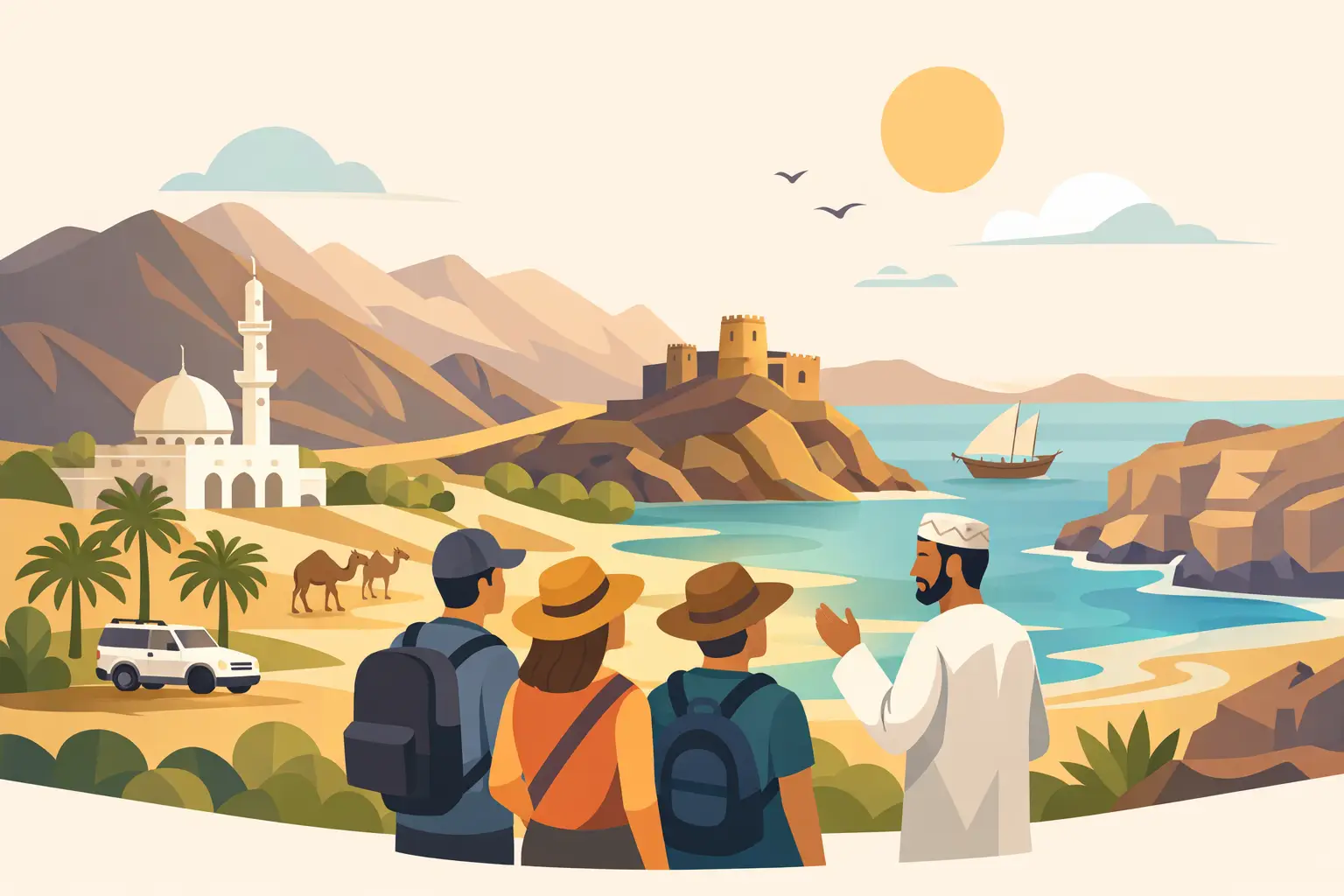
Oman rewards travelers who pay attention. One moment you are standing in a frankincense-scented souq, the next you are watching the light shift across desert dunes, and by evening you are eating by the sea with mountains rising behind the coast. That is exactly why small group Oman tours tend to feel so different from large, fast-moving itineraries. This is a country best experienced with time, context, and room for real connection.
For many American travelers, Oman is appealing for the same reason it can feel hard to plan independently. The landscapes are varied, the culture is deeply rooted, and the best experiences are often spread across cities, wadis, desert camps, mountain villages, and coastal stretches. You can absolutely piece it together on your own, but a thoughtfully designed small-group journey removes the friction while keeping the experience personal.
What makes small group Oman tours different
The biggest difference is not only the group size. It is the way the trip feels day to day. In a group of 10 or fewer, travel is more flexible, quieter, and more human. You are not spending half the day waiting for 35 people to board a bus, check into a hotel, or filter through a photo stop. You have more time where it counts – in the places you traveled so far to see.
That matters in Oman because the country is not built for rushed tourism. The appeal is often subtle at first. Muscat is elegant rather than flashy. Nizwa reveals itself through its fort, market traditions, and sense of continuity. The Wahiba Sands are impressive on their own, but what stays with many travelers is the atmosphere at sunset, the stillness, and the conversation that follows dinner at camp. A smaller group gives those moments space.
It also changes the quality of guiding. Good local guides do much more than identify landmarks. They explain customs, help travelers read social cues, and add the kind of historical and cultural framing that turns a visit into understanding. In a small group, those exchanges are easier. You can ask more questions, hear the answers, and actually engage instead of trailing behind a flag.
Why Oman especially suits the small-group format
Some destinations work fine as broad, high-volume tours. Oman is not one of them. It is better suited to travelers who want to move with intention.
Distances and variety require smart planning
Oman packs a remarkable range of scenery into one trip, but getting from one environment to another takes coordination. A strong itinerary balances driving time with meaningful stops, so the journey never feels like a transfer between highlights. That is easier to do well with a small group, where logistics stay efficient and the pace remains relaxed.
You might begin with Muscat’s architecture and markets, continue to the historic atmosphere of Nizwa, head into the mountains or desert, and then reach a coastline that feels completely different again. The transitions are part of the experience, but only when they are handled thoughtfully.
Cultural experiences feel better when they are not crowded
Oman is known for hospitality, but respectful travel matters. Smaller groups are naturally less disruptive in villages, family-run spaces, and local markets. Interactions feel more genuine when they are not overwhelmed by numbers. That can shape everything from a conversation over Omani coffee to the ease of entering a more traditional setting with confidence and respect.
For travelers who care about authenticity, this is one of the strongest arguments for choosing a smaller departure. The goal is not simply to see Oman. It is to experience it in a way that feels appropriate to the place.
Comfort matters in a destination with many moving parts
Oman is safe and welcoming, but it still requires practical decisions around transport, timing, regional sequencing, weather, and hotel selection. The right tour removes guesswork without making the trip feel over-managed. That balance is where small-group travel shines.
Instead of spending your energy comparing routes, wondering whether a desert camp is worth it, or trying to judge how ambitious to make a mountain day, you can focus on being present. For many travelers, that peace of mind is not a luxury. It is what makes a more ambitious destination enjoyable.
What to look for in small group Oman tours
Not all small-group trips are built the same. The phrase sounds promising, but the real value depends on how the itinerary is designed and supported.
First, look closely at group size. There is a difference between a genuinely intimate group and a tour that markets itself as small while still feeling crowded in practice. A cap of 10 travelers usually creates a much more personal dynamic and smoother travel days.
Second, pay attention to itinerary balance. A strong Oman trip should combine headline sites with quieter, place-based moments. You want major cultural anchors such as Muscat and Nizwa, but also time in landscapes that show Oman’s range – perhaps a wadi, a mountain region, a desert stay, or the coast. If every day reads like a long checklist, the experience may feel thinner than it looks on paper.
Third, consider the style of guidance. The best tours are led by local experts who can interpret culture, not just manage logistics. That is especially valuable in Oman, where etiquette, religion, architecture, and regional traditions all add layers to what you are seeing.
Finally, look for operational clarity. Travelers often focus on the dream side of a trip, but the practical side matters just as much. Clear communication, organized pre-trip information, and a well-structured support system create trust before you even depart. For a destination many Americans have not visited before, that reassurance goes a long way.
Who benefits most from this style of travel
Small group Oman tours are a particularly strong fit for travelers who want depth without the pressure of planning every detail. Couples often appreciate the ease and comfort. Solo travelers tend to like the built-in companionship without feeling absorbed into a large, anonymous crowd. Friends traveling together get the social side of a group trip while keeping the experience elevated and manageable.
This format also suits experienced travelers who have outgrown mass-market coach tours. If you value context, pacing, and access over sheer volume of stops, Oman feels far richer in a smaller setting. You are not sacrificing structure. You are choosing a better kind of structure.
That said, it depends on your travel style. If you prefer full spontaneity and are comfortable driving long distances, adjusting plans on the fly, and researching each stop yourself, independent travel may still appeal. But if your priority is cultural immersion with strong organization behind it, a small-group journey is often the smarter option.
The best Oman experience is not the fastest one
One of the most common mistakes travelers make with Oman is assuming they need to cover as much ground as possible. The country has enough variety to tempt you into packing every region into one trip. In reality, too much movement can flatten the experience.
A better trip allows for rhythm. It gives Muscat time to breathe. It lets a desert night feel like more than a novelty. It leaves room for a guide to linger on a story, for a market visit to become a conversation, or for a scenic stop to become one of your clearest memories. Small groups make that rhythm more achievable because they are less dominated by logistics.
That is also where thoughtful operators stand apart. At Atlas Global Tours, the focus is on culturally rich itineraries that stay personal, well-paced, and professionally supported. In a destination like Oman, that combination matters.
Why the right group size changes the memories you bring home
Travelers rarely come back from Oman talking only about monuments. They talk about atmosphere, generosity, scale, and contrast. They remember the call to prayer echoing through old streets, the texture of mountain roads, the quiet before sunrise in the desert, and the moments when local insight changed what they thought they were looking at.
Those are not accidental memories. They come from a style of travel that leaves room for them.
If Oman is on your list, it is worth choosing a trip format that matches the destination. Smaller groups tend to create better access, more meaningful exchanges, and a steadier, more comfortable pace. And in a country defined by nuance, hospitality, and dramatic shifts in landscape, that makes all the difference.
The best Oman journeys do not rush you past the country’s character. They give you enough structure to feel confident, and enough space to actually feel where you are.