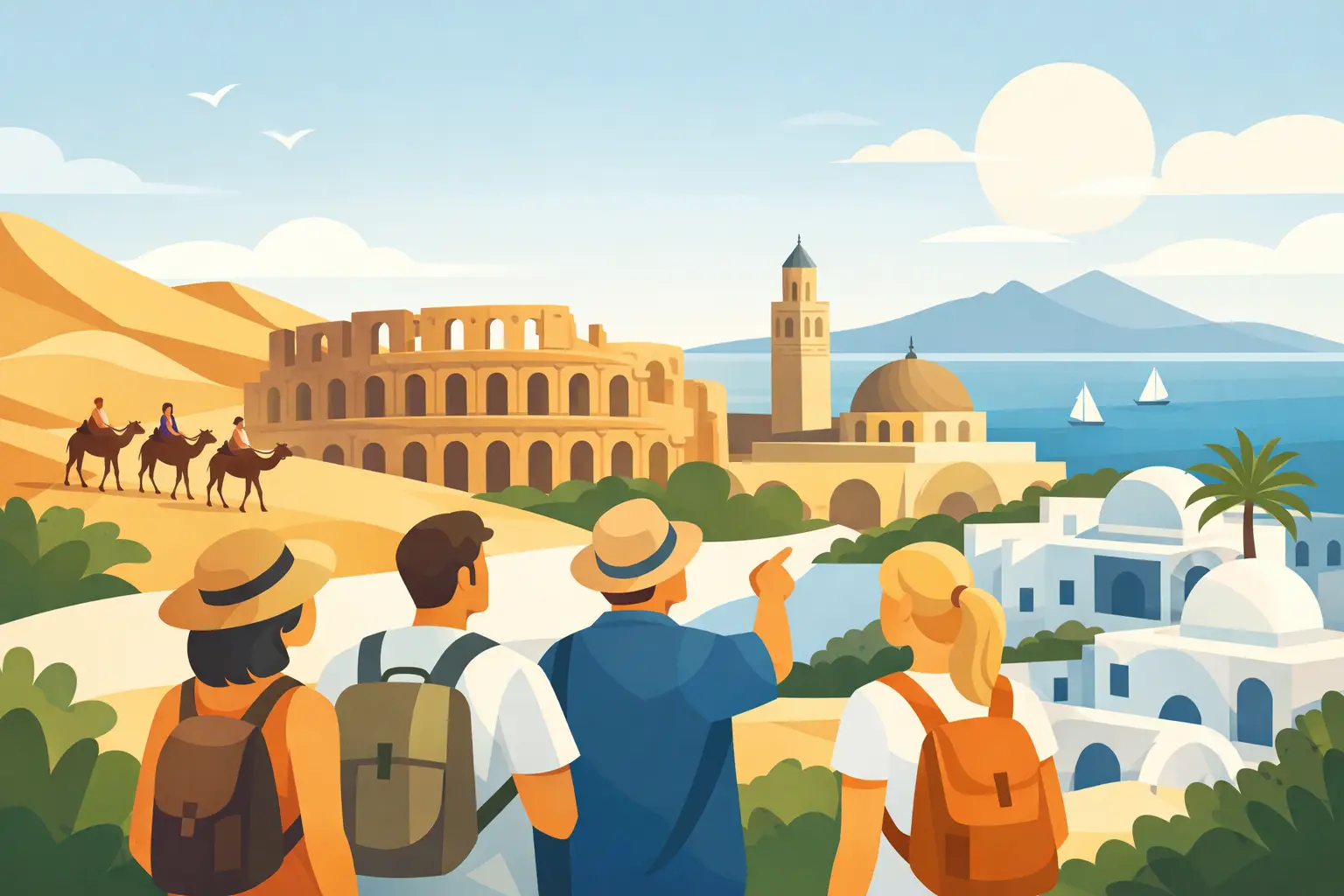
Tunisia rewards travelers who want more than a checklist. In one trip, you can walk through Roman ruins, follow medina lanes shaped by centuries of trade, stand at the edge of the Sahara, and sit down to meals that reveal Arab, Amazigh, Ottoman, and French influences in a single table. That range is exactly why small group Tunisia tours appeal to thoughtful travelers – they make the country feel accessible without flattening its complexity.
For many American travelers, Tunisia sits in a sweet spot. It offers North African atmosphere, major archaeological sites, a living Mediterranean culture, and desert landscapes that feel cinematic, yet it remains less crowded than many better-known destinations. The right tour format matters here. Tunisia is not a place you want to rush through on a giant coach with rigid timing and surface-level commentary. It is a destination best experienced with room for conversation, flexibility, and local context.
What makes small group Tunisia tours different
The biggest difference is not just group size. It is the quality of the experience that smaller numbers make possible. When a tour is limited to around 10 travelers, the pace changes. You can move through a historic site without feeling herded, ask real questions, and enjoy experiences that would be awkward or impossible with 40 people.
That matters in Tunisia because so much of the country is layered. Carthage is not only a famous ancient name. Kairouan is not only a stop on an itinerary. Sidi Bou Said is not only photogenic blue and white architecture. These places become more meaningful when a knowledgeable local guide can connect history, religion, architecture, and daily life in ways that feel human rather than scripted.
Smaller groups also tend to create better access to the moments people remember most. A family-run guesthouse dinner, a conversation with a craftsperson, a slower walk through a medina, or a sunrise departure toward the desert all feel more personal when logistics are simpler. Instead of spending energy managing a crowd, the guide can focus on the experience itself.
Why Tunisia benefits from a small-group format
Tunisia is compact, but it is not one-note. You may start in Tunis with its urban rhythm and museum collections, then move to seaside villages, Roman sites, inland holy cities, and finally the south, where ksour, oases, and desert scenery change the tone entirely. That variety is one of Tunisia’s greatest strengths, but it also means transitions matter.
A small group handles those transitions better. Hotel check-ins are quicker. Rest stops are easier. Questions get answered in real time. If weather, traffic, or local conditions call for a slight adjustment, the day does not unravel. There is more room to be practical without losing momentum.
This format is especially valuable in medina environments, where narrow streets and busy local life do not suit oversized groups. It also works well in desert regions, where comfort, timing, and guide coordination can make the difference between a memorable day and a tiring one. Tunisia is easy to enjoy when the planning is thoughtful. It can feel fragmented when it is not.
The cultural depth most travelers are really looking for
Many travelers say they want authenticity, but what they usually mean is a trip that does not feel staged. Tunisia is well suited to that kind of travel because culture is not confined to one major attraction. It lives in the call to prayer drifting across a city, in regional food traditions, in the architecture of old towns, in the way French and Arabic coexist in everyday life, and in the visible layers of Phoenician, Roman, Islamic, and modern history.
Small group Tunisia tours create the conditions for that depth. You are not just dropped at a landmark and moved along. There is time to understand why Kairouan matters in the Islamic world, why Dougga is so impressive beyond its scale, or why southern Tunisia feels distinct from the coast. A good guide helps travelers connect the dots between geography, empire, religion, trade, and present-day society.
That is often where Tunisia surprises people most. It is visually striking, yes, but it is also intellectually rewarding. Travelers who enjoy context tend to leave with much more than photos.
Comfort, reassurance, and room to breathe
There is a practical side to choosing a small-group tour, and it should not be overlooked. Tunisia is very manageable with the right planning, but many travelers still prefer the reassurance of organized transportation, vetted hotels, clear timing, and on-the-ground support. That is not about avoiding adventure. It is about making space to enjoy it.
For U.S. travelers in particular, peace of mind often comes from knowing that the trip is structured well before departure and supported clearly throughout. A well-run small-group operator brings that reassurance while keeping the experience personal. You know where you are going, what is handled, and who to ask when questions come up. At the same time, the journey does not feel overproduced.
There is also a social benefit. Small groups tend to attract travelers who want shared experience without constant togetherness. That balance matters. You can enjoy conversation over dinner, compare impressions after a museum visit, and still have personal space. For solo travelers and couples alike, that often feels more comfortable than either independent travel or large-group touring.
What to expect from a well-designed itinerary
Not every Tunisia itinerary is built the same way. Some focus heavily on the coast. Others rush from site to site and treat the desert as a photo stop. The strongest small-group itineraries understand that Tunisia works best as a sequence of contrasts.
A thoughtful route often begins with Tunis and its surrounding highlights, such as the Bardo Museum, Carthage, and Sidi Bou Said. From there, the journey should widen rather than repeat itself. Roman sites like Dougga add historical weight. Kairouan adds spiritual and architectural significance. The south adds texture, from troglodyte dwellings and fortified granaries to oasis towns and Sahara-edge landscapes.
Pacing matters as much as geography. The itinerary should include standout sites, but it should also leave room for atmosphere – a walk through a market, time to appreciate regional cuisine, or a quieter moment in a place that is not internationally famous but feels deeply rooted. That is often where a premium small-group experience stands apart.
At Atlas Global Tours, that balance is central to trip design. The goal is not to cover the most ground possible. It is to create a Tunisia journey that feels rich, coherent, and comfortably managed from start to finish.
Are small group Tunisia tours right for every traveler?
Not always, and that is worth saying plainly. If you prefer to build every day yourself, change plans constantly, and travel at a completely independent pace, a guided tour may feel too structured. On the other hand, if you want someone else to handle logistics while still giving you meaningful access to culture and place, a small-group format is often the sweet spot.
It also depends on what kind of comfort you expect. Tunisia can absolutely be enjoyed in a polished, well-organized way, but this is not a resort-only destination if you want to experience it fully. Some of the most rewarding moments come from long scenic drives, historic properties, active sightseeing days, and places where atmosphere matters more than luxury gloss. For many travelers, that is a strength, not a drawback.
The best fit is usually someone who wants substance with support. Someone curious about history and culture, open to regional food, and interested in seeing both famous sites and the spaces in between. That traveler tends to get the most from Tunisia.
Choosing quality over crowd size alone
A small group by itself does not guarantee a better trip. The real question is how the tour is designed and led. Good small group Tunisia tours combine experienced local guides, realistic pacing, carefully chosen accommodations, and a clear understanding of what American travelers need in order to feel both inspired and well cared for.
That includes communication before the trip, professionalism on the ground, and an itinerary with enough flexibility to feel alive. It also means avoiding the common trap of trying to make Tunisia fit someone else’s formula. This country deserves a travel style that respects its depth, its regional variety, and its quieter strengths.
If that is the experience you want, small-group travel is not just a nicer way to see Tunisia. It is often the reason the country clicks at all.
Tunisia leaves a lasting impression when you have the time, context, and comfort to experience it properly – and that is exactly what the right small-group journey is built to provide.