
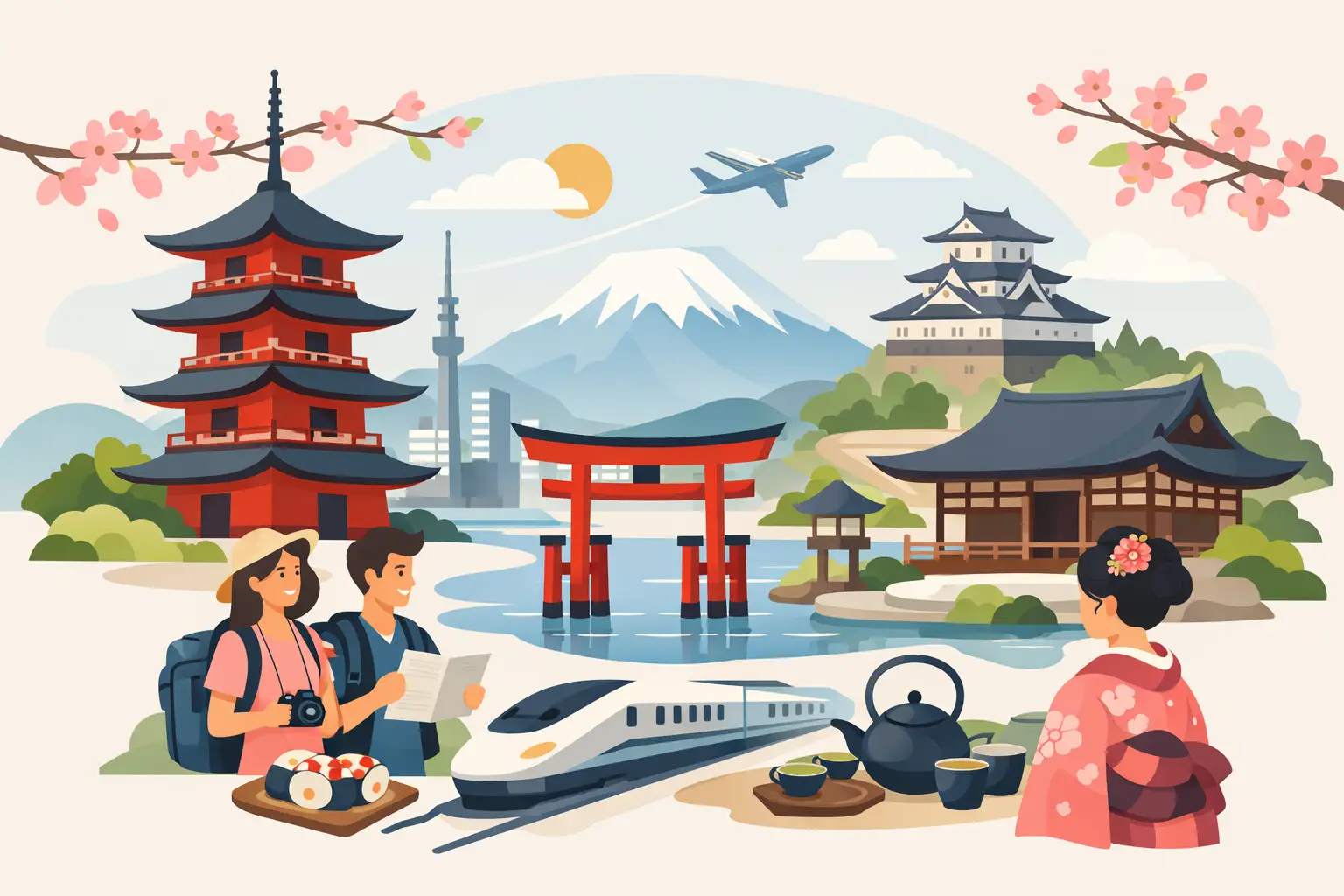
Japan can reward a carefully planned trip in ways that a packed sightseeing schedule cannot. This Japan cultural itinerary example is designed for travelers who want more than photos at famous landmarks: time to understand ritual and craft, taste regional food, meet local specialists, and move through the country at a comfortable, well-supported pace.
The route balances Japan’s major cultural centers with experiences that reveal daily life behind the headlines. It begins in Tokyo, where centuries-old customs sit beside contemporary energy, then follows the rail line west through Kanazawa and Kyoto. Each stop has a purpose, and each includes enough breathing room to let the destination register.
Why 10 Days Works for Cultural Travel in Japan
Ten days is long enough to see distinct sides of Japan without turning every morning into a hotel checkout and every afternoon into a transfer. Tokyo introduces the scale and contrasts of modern Japan. Kanazawa provides a more intimate look at samurai history, gardens, and artisan traditions. Kyoto offers depth: temple architecture, tea culture, old neighborhoods, and the quiet etiquette that can make even a short encounter meaningful.
This itinerary uses efficient rail travel rather than private road transfers between cities. Japan’s train network is exceptionally reliable, but stations can be large and busy. Having luggage plans, reserved seats when appropriate, and guidance at key transitions helps preserve the ease that travelers expect from a thoughtfully organized journey.
Japan Cultural Itinerary Example: Days 1-3 in Tokyo
Day 1: Arrive and settle into Tokyo
Arrive in Tokyo and keep the first evening simple. A comfortable hotel in a well-connected neighborhood gives travelers a calm base after a long international flight. Depending on arrival time, enjoy a welcome dinner featuring seasonal Japanese dishes and a conversation about local dining etiquette, from shared plates to the respectful use of chopsticks.
The goal is not to rush into sightseeing. Japan is a destination where small details matter, and an unhurried first night makes the days ahead more enjoyable.
Day 2: Old Tokyo, food, and everyday rituals
Begin in Asakusa, one of Tokyo’s most atmospheric historic districts. At Senso-ji, the city’s oldest Buddhist temple, visitors can observe how worshippers purify their hands, offer incense, and approach the main hall. These are living practices, not museum displays, so a knowledgeable local guide adds essential context about what visitors are seeing and how to participate respectfully.
From there, wander the surrounding streets for traditional snacks and small shops before visiting a food-focused market or neighborhood shopping street. Tokyo’s culinary culture is not limited to high-end sushi counters. A bowl of soba, crisp tempura, grilled fish, or a simple wagashi sweet can tell a story about seasonality, regional ingredients, and meticulous preparation.
Spend the evening in a different Tokyo district, perhaps the lantern-lit lanes of a traditional dining area or the striking streetscape around Shibuya. The contrast is part of the lesson: Tokyo does not replace its past with its present. It layers them.
Day 3: Design, devotion, and contemporary culture
Tokyo’s contemporary side deserves cultural attention as well. Visit a design-focused neighborhood, an art museum, or a carefully selected gallery to see how Japanese aesthetics influence fashion, architecture, packaging, and public spaces. Minimalism is often associated with Japan, but it is only one thread. Color, playfulness, precision, and pop culture all have a place here.
Later, make time for Meiji Jingu or another Shinto shrine set apart from the city’s busiest streets. A shrine visit offers a useful opportunity to discuss the difference between Shinto and Buddhist sites, as well as the importance of seasonal festivals and ancestral connection. End with a relaxed evening, because the next day brings a change of pace.
Days 4-5 in Kanazawa: Craft and Heritage
Travel by bullet train to Kanazawa, a city that escaped much of the destruction experienced elsewhere during World War II. Its preserved districts and thriving craft traditions make it a valuable counterpoint to Tokyo.
On day four, explore Kenrokuen, among Japan’s most celebrated landscape gardens. The garden is beautiful in every season, but its deeper appeal lies in composition. Water, stone, bridges, trees, and borrowed views are arranged to create harmony rather than spectacle. Pair the visit with Kanazawa Castle and an introduction to the city’s former role as a powerful samurai center.
Day five can focus on the hands that keep tradition alive. Kanazawa is known for gold leaf, lacquerware, ceramics, silk dyeing, and other refined crafts. A workshop or studio visit is more meaningful than simply shopping for souvenirs because it reveals the patience and technical discipline behind the finished object. In the Higashi Chaya district, historic teahouses and narrow wooden streets offer another glimpse of the city’s cultural fabric.
There is a trade-off here. Kanazawa has fewer headline attractions than Osaka or Hiroshima, so travelers who want a fast-paced checklist may prefer another route. For those drawn to artistry, gardens, and smaller-city character, it is often one of the trip’s most memorable stops.
Days 6-9 in Kyoto: Depth Over Speed
Day 6: Enter Kyoto with intention
Continue to Kyoto and settle into a centrally located hotel. Rather than attempt several major temples immediately, begin with a walk through Gion or another historic neighborhood at a respectful pace. Geiko and maiko traditions are often misunderstood by visitors. A guide can explain their cultural role and help travelers appreciate the area without treating working professionals or local residents as attractions.
A seasonal kaiseki-style dinner, where feasible, makes an excellent introduction to Kyoto’s food culture. The meal is not simply formal. It reflects the Japanese attention to ingredients, vessels, color, and the rhythm of the season.
Day 7: Temples and the philosophy of place
Visit Kiyomizu-dera early, when its wooden terrace and hillside setting are at their most serene. Continue through the lanes of Higashiyama, where pottery shops, small cafés, and old merchant buildings invite slower exploration. The area can be crowded, particularly during cherry blossom and autumn foliage seasons, so timing is one of the most valuable forms of planning.
In the afternoon, choose one major site with a distinct character, such as a Zen temple and garden. The point is not to collect temple names. It is to learn how architecture, landscape, meditation, and ritual shape a sense of place.
Day 8: Arashiyama and a local perspective
An early visit to Arashiyama can avoid the busiest hours around the bamboo grove. Beyond the grove, this western Kyoto district offers riverside views, temple grounds, and a more spacious feel. Consider a craft, cooking, or tea-focused experience led by a local host. The best cultural activities are not performances staged to confirm a visitor’s expectations. They should leave room for conversation, curiosity, and respectful participation.
A tea experience is especially worthwhile when it explains the values behind the ceremony: attentiveness, humility, seasonal awareness, and care for guests. It need not be elaborate to be meaningful.
Day 9: Fushimi Inari and free time with purpose
Begin at Fushimi Inari Taisha, known for its thousands of vermilion torii gates. Walking beyond the first, most photographed section offers a quieter experience and a chance to understand the shrine’s connection to Inari, associated with rice, agriculture, and prosperity.
Keep the afternoon flexible. Some travelers may want Nishiki Market and a food tasting, while others may prefer a museum, a quiet café, or time to revisit a neighborhood. This flexibility is not empty space. It lets each traveler respond to Japan personally while still benefiting from a well-organized route.
Day 10: Depart with Context, Not Just Souvenirs
Depart from Kyoto or return to Tokyo depending on flight plans. A well-designed final morning leaves ample time for a calm transfer, especially when international luggage, station navigation, and airport timing are involved.
For travelers who prefer cultural depth without the uncertainty of managing every reservation and transition alone, a small group can make a real difference. Atlas Global Tours approaches journeys like this with intimate group sizes, experienced local guidance, and room for the unexpected moments that often become the stories travelers remember.
Japan asks visitors to pay attention: to the way a meal is presented, the silence within a temple hall, the precision of a craftsperson’s work, and the courtesy built into everyday exchanges. Give those moments enough time, and your itinerary becomes more than a route between landmarks.