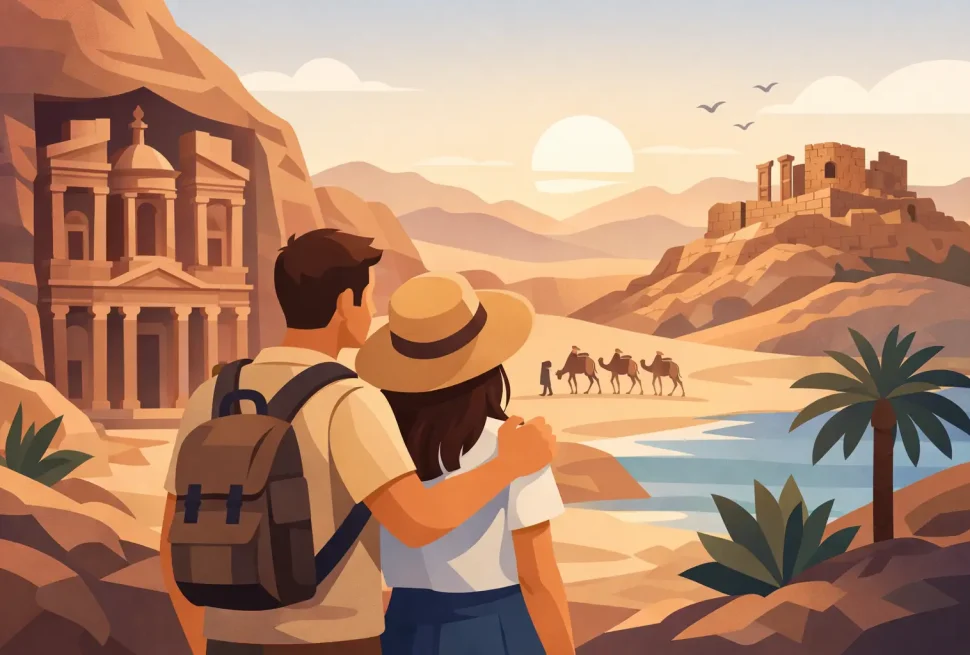

A dawn visit to a temple, a family-prepared lunch in a mountain village, and an unhurried conversation with a local guide can reveal more about a place than another hour spent checking sights off a list. That is the promise of authentic cultural itineraries: travel planned around real connection, not simply proximity to famous landmarks.
For culturally curious travelers, authenticity does not mean giving up comfort, safety, or a well-organized plan. It means having the confidence to move beyond the obvious with knowledgeable people, a manageable pace, and enough room to notice what makes a destination distinct. The best journeys make room for both the Petra Treasury and the Bedouin stories that give the landscape its living context; both a Marrakech medina and the craft traditions still practiced inside it.
What Makes an Itinerary Culturally Authentic?
An authentic itinerary is not defined by how remote or difficult an experience appears. A crowded market can be deeply meaningful when it is approached with context and respect. A celebrated UNESCO site can be essential when a local expert explains its place in daily life, faith, art, or national memory.
The difference is intention. Thoughtful cultural travel asks more than, “What can we see?” It asks, “Whose story are we entering, what should we understand before we arrive, and how can our visit benefit from local knowledge?” This approach turns a visit to an ancient citadel, a neighborhood food stall, or a rural workshop into something more memorable than a photo stop.
Authenticity also requires honesty. Not every activity needs to be hidden, exclusive, or unfamiliar to be worthwhile. Some traditions are shared with visitors because local hosts are proud to share them. Others are private and should remain so. A responsible itinerary recognizes that distinction, avoids staging culture for spectacle, and gives travelers a clearer view of the people and places they have come to know.
Authentic Cultural Itineraries Need Both Highlights and Hidden Context
Skipping major sites in the name of being “off the beaten path” can be just as limiting as seeing only major sites. The Great Pyramids, the Roman ruins of Jerash, Kyoto’s historic temples, and the palaces of India matter for good reason. They hold layers of human achievement, belief, conflict, and beauty that deserve time and attention.
What changes the experience is how those places fit into the larger journey. A well-designed itinerary pairs landmark days with experiences that reveal the texture of contemporary life: a cooking demonstration that explains regional ingredients, a walk through a residential quarter, a visit with artisans, or a meal where local customs are discussed rather than merely observed.
This balance is especially valuable in destinations with long, complex histories. In Egypt, ancient monuments become more meaningful when travelers also understand modern Egyptian hospitality and the rhythms of life along the Nile. In Morocco, imperial cities gain depth through conversations about Amazigh heritage, regional cuisine, and traditional craftsmanship. In Armenia, medieval monasteries and mountain scenery are strengthened by encounters with a culture shaped by resilience, faith, and an enduring sense of welcome.
Why Small Groups Change the Experience
Group size is one of the least glamorous details of an itinerary, yet it often determines whether cultural connection is possible. A group of 40 moves differently through a market, a family restaurant, or a historic neighborhood than a group of 10. It requires more fixed timing, more logistical coordination, and more distance between travelers and the people they meet.
Smaller groups can sit at a single table, hear questions answered clearly, adjust when a local event changes the day, and enter places that are simply impractical for large coaches. They also create space for personal interests. One traveler may want to learn about textile traditions; another may be fascinated by religious architecture. A skilled guide can respond to those curiosities when the group is intimate enough to have a conversation.
That does not mean small-group travel is completely spontaneous. Reliable travel still needs confirmed accommodations, transportation, entrance arrangements, and clear expectations. The advantage is flexibility within a secure structure. Travelers can enjoy local discovery without carrying the burden of managing every detail themselves.
The Local Guide Is More Than a Navigator
Maps can show where a palace, souk, or temple is located. They cannot explain why a particular doorway is painted blue, how etiquette changes at a shared meal, or which historical narratives remain sensitive and contested. That perspective comes from a local guide with genuine subject knowledge and the ability to make a place intelligible to visitors.
The strongest guides are cultural ambassadors. They help travelers understand when to remove shoes, how to dress respectfully, what questions are welcome, and when it is better to listen. They connect history to the present, bringing nuance to subjects that can otherwise be reduced to broad headlines or oversimplified folklore.
A local guide also helps travelers make more thoughtful choices. They can recommend regional dishes, introduce independent makers, explain customary tipping, and help guests navigate moments that might feel unfamiliar. This practical support creates peace of mind while preserving the pleasure of discovery.
Pacing Is Part of Cultural Respect
An itinerary can include exceptional places and still feel superficial if every day is overfilled. Racing from breakfast to bus, monument to museum, and dinner to hotel leaves little room to absorb what has been seen. It also treats local communities as scenery rather than places where life is unfolding.
Thoughtful pacing creates room for the unexpected: a longer conversation with a guide, time to linger in a museum gallery, a quiet coffee after a market visit, or a chance to return to a neighborhood that made an impression. These pauses are not empty time. They are often when travelers begin connecting individual experiences to a larger understanding of a destination.
Pacing depends on the place and the traveler. Some journeys, such as those through Jordan or Oman, naturally involve longer drives between remarkable landscapes and historic sites. Others, such as Japan or Istanbul, reward walking days and public spaces alive with daily activity. The right itinerary is clear about these realities instead of promising a version of travel without movement, crowds, weather, or cultural adjustment.
How to Recognize a Well-Designed Cultural Journey
Before booking, look beyond a list of inclusions. A strong itinerary explains why its stops belong together and gives each day a clear rhythm. It should identify the experiences that provide local context, not only the hotels and headline attractions.
Pay attention to who leads the trip and how the company supports travelers before departure. Clear communication, realistic activity expectations, small group limits, and well-planned transportation are signs that cultural immersion has been designed with care rather than added as marketing language. For many travelers, U.S.-based support and straightforward trip information provide useful reassurance when choosing an international tour.
It is also worth considering what “authentic” means to you personally. If your ideal day includes hours of independent wandering, seek an itinerary with built-in free time. If you prefer to understand a destination through food, look for programs that make regional dining a meaningful part of the experience. If history is your priority, choose a journey that allows enough time at significant sites rather than treating them as quick stops between hotels.
Atlas Global Tours designs small-group journeys around this balance: iconic destinations, local expertise, cultural experiences with purpose, and the practical care that lets travelers be present. The goal is not to manufacture a perfect version of another culture. It is to create the conditions for genuine curiosity, respectful exchange, and lasting memories.
The most rewarding trip may be remembered for a famous monument, but it is often defined by a smaller moment: sharing tea, learning a local phrase, hearing a guide’s family story, or seeing a familiar landscape through someone else’s eyes. Choose an itinerary that leaves room for those moments. They are where a destination begins to feel personal.