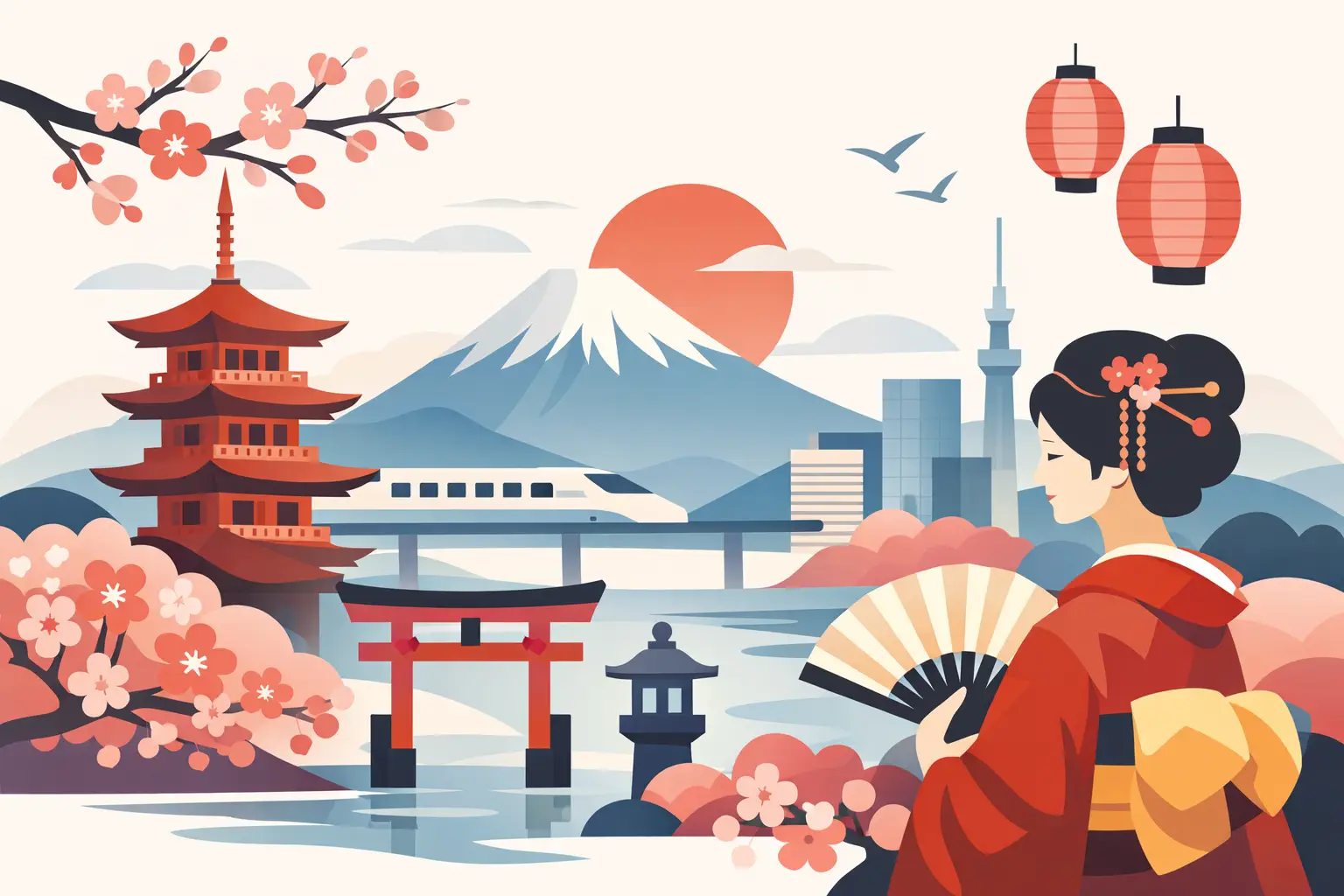
A vermilion shrine gate standing beside a glass-and-steel train station captures one of Japan’s defining contrasts: reverence for the past alongside a powerful instinct for renewal. This Japan history and culture guide gives travelers the context to see beyond the famous sights, whether you are walking Kyoto’s temple lanes, sharing a meal in Osaka, or watching Tokyo’s evening crowds move with remarkable order.
Japan rewards curiosity. Its cultural customs are often subtle rather than theatrical, and its historic landmarks become more meaningful when you understand the beliefs, social changes, and local craftsmanship behind them. A thoughtfully paced small-group journey creates room for both: the essential landmarks and the quieter encounters that make a destination feel personal.
Japan History and Culture Guide: The Foundations
Japan’s earliest communities were shaped by the sea, mountains, and rice cultivation. The indigenous Ainu people of northern Japan have a distinct cultural heritage that remains an important part of the country’s story, particularly in Hokkaido. On the main islands, the long Jomon period is known for some of the world’s earliest pottery, followed by the Yayoi period, when wet-rice farming, metalworking, and more settled social structures took hold.
By the sixth century, ideas and technologies arriving through Korea and China had a lasting influence. Buddhism entered Japan alongside Chinese writing, political models, and artistic traditions. Yet Japan did not simply adopt outside influences unchanged. It blended them with local practices, including Shinto, a tradition centered on kami – sacred presences associated with natural forces, places, and ancestors.
That blend explains why a temple and a shrine can feel connected while serving different religious traditions. Buddhist temples commonly feature statues, incense, and graveyards; Shinto shrines are often marked by torii gates, purification fountains, and spaces that honor local kami. The boundaries have shifted through history, and many Japanese people comfortably participate in customs associated with both.
From Imperial Court to Samurai Rule
Kyoto became the imperial capital in 794 and remained so for more than a thousand years. During the Heian period, court culture flourished in refined poetry, painting, architecture, and literature. The Tale of Genji, written by courtier Murasaki Shikibu in the early 11th century, offers a remarkable window into this world of ceremony, aesthetics, and social nuance.
Political power gradually moved away from the imperial court and toward military families. From the late 12th century, shoguns ruled in the emperor’s name, supported by warrior elites known as samurai. This was not one continuous, unchanging era of sword fights and castles. Japan experienced periods of civil conflict, regional competition, and extraordinary cultural achievement, including the development of Zen-influenced gardens, ink painting, and the tea tradition.
The Tokugawa shogunate, established in 1603, brought more than 250 years of relative stability. Japan was not completely closed to the world during this period, but foreign contact was carefully controlled. Cities grew, domestic travel expanded, and a lively urban culture emerged through kabuki theater, woodblock prints, publishing, and food culture. Many images travelers associate with historic Japan, from elegant ukiyo-e prints to Edo-period streets, belong to this era.
When you visit a castle, keep in mind that it was both a military stronghold and a statement of political authority. When you encounter a tea room or landscaped garden, notice the different kind of power it reflects: the ability to shape quiet, balance, and attention into an experience.
Modern Japan Was Built at Remarkable Speed
In 1868, the Meiji Restoration ended shogunal rule and returned formal authority to the emperor. Japan rapidly modernized its government, military, schools, industry, and infrastructure. Railways, factories, and new institutions transformed daily life, though the speed of change also brought hardship and social tension.
The 20th century included imperial expansion, war, and profound loss. The atomic bombings of Hiroshima and Nagasaki in 1945 remain central to any honest understanding of modern Japan. Hiroshima’s Peace Memorial Park is not simply a historic stop. It is a place for reflection on civilian suffering, memory, and the enduring global stakes of war.
Japan’s postwar recovery was equally transformative. Economic growth produced globally recognized industries, dense urban centers, and advances in design and technology. But contemporary Japan is not only neon streets and high-speed trains. It is a country where long-established neighborhood festivals, family-run shops, regional dialects, and seasonal food traditions continue to matter deeply.
The Cultural Values You May Notice as a Guest
It is easy to reduce Japanese culture to a few labels such as politeness or efficiency. Those observations are not wrong, but they are incomplete. Customs vary by region, generation, setting, and individual personality. Still, several ideas can help visitors interpret what they see.
Harmony, often described through the concept of wa, places value on consideration for the group and avoiding unnecessary disruption. This may appear in quiet train cars, orderly queues, careful packaging, or the indirect way disagreement is sometimes expressed. It does not mean every interaction is formal. Japan can be warm, humorous, informal, and wonderfully playful. It does mean that reading the setting matters.
Omotenashi is another useful term, often translated as wholehearted hospitality. In practice, it may be the server who anticipates a need without fanfare, the ryokan host who explains a meal course by course, or the shopkeeper who carefully wraps a small purchase. The point is not extravagant service. It is respect expressed through preparation and care.
Seasonality also shapes Japanese life. Cherry blossoms are only the most familiar example. Plum blossoms, summer festivals, autumn maple leaves, and winter hot springs each have their own rhythms. Menus, sweets, flower arrangements, and even textile patterns may change with the season. Travelers who slow down enough to notice these details often find the strongest sense of place.
Food Is Regional History on a Plate
Japanese cuisine is far broader than sushi, and regional food is one of the most enjoyable ways to understand the country. Coastal areas emphasize seafood in distinct local forms. Mountain regions draw on preserved foods, soba noodles, mushrooms, and vegetables. Osaka’s food culture is energetic and sociable, while Kyoto cuisine often highlights delicate seasonal ingredients and precise presentation.
A meal may reveal historical trade routes, local agriculture, religious practices, or the ingenuity of communities working with limited seasonal resources. Ramen alone changes dramatically from one region to another, with differences in broth, noodles, toppings, and local identity.
For travelers, the best approach is curiosity with flexibility. Try a set meal at a small restaurant, sample a regional sweet, and ask a local guide what people in the area genuinely eat. Dietary needs can be accommodated more successfully with advance planning, especially for vegetarian, vegan, gluten-free, or allergy-sensitive travelers. Dashi, a foundational stock often made with fish, appears in many dishes that may otherwise look plant-based.
Everyday Etiquette That Makes Travel Easier
You do not need to perform every custom perfectly. A sincere, observant visitor is usually welcomed. A few habits make a meaningful difference: remove shoes when asked, speak quietly on public transportation, and avoid eating while walking in places where it may be considered inconsiderate.
At shrines and temples, follow posted guidance and observe how others move through the space. At a shrine, visitors often bow before passing through a torii gate and may use the water basin for symbolic purification. Photography rules vary, particularly inside sacred buildings, so a pause before raising your camera is a simple sign of respect.
Tipping is generally not expected and can create awkwardness. Instead, appreciation is shown through a warm thank-you, or arigato gozaimasu. Cash remains useful despite the growth of card payments, especially in smaller shops and rural areas. Reliable transportation and clear signage make independent movement possible, but local insight can turn a straightforward transfer into a richer understanding of the neighborhood around it.
See the Country Beyond Its Most Famous Images
Tokyo, Kyoto, and Osaka deserve their place on a first journey, but Japan’s character changes quickly beyond the major cities. In Kanazawa, preserved districts and craft traditions reveal the cultural ambitions of a former castle town. In the Japanese Alps, traditional farmhouses and mountain landscapes offer a different sense of scale. Naoshima brings contemporary art into conversation with island life, while Hiroshima encourages reflection alongside excellent regional food.
The right itinerary depends on your interests and travel style. First-time visitors may prefer a balanced route that combines Tokyo’s energy, Kyoto’s historic depth, and a smaller city or countryside stay. Repeat travelers might spend more time in Kyushu, Hokkaido, Shikoku, or the Setouchi islands. There is no prize for seeing the most places. A journey with enough breathing room for a market visit, a neighborhood walk, or a conversation over tea will often stay with you longer.
For travelers who want that balance of cultural depth and dependable planning, Atlas Global Tours designs small-group experiences around local guidance, meaningful pacing, and the confidence that key details are thoughtfully handled. Come prepared to observe, ask respectful questions, and leave room for the unscripted moments – they are often where Japan becomes most memorable.