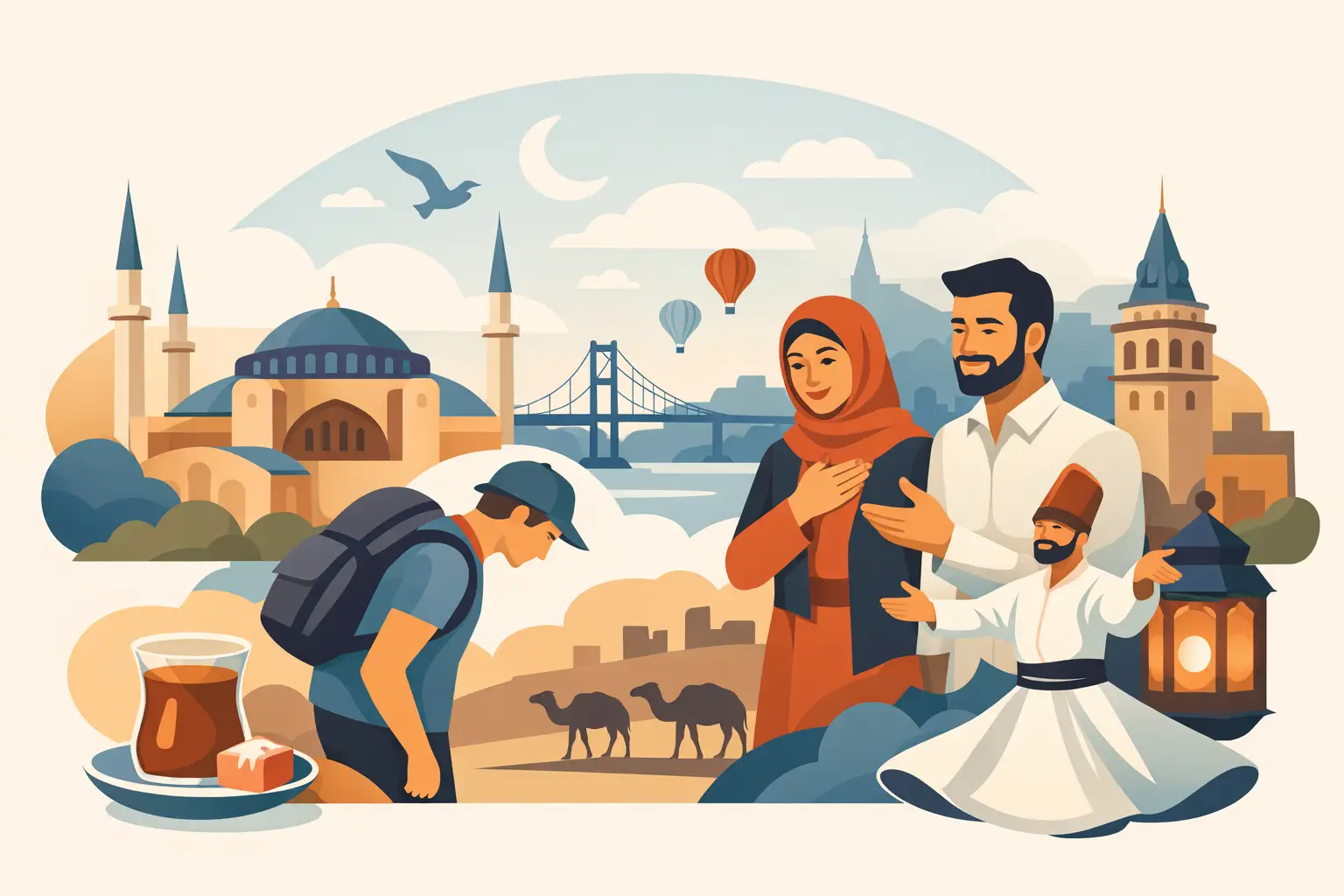
A warm welcome in Turkiye often arrives before the first landmark: a glass of tea, an offered seat, a question about where you are from. This Turkiye cultural etiquette guide is designed to help you meet those moments with ease. You do not need to memorize every custom to travel well. A little awareness, genuine curiosity, and a willingness to follow your local guide’s lead will carry you far.
Turkiye is a remarkably diverse country, shaped by Anatolian, Ottoman, Mediterranean, Balkan, Central Asian, and Middle Eastern influences. Customs can feel more conservative in smaller towns and more relaxed in Istanbul, Izmir, or coastal resort areas. Age, family background, religion, and setting all matter. The goal is not to perform a version of local life, but to show respect while enjoying the generosity and character that make travel here so memorable.
A Turkiye Cultural Etiquette Guide for Everyday Moments
Begin with a warm greeting
Politeness in Turkiye is often personal and unhurried. A friendly greeting matters, whether you are entering a small shop, meeting a guide, or joining a meal. “Merhaba” means hello and is appropriate almost anywhere. “Teşekkür ederim” means thank you, and even a sincere attempt at the phrase is warmly received.
When meeting someone for the first time, a handshake is common, especially in business or formal travel settings. Let the other person set the tone. Close friends of the same gender may greet with kisses on both cheeks, but visitors are not expected to initiate this. With someone of a more conservative background, particularly an older person or a woman, wait to see whether they offer their hand.
Addressing people respectfully also goes a long way. You may hear “Bey” after a man’s first name and “Hanım” after a woman’s first name, similar to Mr. and Ms. Using these terms when introduced is a thoughtful gesture, though your guide can help with the right context.
Accept hospitality with grace
Hospitality is not a transaction in Turkiye. It is a point of pride. If a shopkeeper offers tea, a family invites you to sit, or a host sets out more food than seems possible to finish, the gesture is often as meaningful as the item itself.
Accepting a cup of tea when time allows is a simple way to connect. You are not obligated to accept every offer, especially when you have a schedule, but decline kindly rather than abruptly. A smile and “teşekkür ederim” are enough. If you are welcomed into a home, bring a modest gift such as quality sweets, chocolates, or flowers. Avoid alcohol unless you know the hosts drink.
Do not be surprised if your host encourages you to eat more. You can compliment the meal, take a small additional serving, or say that you are very full while expressing appreciation. Leaving a little food on the plate is generally fine. What matters is acknowledging the care behind the invitation.
Dining Etiquette: Share the Experience
Meals in Turkiye are social occasions, often enjoyed at a relaxed pace. At a restaurant, wait for the host or guide to suggest where to sit and when to begin, particularly during a shared meal. Dishes may arrive in the center of the table, and sampling several small plates is part of the pleasure.
Bread is treated with particular respect and is commonly used to gather food. In informal settings, people may use bread instead of a fork for certain dishes, but utensils are always available and perfectly appropriate for travelers. If you are offered food or a drink, receive it with your right hand when practical. The left hand is traditionally considered less appropriate for eating and passing items, although travelers should not worry over an occasional mistake.
Turkish coffee deserves a small note. It is served unfiltered, so do not stir once it has settled, and do not drink the grounds at the bottom of the cup. Tea is usually served in a small tulip-shaped glass and may be offered repeatedly. Saying no after one or two glasses is acceptable.
Tipping is customary but not rigid. In restaurants, a tip of roughly 5 to 10 percent is appreciated when service is not already included. For drivers, local guides, hotel staff, and restaurant teams, a modest tip recognizes attentive service. On a well-organized small-group journey, your tour leader can offer practical guidance based on the destination and the services included.
Dress With Context in Mind
Turkiye welcomes visitors with many different personal styles. In Istanbul, Ankara, and beach destinations, you will see everything from contemporary fashion to conservative dress. Still, modest, polished clothing is the most versatile choice for travelers, especially when moving between cities, villages, historic sites, and religious spaces.
For everyday sightseeing, lightweight pants, longer skirts or dresses, comfortable walking shoes, and tops that cover the shoulders will serve you well. In summer, breathable fabrics are useful, but very revealing beachwear belongs at the beach or pool rather than in town. Packing one light scarf is practical for women visiting mosques and useful against sun, breeze, or air-conditioned interiors.
At a mosque, both women and men should wear clothing that covers shoulders and knees. Women are generally asked to cover their hair, and scarves are sometimes available at the entrance. Shoes must be removed before entering carpeted prayer areas. Visit outside prayer times when possible, speak quietly, and avoid walking directly in front of someone who is praying. Some areas may be reserved for worshippers, so follow posted signs and your local guide’s direction.
Shopping, Bargaining, and Taking Photos
Shopping in a Turkish bazaar can be lively, sociable, and surprisingly personal. In traditional markets, bargaining may be expected for rugs, ceramics, textiles, antiques, and souvenirs. In modern stores, malls, pharmacies, and most restaurants, prices are fixed. A good rule is to bargain only where it is clearly part of the setting.
Keep the exchange friendly. Ask the price, make a reasonable counteroffer, and be ready to walk away pleasantly if it does not suit your budget. Bargaining is less about winning than creating a respectful conversation. If you have agreed on a price, it is courteous to follow through rather than continue negotiating.
Photography calls for the same consideration. Always ask before photographing people, particularly elders, families, vendors, or anyone at work. A smile, a gesture toward your camera, and a verbal request are often enough. Be especially careful in mosques, rural communities, military areas, airports, and around police or security personnel. When in doubt, put the camera down and ask your guide.
Conversations That Build Connection
Many Turkish people enjoy speaking with visitors about their hometown, food, family, history, and favorite places in the country. Showing interest in regional dishes or asking for a local recommendation can open a far richer conversation than a quick exchange about sightseeing.
Political subjects, including national identity, regional conflicts, and the legacy of the Ottoman Empire, can be sensitive and complex. That does not mean they are forbidden, but they deserve humility rather than assumptions. Listen first, avoid pressing for personal views, and recognize that one person’s perspective does not represent an entire country.
Likewise, avoid treating Turkiye as a bridge between stereotypes of “East” and “West.” It is a living, modern country with its own layered identity. Travelers who arrive with curiosity rather than labels tend to receive the most candid and generous welcome.
Let Local Knowledge Lead
Cultural confidence does not come from getting every gesture exactly right. It comes from noticing the room, responding with warmth, and accepting guidance when it is offered. On an immersive small-group trip, local guides provide more than historical facts: they help you understand when to remove your shoes, how to read a market interaction, and where a simple greeting can become a real conversation.
Bring your patience to the tea table, your appetite to the shared meal, and your questions to the people who call Turkiye home. Those small acts of respect can turn a beautifully planned itinerary into a journey that feels genuinely connected.