India rewards travelers who look beyond the monument gate. The difference in an India local guide experience is often found in the details: knowing why shoes come off before entering a temple, where a family makes the morning’s best chai, or how a neighborhood’s architecture reveals its former rulers. These moments turn a well-planned trip into a personal connection with a place of extraordinary depth.
For many American travelers, India can feel both irresistible and logistically complex. It is vast, multilingual, intensely layered, and full of sensory contrasts. A knowledgeable local guide provides more than commentary. They offer context, practical confidence, and the human introductions that make the country feel welcoming rather than overwhelming.
Why local guidance changes the way you experience India
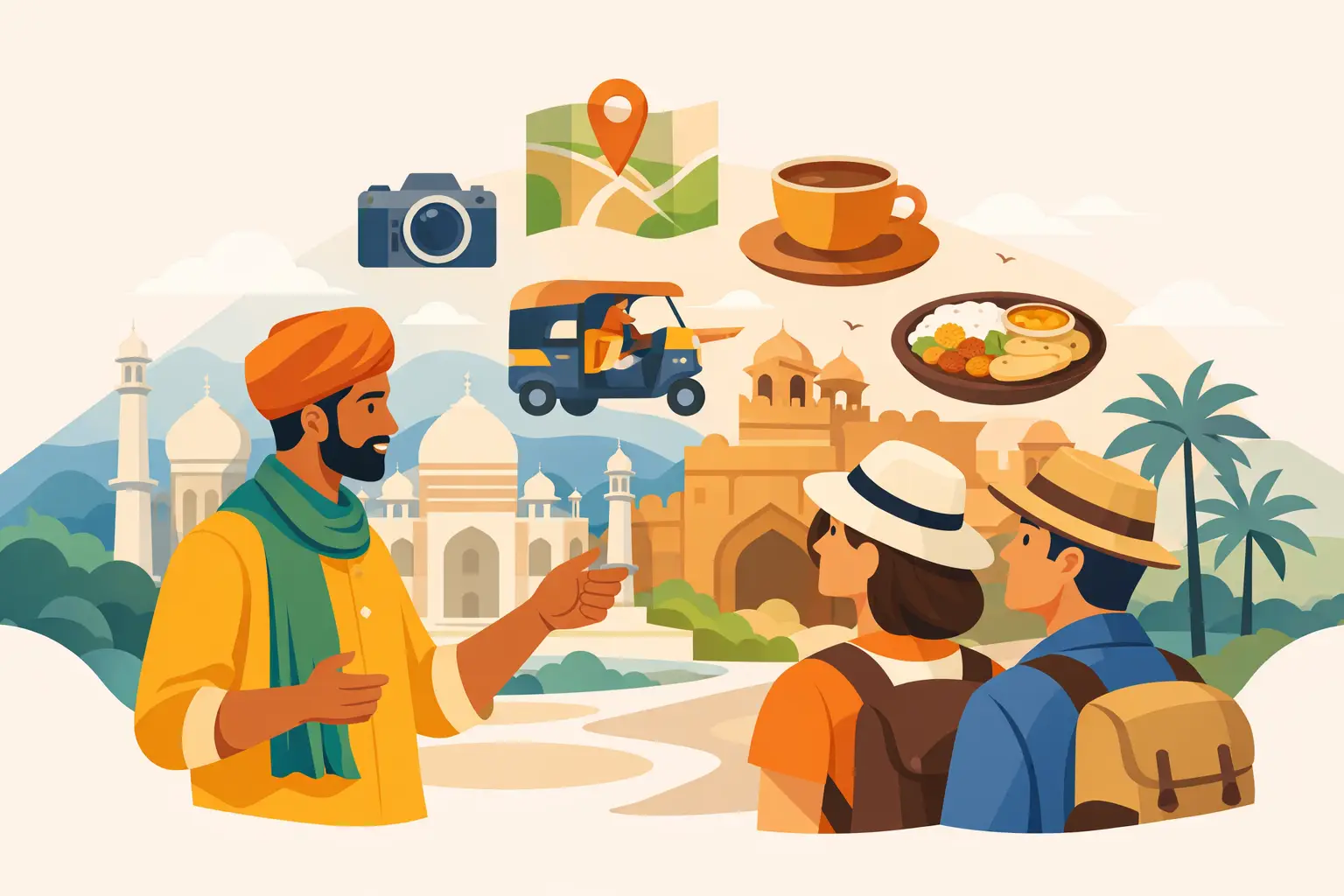
India’s landmark list is remarkable: the Taj Mahal, Jaipur’s hilltop forts, Varanasi’s ghats, Delhi’s Mughal monuments, and the temples and palaces of Rajasthan. But seeing these sites is not the same as understanding them. A strong guide explains the beliefs, dynasties, craftsmanship, and daily traditions behind what is in front of you, without turning a day of discovery into a lecture.
At the Taj Mahal, for example, a guide can point out the precise stone inlay work, the optical choices that shape the building’s proportions, and the story of the people who created it. In Old Delhi, they can make a busy market feel navigable, recommend what to taste, and explain why a spice, garment, or sweet has cultural significance. The experience becomes richer because you are not left to guess which details matter.
That cultural translation is especially valuable in a country where etiquette varies by setting and region. A local guide can offer gentle, useful guidance around photography, dress, temple customs, bargaining, dining, and tipping. The goal is not to put travelers on edge with rules. It is to help them participate thoughtfully and comfortably.
An India local guide experience is not one-size-fits-all
Not every guide offers the same kind of value. A guide who is excellent at interpreting the painted halls of a Rajput palace may have different strengths from a naturalist leading a safari day in Ranthambore or a food-focused host in Mumbai. The best itineraries match the guide’s knowledge to the place and give travelers enough time to ask questions, pause for photos, and follow genuine curiosity.
There is also a meaningful difference between being escorted through a destination and being welcomed into it. A cultural ambassador might introduce you to a local artisan, explain a festival preparation happening in the street, or suggest a quieter courtyard after a crowded heritage site. These encounters cannot always be scheduled down to the minute, which is why a thoughtfully designed tour needs room for flexibility.
That said, authenticity should never mean uncertainty. Travelers deserve clear meeting times, dependable transportation, vetted accommodations, and transparent expectations alongside spontaneous local moments. The most rewarding India journeys balance both: a structure you can trust and enough breathing room for a place to surprise you.
What a great local guide does beyond sightseeing
A knowledgeable guide makes the day easier in ways that may not be obvious until you are traveling. In a country with lively traffic, large historic complexes, and many local languages, practical coordination protects your energy for the experiences you came to enjoy.
They make history feel present
India’s history is not confined to museums. It appears in a stepwell outside Jaipur, a colonial-era street in Kolkata, a Sikh gurdwara’s community kitchen, and a centuries-old craft passed through generations. A guide connects these threads so each site feels part of a larger story rather than another stop on a checklist.
The best guides also welcome thoughtful conversation. India is a modern democracy with a young population, dynamic cities, regional identities, and traditions that continue to evolve. Good interpretation leaves room for complexity. It avoids reducing a country of more than a billion people to a few easy stereotypes.
They help you eat with confidence
Food is one of India’s great pleasures, but menus can be unfamiliar and regional specialties change dramatically from one city to the next. A local guide can help you distinguish a mild lentil dish from a fiery pickle, find a trusted snack stall, and explain why a meal is prepared or served in a particular way.
This is particularly helpful for travelers with dietary needs. Vegetarian eating is widely available, but vegetarian, vegan, dairy-free, gluten-free, and allergy-conscious travel are not interchangeable. Clear communication matters. A tour team can help establish preferences in advance, while a local guide can reinforce them in the moment and recommend satisfying alternatives rather than leaving you with a plain side dish.
They create space for genuine interaction
Travelers often want to meet local people but do not want to intrude. A guide helps bridge that gap respectfully. It may be a conversation with a craftsperson in a workshop, a visit to a family-run business, or a chance to learn about a community tradition directly from those who keep it alive.
These interactions should feel mutual, not staged. Ask permission before taking photographs, purchase crafts when appropriate rather than treating a workshop as a free attraction, and stay open to learning without expecting a performance. A good guide sets that tone from the beginning.
Small groups make local insight more personal
Group size shapes the entire guide experience. In a large coach tour, travelers can spend much of the day getting on and off the bus, waiting for headcounts, or struggling to hear. Questions become harder, local eateries may not have room, and a guide has limited ability to adapt the pace.
With a group capped at 10 travelers, conversations are easier and logistics are lighter. You can hear your guide in a crowded bazaar, linger when a site sparks interest, and enjoy meals at restaurants that would not suit a group of 40. Solo travelers gain built-in company, while couples and friends retain the personal feel that drew them to travel in the first place.
Small-group travel does not mean every moment is tightly shared. The strongest itineraries build in independent time as well: an unhurried café stop, a chance to browse textiles, or a free evening to rest after a full day. The right balance depends on the destination and the group, but personal attention makes that balance more achievable.
How to recognize a well-designed guided journey
Before booking, look beyond phrases such as “local experiences” or “expert-led.” Ask how the company selects guides, whether the itinerary identifies meaningful inclusions, and how many travelers will be in your group. Details are a sign of care.
You should also understand what is planned and what is flexible. India’s weather, traffic, holidays, and site conditions can affect a day’s timing. A responsible tour operator has local relationships and contingency plans, then communicates clearly if an adjustment is needed. Flexibility is reassuring when it is backed by preparation.
For U.S. travelers, dependable support matters as much as inspiration. Atlas Global Tours combines intimate group sizes with experienced local guidance and thoughtfully organized multi-day journeys, so travelers can focus on the culture in front of them rather than the logistics behind the scenes.
It is worth asking whether the itinerary reaches beyond major attractions without treating lesser-known places as a novelty. A neighborhood walk, regional meal, village visit, or artisan encounter should add understanding to the trip, not simply provide a photo opportunity. The most memorable local experiences deepen the story of the destination.
Arrive ready to learn, not to perform expertise
You do not need to study every dynasty or memorize local phrases before traveling to India. A little preparation helps, but curiosity matters more. Let your guide know what interests you, whether that is architecture, textiles, religion, wildlife, street food, photography, or contemporary life. Their local knowledge can make room for the questions that matter most to you.
Bring patience for the moments that do not move at the speed you expect. India can be beautifully efficient in one setting and wonderfully unhurried in another. If you meet it with respect, supported by a guide who knows how to read the rhythm of the day, even an unexpected detour can become the story you tell first when you return home.