
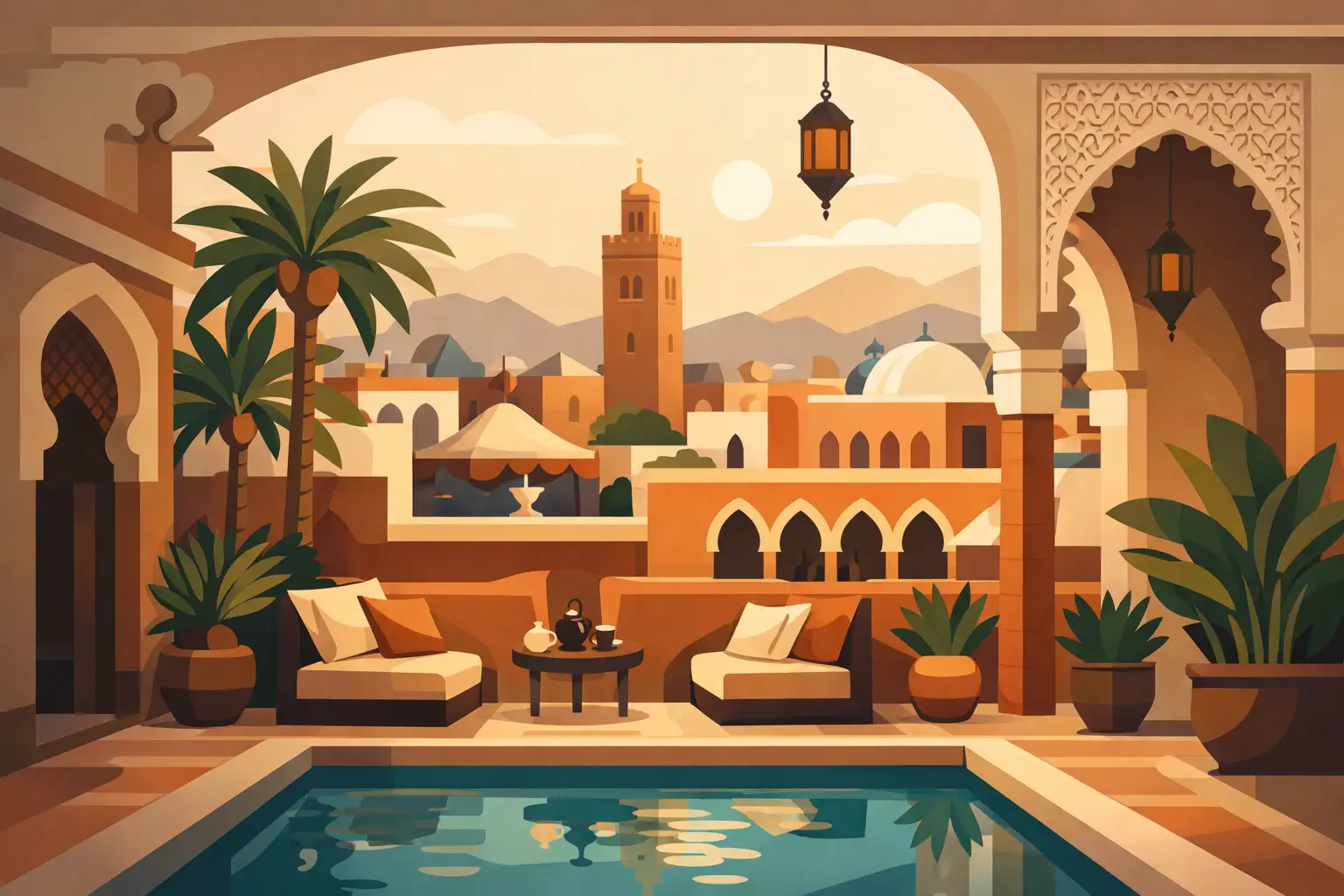
A Morocco riad review should tell you more than whether the tiles were beautiful. Nearly every well-photographed riad has a carved doorway, a fountain, and a rooftop view. What determines whether you will love the experience is quieter: how easily you can find it after dark, whether your room gets morning light or street noise, and whether the team makes a historic medina feel welcoming rather than overwhelming.
For travelers who want Morocco to feel personal, a good riad can be one of the most memorable parts of the journey. It replaces the anonymous rhythm of a large hotel with the sound of tea being poured in the courtyard, the scent of orange blossom, and conversations with hosts who know the neighborhood. But a riad is not automatically the right choice for every night, every traveler, or every city. Here is how to judge the experience with clear expectations.
What a Morocco Riad Review Should Look For
A riad is a traditional Moroccan home built around an interior courtyard or garden. Many have been thoughtfully restored into intimate guesthouses, often with only a handful of rooms. From the outside, the building may appear modest, even plain. Inside, it can reveal zellij tilework, plaster carving, painted cedar, and a calm center that feels far removed from the activity outside its door.
That contrast is the point. In the medinas of Marrakech and Fes, daily life is close at hand: vendors calling out, scooters slipping through narrow lanes, the occasional donkey cart, the aroma of grilled meats and fresh bread. A riad offers a retreat within that living city rather than a separate resort environment.
Still, the word “riad” covers a broad range. Some properties are polished boutique hotels with full-service dining, attentive staff, climate control, and carefully designed rooms. Others are simpler family-run guesthouses with genuine warmth but fewer amenities. Photos alone rarely reveal the difference. Look past the courtyard and assess the details that affect your rest, comfort, and confidence.
Location Is Part of the Experience
A central medina address places historic sites, souks, and neighborhood cafés within walking distance. It also means vehicles generally cannot reach the front door. Depending on the riad, you may walk a few minutes through alleys after your transfer drops you near a gate.
For many travelers, that walk is a worthwhile trade-off. It creates the feeling of arriving somewhere distinct, not simply checking into a hotel beside a busy road. Yet travelers with limited mobility, heavy luggage, or anxiety about navigating unfamiliar streets should prioritize a property with reliable porter assistance and a clear, escorted arrival plan.
In Marrakech, a riad near the central sights can be convenient but may sit in a busier, noisier pocket of the medina. In Fes, the lanes are more labyrinthine and the terrain can be steeper. A knowledgeable local guide makes an enormous difference, especially on the first day. On a thoughtfully organized small-group journey, you can enjoy the character of a medina stay without bearing the pressure of finding your way alone.
Room Comfort Varies More Than the Courtyard
Historic homes were not designed like modern hotels. Rooms can differ significantly in size, layout, natural light, storage, and bathroom configuration. A beautiful suite on an upper floor may involve several flights of stairs. A ground-floor room may be easier to reach but closer to courtyard conversation or early breakfast activity.
Ask practical questions before booking: Does the room have reliable air conditioning or heating for the season? Is there an enclosed shower with consistent hot water? Are beds configured as one large bed or two separate beds? Is there a safe, hair dryer, and enough space for luggage? These are not fussy details. They shape how restorative the stay feels after a full day among palaces, markets, museums, and mountain roads.
Sound deserves special attention. Courtyards carry voices upward, rooftop terraces may host dinner, and the call to prayer is part of life in Morocco. Most travelers find these sounds evocative, but light sleepers may prefer a room away from common areas and a pair of earplugs. A riad can offer deep tranquility, though not the soundproofed predictability of a major international hotel.
The Service That Makes a Riad Memorable
The strongest riads combine beautiful architecture with thoughtful hospitality. Staff may welcome you with mint tea, arrange luggage assistance, recommend a nearby hammam, or prepare an early breakfast before a morning departure. This kind of care is often what guests remember long after the tile colors blur together.
Service styles differ. A small riad may have limited staff overnight, while a larger boutique property can offer a more formal front desk and round-the-clock support. Neither model is inherently better. It depends on whether you value a quiet, home-like atmosphere or want more hotel-style services close at hand.
Breakfast is another revealing detail. Many riads serve Moroccan breads, msemen pancakes, eggs, yogurt, fruit, honey, olive oil, and strong coffee on the rooftop or beside the courtyard. It is generous, flavorful, and a lovely introduction to the day. Travelers with dietary needs should communicate them in advance, especially for gluten-free, vegan, allergy-sensitive, or medically necessary meals. The best properties respond candidly about what they can accommodate.
Atmosphere Versus Convenience: The Real Trade-Off
A riad stay is especially rewarding for travelers who want cultural texture without giving up comfort. It is not a staged version of Morocco. You are sleeping inside the medina, with its rhythms and occasional imperfections, while returning to a space designed for rest.
The trade-off is convenience. Elevators are uncommon. Pool areas, if present, tend to be compact. Vehicle access is limited. Some rooms have lower light because inward-facing architecture keeps the home cool and private. If a resort pool, expansive grounds, gym access, or effortless car pickup matters most, a modern hotel may be the better fit for part of your itinerary.
There is also no rule that says every night must be spent in a riad. A balanced Morocco itinerary might pair intimate medina stays in Marrakech and Fes with a desert camp near the Sahara, a kasbah-style lodge in the Atlas Mountains, or a coastal hotel in Essaouira. Each setting adds a different perspective on the country.
How to Choose With Confidence
When comparing properties, prioritize the experience behind the images. Read recent comments for patterns, not isolated complaints. A one-time issue can happen anywhere; repeated notes about weak Wi-Fi, hard-to-find entrances, noisy rooms, cold showers, or inconsistent service deserve attention.
Before confirming a stay, make sure these points are clear:
- The riad can arrange or coordinate an arrival transfer and porter service from the nearest vehicle access point.
- Your room category, bed setup, stairs, and bathroom arrangement suit your needs.
- The property can support any essential dietary, mobility, or accessibility requirements.
- You understand whether dinner, alcohol service, a pool, or late-night staff are available.
- You have a dependable contact person or local guide for arrival, departures, and medina navigation.
For guests traveling with Atlas Global Tours, accommodation choices are considered as part of the larger journey, not selected simply for visual appeal. The goal is to place you close to Morocco’s living heritage while ensuring transfers, local insight, and daily logistics are handled with care.
Who Will Love a Morocco Riad?
Riads tend to appeal most to culturally curious travelers, couples seeking a sense of place, solo travelers who appreciate personal hospitality, and small groups who prefer character over standardization. They are ideal for people who can enjoy a little unpredictability when it comes with a richer setting: the turn down a lantern-lit lane, the quiet of a tiled courtyard, the first view across a city of rooftops.
They may be less suitable for travelers who need fully step-free access, demand identical room layouts, or want a large property with every amenity on site. Being honest about those preferences does not make a trip less adventurous. It helps you choose accommodations that let you be present for what matters.
On your first evening in a Moroccan riad, take a few minutes before dinner to sit in the courtyard or on the roof. Listen past the bustle of the medina. That small pause often turns a beautiful place to sleep into the moment when Morocco begins to feel close.