
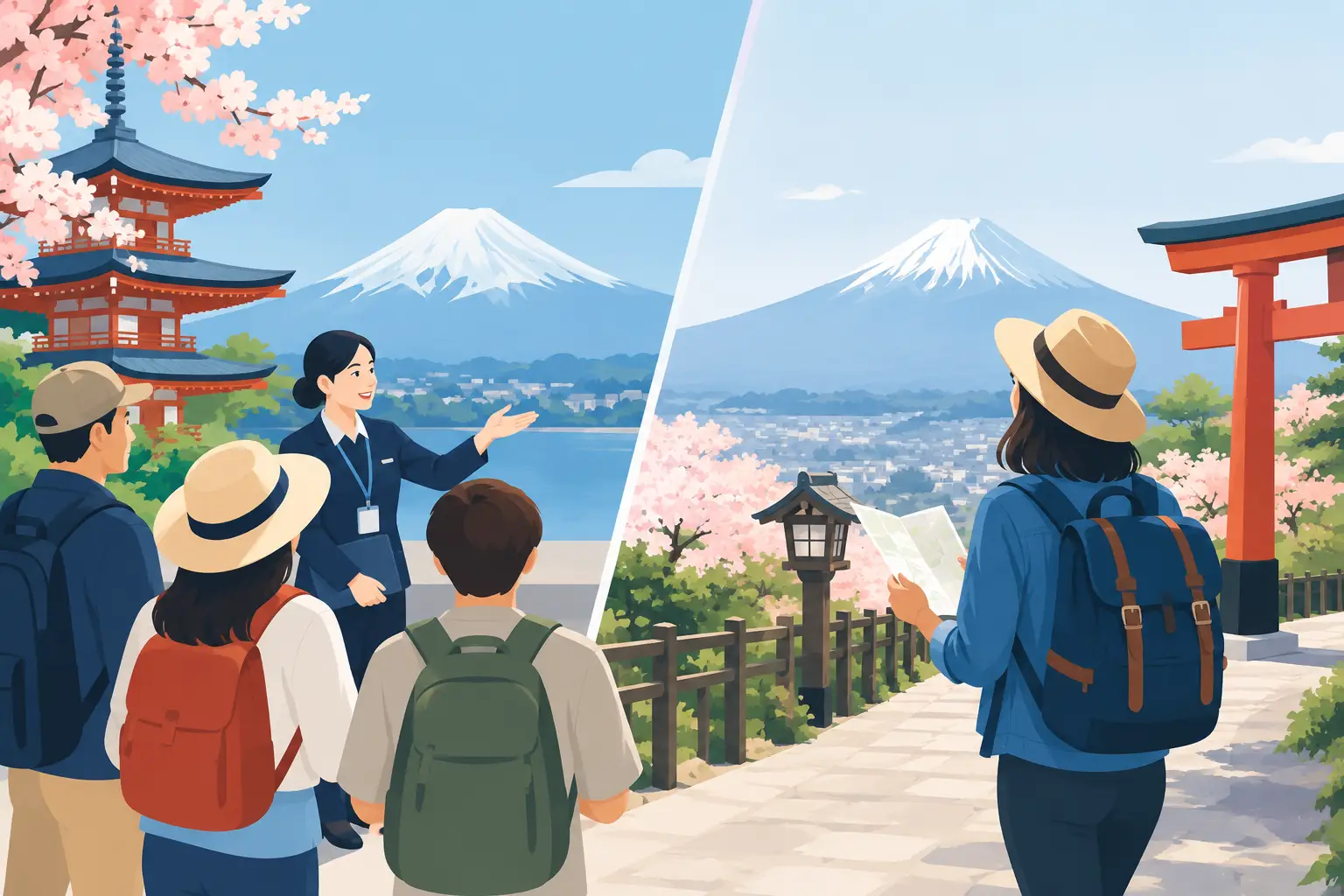
A missed platform change in Tokyo can cost only 10 minutes. A poorly timed rail connection between Kyoto and a rural inn can reshape an entire day. That contrast gets to the heart of Japan tours versus independent travel: Japan is remarkably easy to visit, yet the details behind a meaningful, well-paced journey can be more demanding than they first appear.
Japan rewards curiosity. It is a place where a quiet morning at a Shinto shrine, an unmarked neighborhood noodle counter, and a centuries-old craft tradition can become as memorable as the headline sights. The question is not whether Japan is worth seeing independently or with a group. It is which approach lets you experience it with the right balance of freedom, cultural connection, and peace of mind.
Japan Tours Versus Independent Travel: What Changes Most
The biggest difference is not simply who books the hotels or buys the train tickets. It is who carries the planning responsibility when the itinerary becomes complicated.
Independent travelers make every decision themselves, from choosing which neighborhood to stay in to deciding whether a regional rail pass makes sense. That can be deeply satisfying for travelers who enjoy research and are happy to adjust plans as they go. Japan’s rail network, clean cities, and strong visitor infrastructure make this more achievable than in many destinations.
A guided small-group tour transfers the complicated decisions to specialists while preserving the experiences that brought you to Japan in the first place. Your route, accommodations, major transportation, and key reservations are handled in advance. More importantly, a knowledgeable local guide can explain what is happening around you, from shrine etiquette to the regional character of a meal, rather than leaving you to piece it together from a guidebook after the fact.
For many travelers, the choice comes down to this: Do you want Japan itself to be the focus of your energy, or do you enjoy making the logistics part of the experience?
The Real Cost Is More Than the Trip Price
Independent travel can look less expensive at first, particularly if you book modest hotels, eat casually, and move at your own pace. It can be an excellent value for travelers comfortable comparing options and accepting occasional compromises. Japan also offers superb convenience-store meals, efficient public transportation, and accommodation choices across a wide range of budgets.
But a low nightly rate does not always tell the whole story. Popular restaurants may require advance reservations. Desirable ryokan stays can sell out far ahead. Luggage forwarding, local transit, airport transfers, attraction tickets, and last-minute changes all add both cost and time. A mistake in location can mean spending more of each day in transit than expected.
A thoughtfully designed tour generally costs more upfront because it bundles planning, coordination, transportation, accommodations, guided experiences, and support. The value is not that every moment is scheduled. It is that someone has already made the decisions that prevent wasted time and avoidable expenses. Travelers who want a culturally rich trip without turning evenings into planning sessions often find that this structure is worth the investment.
Flexibility Means Different Things in Japan
Independent travel offers maximum control. You can spend a second afternoon browsing bookstores in Jimbocho, skip a museum when the weather is perfect for a garden stroll, or change dinner plans on a whim. If you return to Japan often, speak some Japanese, or have a very specific personal interest, that freedom can be ideal.
Still, flexibility is not always the same as spontaneity. In high-demand destinations such as Tokyo, Kyoto, and Hakone, the best accommodations and experiences may need to be secured months in advance. During cherry blossom season, autumn foliage, and major holiday periods, last-minute freedom can narrow quickly.
A well-run small-group tour creates a different kind of flexibility. The foundation is organized, but the experience should leave room for conversation, local discoveries, and personal pace. With groups capped at around 10 travelers, there is more ability to adapt than on a large coach itinerary. You can enjoy the reassurance of a clear plan without feeling herded from one photo stop to the next.
Cultural Access Is Where Guidance Can Matter Most
Japan is welcoming, safe, and wonderfully navigable, but its cultural nuance is easy to miss. Bowing customs, bathing etiquette at an onsen, restaurant norms, and the quieter rhythms of religious sites all become more meaningful when someone explains the context with care.
Independent travelers can absolutely build authentic connections, especially by learning a few Japanese phrases, slowing down, and choosing locally owned businesses. The trade-off is that the discovery process requires more preparation and confidence. Translation apps are useful, but they cannot replace a conversation with a local guide who knows the people, places, and stories behind an experience.
On a culturally focused tour, a guide is not simply there to point out landmarks. They help turn a temple visit into an understanding of living traditions. They can introduce regional foods beyond the most obvious dishes, explain why a particular neighborhood developed as it did, and help travelers approach local customs respectfully. This is especially valuable outside the major cities, where English-language information can be limited and the most rewarding experiences may not be obvious online.
Convenience, Confidence, and the Unexpected
Japan is one of the safest countries many Americans will visit, but every trip has variables. A flight delay, sudden weather disruption, misplaced passport, illness, or train cancellation becomes much easier to manage when you have responsive support and someone who understands the local system.
Independent travelers need to solve these moments themselves. For experienced travelers, that may be part of the adventure. It also requires patience, travel insurance, a working phone plan, and enough flexibility in the itinerary to absorb setbacks.
With a guided journey, you are not alone when plans change. A trusted team can coordinate adjustments, communicate clearly, and help protect the experience you traveled so far to have. That reassurance matters for first-time visitors to Japan, solo travelers, couples celebrating a special milestone, and anyone who prefers to travel confidently without giving up depth.
Who Should Choose Independent Travel?
Independent travel is often the right fit if you enjoy detailed research, want several unstructured days in one place, or are visiting Japan with a highly specialized purpose. It can also suit travelers who have been before and want to return to favorite neighborhoods at their own rhythm.
It is particularly appealing when your schedule is open-ended. A traveler spending three weeks in Japan can afford to linger, recover from a wrong turn, and follow a recommendation without worrying about missing the next destination. The more time you have, the more forgiving self-planned travel becomes.
That said, independence works best when it is intentional. Book popular restaurants and special stays early, avoid trying to see too much in too little time, and leave room for the practical realities of moving through large stations and unfamiliar cities.
Who Benefits Most From a Small-Group Japan Tour?
A small-group tour is a strong choice for travelers who want to see Japan thoughtfully but do not want to spend months assembling the route. It works especially well for a first visit, when the country offers so many possibilities that narrowing the itinerary can feel overwhelming.
It is also a compelling option for travelers who value companionship without wanting a crowd. Sharing a meal, a scenic train ride, or a local craft experience with a small circle of curious travelers can add warmth to the journey. At the same time, intimate group sizes make it easier to ask questions, receive personal attention, and move through each destination with less friction.
The right tour should feel curated rather than crowded. Look for a measured pace, accommodations with a sense of place, local guides who offer real insight, and an itinerary that balances essential sights with quieter encounters. Atlas Global Tours builds its Japan journeys around that balance, pairing iconic destinations with meaningful local experiences in groups of no more than 10 travelers.
Choose the Trip That Matches How You Want to Feel
There is no single correct way to travel through Japan. Independent travel offers ownership, open space, and the satisfaction of building every day yourself. A guided small-group tour offers expert planning, cultural interpretation, and the confidence to be fully present.
If your ideal memory is finding your own way through Tokyo with no timetable beyond dinner, independent travel may be right for you. If your ideal memory is sitting down to a regional meal, understanding the story behind it, and knowing tomorrow’s details are already thoughtfully handled, a small-group journey may offer more of what you came for.
Choose the approach that leaves you curious rather than exhausted. Japan has enough beauty, flavor, history, and quiet surprise to fill every available moment. The best trip is the one that gives you room to notice it.