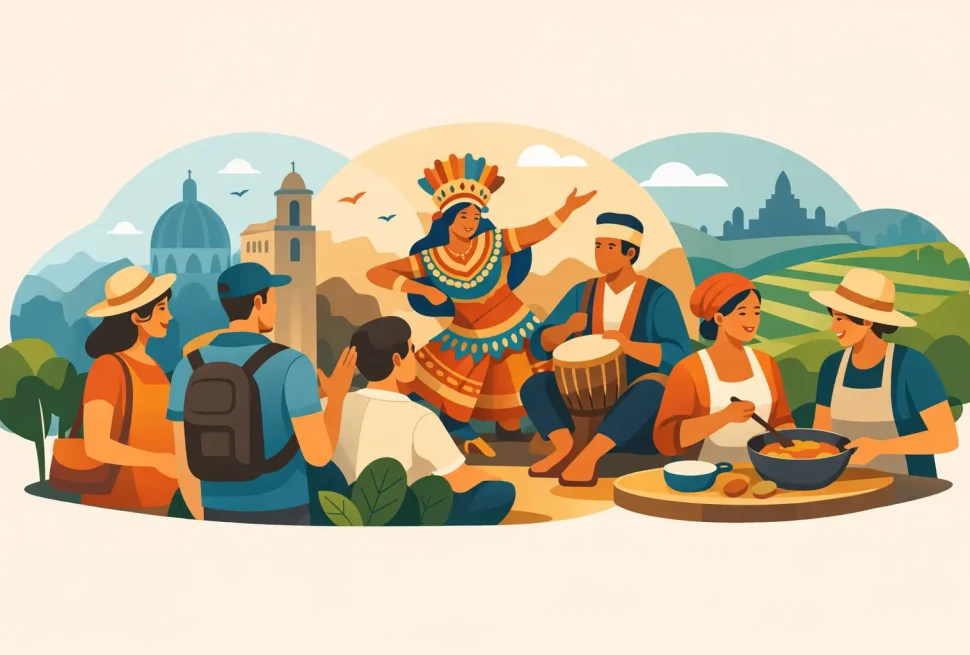

You can learn a lot about a trip by asking one simple question: how many people are in the group? That detail shapes everything from how quickly you move through a city to whether dinner feels like a rushed stop or a genuine evening of local connection. This small group travel guide is for travelers who want more than transportation and hotel bookings – they want cultural depth, thoughtful pacing, and the confidence that the experience will feel personal.
For many travelers, the appeal of a guided tour is obvious. The planning is handled, the logistics are organized, and there is a clear structure from arrival to departure. But not all guided travel feels the same. Large coach tours can be efficient, yet they often trade intimacy for volume. Independent travel offers freedom, yet it can demand a great deal of time, research, and on-the-ground decision-making. Small group travel sits in a very different space – one that offers support without flattening the experience.
What a small group travel guide should really help you decide
A useful small group travel guide should do more than define the format. It should help you decide whether this style of travel matches the way you want to experience a destination. In practical terms, small group travel usually means limited group sizes, stronger interaction with the guide, and itineraries that can be more immersive because they are not built around moving 40 people at once.
That difference matters more than many travelers expect. In places like Morocco, Japan, Jordan, or Turkiye, the value of a smaller group often shows up in moments that cannot be mass-produced. It may be the ability to ask more questions during a walk through an old medina, spend unhurried time at a family-run restaurant, or adjust the pace slightly when a site deserves longer than expected. Those moments tend to become the memories people talk about later.
Why small group travel feels different
The most immediate difference is access. Smaller groups can move through neighborhoods, markets, historic sites, and local venues with less friction. Boarding transport is easier. Hotel check-ins are less chaotic. Meals are more enjoyable because conversation is possible, and the setting does not need to accommodate a crowd.
The second difference is the quality of guidance. On a smaller tour, local guides are not simply delivering rehearsed commentary through a microphone. They have more room to engage, answer questions, and provide context that helps a place make sense beyond the postcard version. For culturally curious travelers, that shift is significant. You are not just seeing a destination. You are understanding it with help from someone who knows how history, customs, food, religion, and daily life connect.
Then there is flexibility. That does not mean a small group tour is unstructured. Strong planning still matters. It means the itinerary can breathe a little. If traffic changes the day, if a market visit runs longer because the group is genuinely engaged, or if a restaurant recommendation from a local guide turns out to be too good to skip, a smaller group can often adapt more gracefully than a large one.
The trade-offs are real
Small group travel is not automatically perfect for everyone. If your top priority is the lowest possible price, a large coach tour may cost less because expenses are spread across more travelers. If you want complete spontaneity every day, independent travel may suit you better. And if you prefer anonymity, a smaller group can feel more social because you will naturally get to know the other travelers.
That said, many people find the trade-off worthwhile. Paying more for a smaller group often means better pacing, more meaningful access, and a stronger sense that the trip was designed for human experience rather than crowd management. For couples, solo travelers, and friends traveling together, that balance can be especially attractive. You get companionship and expert structure without feeling absorbed into a machine.
How to judge a small group tour before you book
Not every company defines small group travel the same way, so it is worth looking past the headline. A tour that says small group but regularly runs with 18 or 20 people will feel very different from one capped at 10. That gap affects transportation, dining, guide interaction, and overall atmosphere.
Look closely at the itinerary design. The strongest small group journeys combine major highlights with lesser-known experiences that would be harder to execute well in a larger format. A well-planned trip should show cultural intention, not just a list of famous stops. If every day reads like a race from one landmark to the next, the group size alone will not fix that.
Guide quality also deserves attention. The right guide is not just informative. They are a bridge between travelers and place. They help you read a destination with more nuance, whether that means understanding local etiquette in Oman, architectural layers in Armenia, or the living religious traditions that shape daily life in India or Nepal.
Operational clarity matters too. Clear communication before departure, transparent inclusions, realistic pacing, and strong on-the-ground support are all part of a well-run experience. Travelers often focus on the visible parts of a tour, but peace of mind usually comes from the invisible parts being handled well.
A small group travel guide to the experience itself
Once you are on the road, small group travel tends to create a very particular rhythm. Mornings are simpler because there is less waiting and less herding. Transit between places is smoother. Questions that would get lost in a larger group can be answered in the moment. Even the energy of the day changes. Instead of feeling processed through a schedule, you feel accompanied through it.
This becomes especially valuable in destinations where cultural context is essential. A souk, a temple complex, a mountain village, or an archaeological site can be visually impressive on its own. But with a skilled local guide and a small group that can actually pause, ask, and absorb, the experience becomes layered rather than superficial.
There is also a social advantage that many travelers appreciate more than they expect. In a group of 8 to 10, conversations happen naturally. Solo travelers often feel included quickly. Couples get shared experiences without losing the sense of intimacy they wanted from the trip. You are large enough to benefit from group travel, but small enough that no one feels like a number.
Who small group travel suits best
This format tends to work best for travelers who value substance over speed. If you care about food, local stories, architecture, history, and daily culture, a smaller group gives those interests room to matter. It also suits travelers who want structure without surrendering the feeling of discovery.
It is a strong fit for people visiting destinations that may feel logistically complex on their own. Multi-stop journeys through North Africa, the Middle East, the Balkans, or parts of Asia often involve transportation coordination, local timing, language differences, and site sequencing that are far easier to enjoy when expertly handled. In those cases, the right tour is not limiting freedom. It is removing friction so you can be present.
Travelers who want complete luxury at every moment may need to evaluate carefully, since small group travel can vary in style from comfortably premium to more adventure-oriented. The best operators are clear about that. Small group does not describe one standard of accommodation or pace. It describes a style of travel built around intimacy, attention, and a more human scale.
Why the right operator matters as much as the itinerary
A thoughtfully built small group tour depends on more than destination knowledge. It depends on judgment. The company has to know which iconic sites are truly worth the time, which hidden experiences add depth rather than novelty, and how to balance cultural immersion with comfort and reliability.
That is where experienced planning makes a visible difference. A well-designed tour should feel smooth without feeling generic. It should reassure without over-controlling. At Atlas Global Tours, that balance is central to the way intimate journeys are built – with groups capped at 10, culturally rich itineraries, and local guides who help travelers connect with places in a more meaningful way.
For travelers who want to see the world without skimming across its surface, small group travel offers a compelling middle path. It preserves the ease of organized touring while making room for curiosity, conversation, and real encounters. Choose it well, and the trip does more than run on time – it stays with you long after you return home.