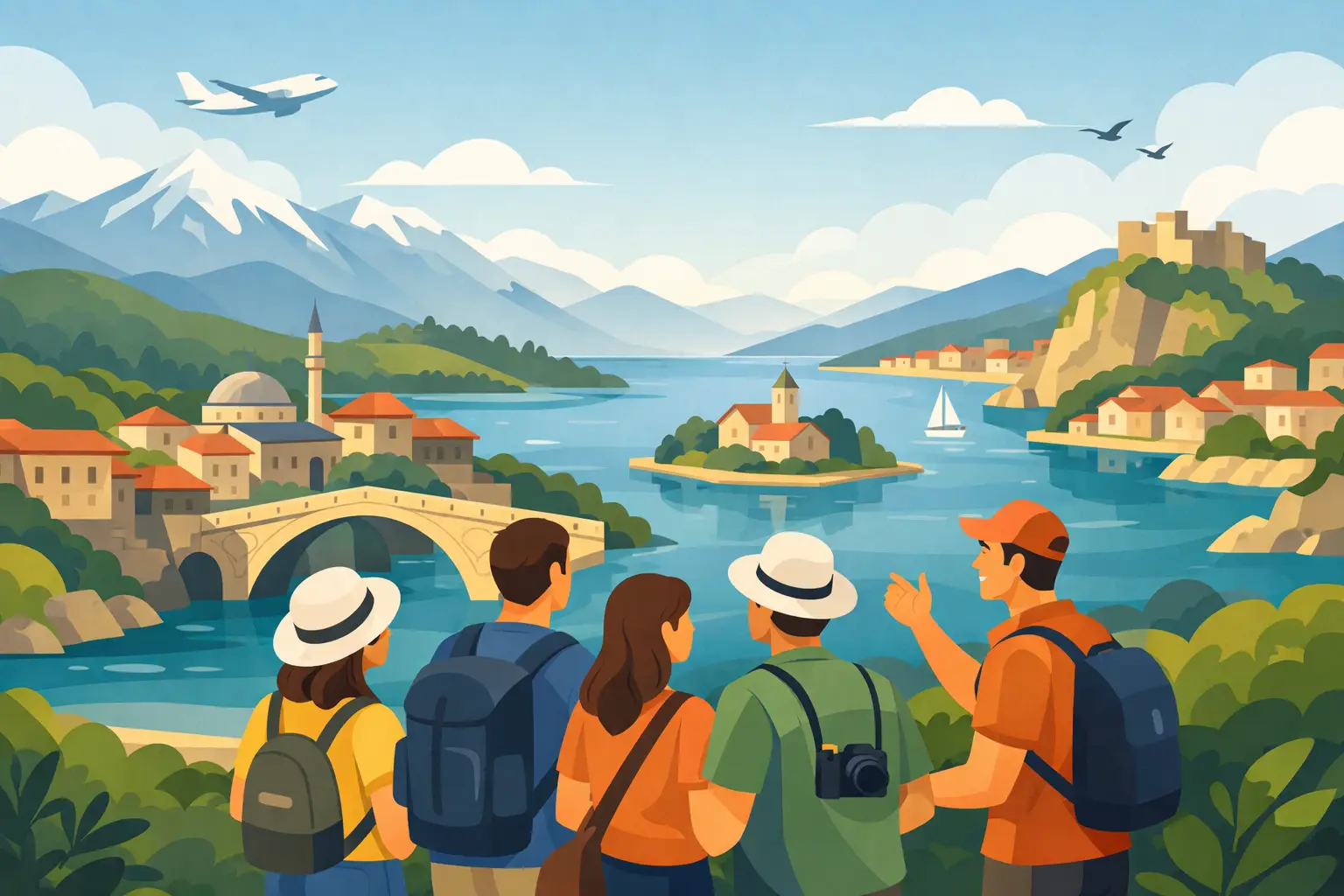
One day you are standing in a stone old town on the Adriatic, and a few days later you are sharing lunch in a mountain village, listening to stories that do not appear on standard sightseeing scripts. That is the real appeal of balkan small group tours. The region is layered, diverse, and occasionally logistically tricky, which makes a well-designed small-group journey far more rewarding than a rushed, one-size-fits-all itinerary.
What makes Balkan small group tours different
The Balkans are not a single travel experience. They are a mosaic of languages, religions, cuisines, empires, and landscapes packed into a relatively compact part of Europe. You can move from Ottoman-influenced bazaars to Venetian coastal towns, from Orthodox monasteries to contemporary city cafes, often within a single trip.
That variety is exactly why small-group travel works here. In a region where local context matters, the right guide does more than point out landmarks. They help travelers understand why a bridge matters in Mostar, why food changes from one border to the next, and how history still shapes daily life in places like Sarajevo, Kotor, or Skopje.
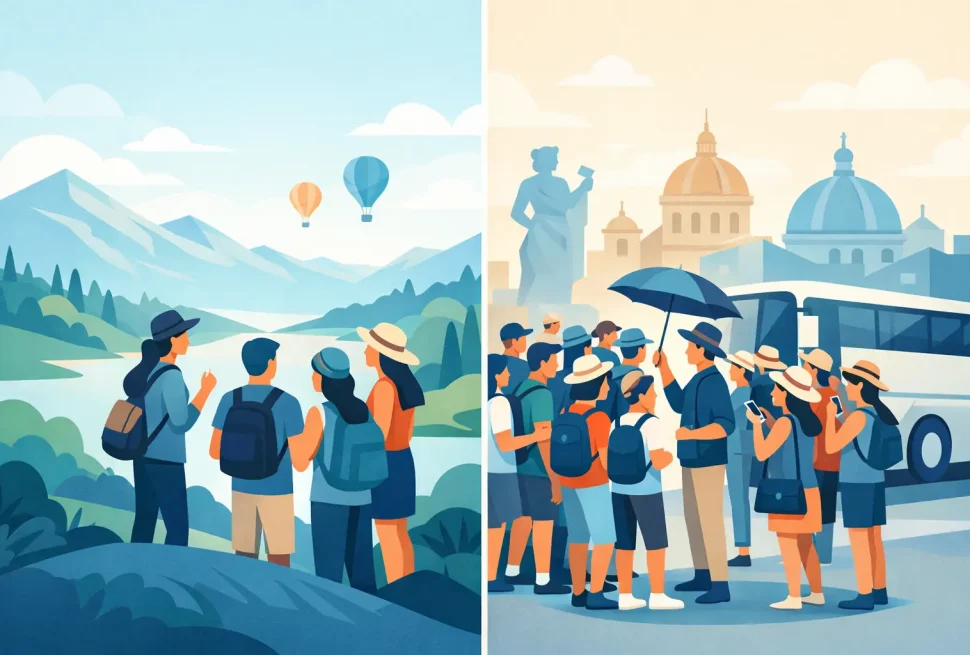
Large coach tours can cover the distance, but they often flatten the experience. The Balkans reward a more attentive style of travel – one that leaves room for conversation, regional nuance, and the occasional spontaneous stop that turns into a highlight.
Why the small-group format suits the Balkans
In practice, group size changes almost everything. A smaller group moves faster through border crossings, checks into boutique hotels more smoothly, and can eat in locally loved restaurants that would never accommodate a busload of travelers. That means less waiting, less herding, and more time actually experiencing the destination.
There is also a social advantage. Many travelers interested in the Balkans are not looking for a loud, highly scheduled group atmosphere. They want companionship and shared discovery without feeling swallowed by the group. A smaller format strikes that balance well, especially for couples, solo travelers, and friends who want structure without losing a sense of personal space.
This style also tends to support better pacing. The Balkans are best appreciated when a trip includes both major sites and quieter moments – coffee in a historic square, a conversation with a local host, a scenic drive that is not treated as dead time. Smaller groups make that rhythm easier to maintain.
A region where logistics matter more than people expect
The Balkans can look simple on a map, but travel here is not always plug-and-play. Border crossings vary. Road travel is often the best option, but journey times can shift. Some destinations are best reached through a combination of careful driving, local coordination, and realistic timing.
That is one of the strongest arguments for organized Balkan small group tours. You get the richness of a multi-country itinerary without spending your vacation trying to decode transport schedules, rental car rules, or cross-border planning. Instead of worrying about how to get from Albania to North Macedonia or how much time to allow between Montenegro and Bosnia, you can stay focused on the experience itself.
For many U.S. travelers, that peace of mind is not a minor benefit. It is what makes the trip possible in the first place. The region is deeply rewarding, but it asks for good planning. When that planning is handled well, the Balkans feel exciting rather than stressful.
Cultural depth is the real reason people choose this style
The best balkan small group tours are not simply efficient. They are culturally intelligent. They are designed around the idea that the Balkans deserve more than a checklist of capitals and viewpoints.
That might mean learning how different faith communities shaped the same city over centuries. It might mean seeing how Yugoslav history is remembered differently across borders. It might mean understanding why local wine traditions, family hospitality, and regional cooking vary so much from one stop to the next.
This is where local guides make a genuine difference. A strong guide adds context, but just as importantly, they create access. They know when a market is at its liveliest, which family-run restaurant delivers the kind of meal travelers remember years later, and how to explain complex history without reducing it to a few tidy talking points.
For travelers who care about meaning, not just movement, that difference is substantial.
What to look for in Balkan small group tours
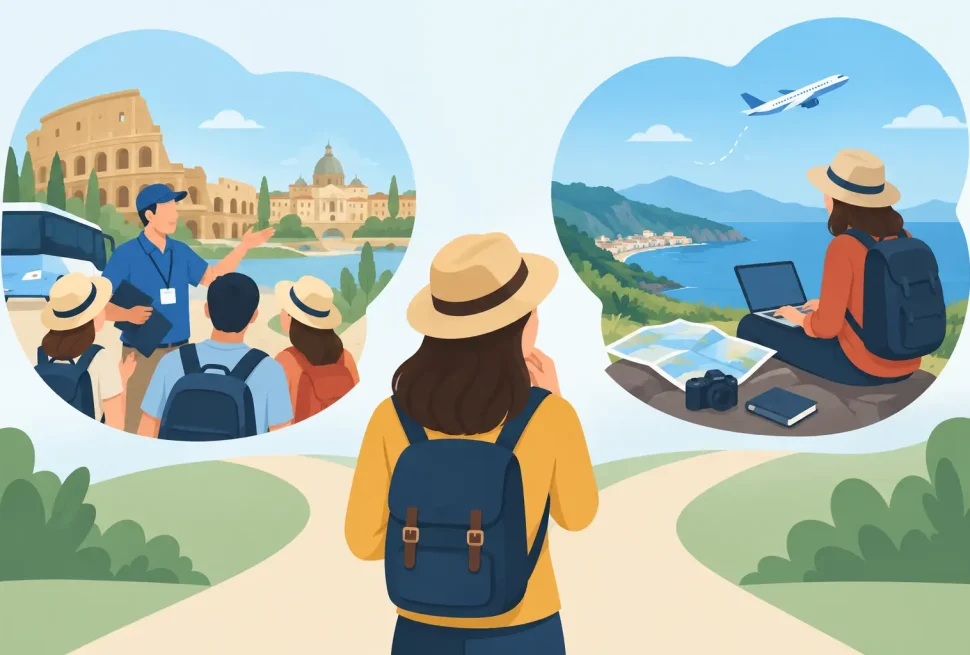
Not every small-group trip is built the same way. Some itineraries are small in headcount but still feel rushed and generic. Others are thoughtfully paced, with enough flexibility to feel personal while still being professionally managed.
A few things tend to separate strong tours from forgettable ones. Group size matters, but so does itinerary design. Look for journeys that balance well-known highlights with places that feel lived-in and local. A good route might include iconic stops such as Dubrovnik or Kotor, but it should also create room for inland towns, regional food experiences, and the kind of context that helps each stop connect to the next.
Accommodation style matters too. In the Balkans, smaller hotels and character-rich properties often fit the destination better than anonymous chain stays. They can make the trip feel more grounded in place, especially when paired with centrally located stays that let travelers walk, explore, and absorb the atmosphere after the day’s guided touring ends.
And then there is support. A well-run operator communicates clearly before departure, sets realistic expectations, and provides confidence throughout the trip. That is especially valuable in a region many travelers are visiting for the first time.
Who benefits most from this travel style
Balkan small group tours appeal to a wide range of travelers, but they are especially well suited to people who want depth without having to build every moving part themselves. If you are culturally curious, appreciate expert guidance, and prefer meaningful travel over mass tourism, this format fits naturally.
It works well for solo travelers because there is built-in community without the impersonality of a large group. It suits couples who want the ease of a guided journey but still value intimate experiences. It is also a strong choice for seasoned travelers who have done Europe before and want something more layered than the classic Western European circuit.
That said, expectations matter. If your ideal trip is completely unscheduled and highly independent, a guided itinerary may feel too structured. On the other hand, if you want every moment orchestrated with no walking, no complexity, and no cultural contrast, the Balkans may surprise you. The sweet spot is for travelers who want comfort, guidance, and smart planning, but still welcome authenticity and a bit of texture.
The best Balkan trips feel personal, not performative
One of the most common disappointments in travel is realizing that a destination has been reduced to a photo stop. The Balkans deserve better than that. They are a region of memory, resilience, hospitality, and extraordinary geographic range. The experience becomes much richer when the trip is designed to connect travelers with real places and real people, not just polished viewpoints.
That is why smaller groups matter so much here. They make it easier to hear the guide, ask better questions, adapt to the moment, and travel with a sense of presence rather than momentum alone. For a region with this much complexity, that is not a luxury. It is the difference between seeing the Balkans and understanding them.
For travelers who want that balance of immersion and reassurance, Atlas Global Tours reflects what this style should look like: thoughtfully curated itineraries, strong local guidance, and a group size that keeps the experience personal from start to finish.
The Balkans tend to stay with people. Not because they are easy to summarize, but because they are full of contrast, character, and human warmth. The right small-group journey gives you enough structure to travel confidently and enough openness to let the region speak for itself.