Armenia rewards travelers who pay attention. One moment you are standing in front of a first-century temple with mountain air moving across the gorge, and a few hours later you are seated at a family table learning why lavash is more than bread. That is exactly why small group Armenia tours appeal to travelers who want more than a checklist. In a country where history, faith, food, and hospitality are closely woven together, the size and style of your trip shape what you actually experience.
For many travelers, Armenia is not a place to rush through on a large coach with a microphone-led schedule. It is a destination that opens up through conversation, local context, and enough flexibility to linger when something feels special. A well-designed small-group journey creates space for all of that while still giving you the structure, guidance, and peace of mind that make international travel feel easy.
What makes small group Armenia tours different
The biggest difference is not just the number of people. It is the entire rhythm of the trip. When a group is capped at 10 travelers, the experience becomes more personal from the start. Transfers move faster, hotel check-ins feel smoother, and guides can spend less time managing logistics and more time helping you understand what you are seeing.
That matters in Armenia because the country is rich in layered detail. Monasteries are not simply beautiful sites on a hilltop. They are tied to political history, religious identity, manuscript traditions, and centuries of resilience. Markets are not just pleasant places to browse. They reveal regional produce, family recipes, and the daily habits that make a place feel lived-in rather than staged. In a smaller group, questions come naturally, and local guides have room to answer them thoughtfully.
There is also a practical advantage. Smaller groups can reach places and move at a pace that often feels difficult for larger tours. That does not mean every moment is spontaneous or unstructured. It means the itinerary has breathing room. If a viewpoint deserves ten more minutes, or a conversation with a local artisan becomes unexpectedly memorable, the day does not have to feel derailed.
Why Armenia is especially suited to small-group travel
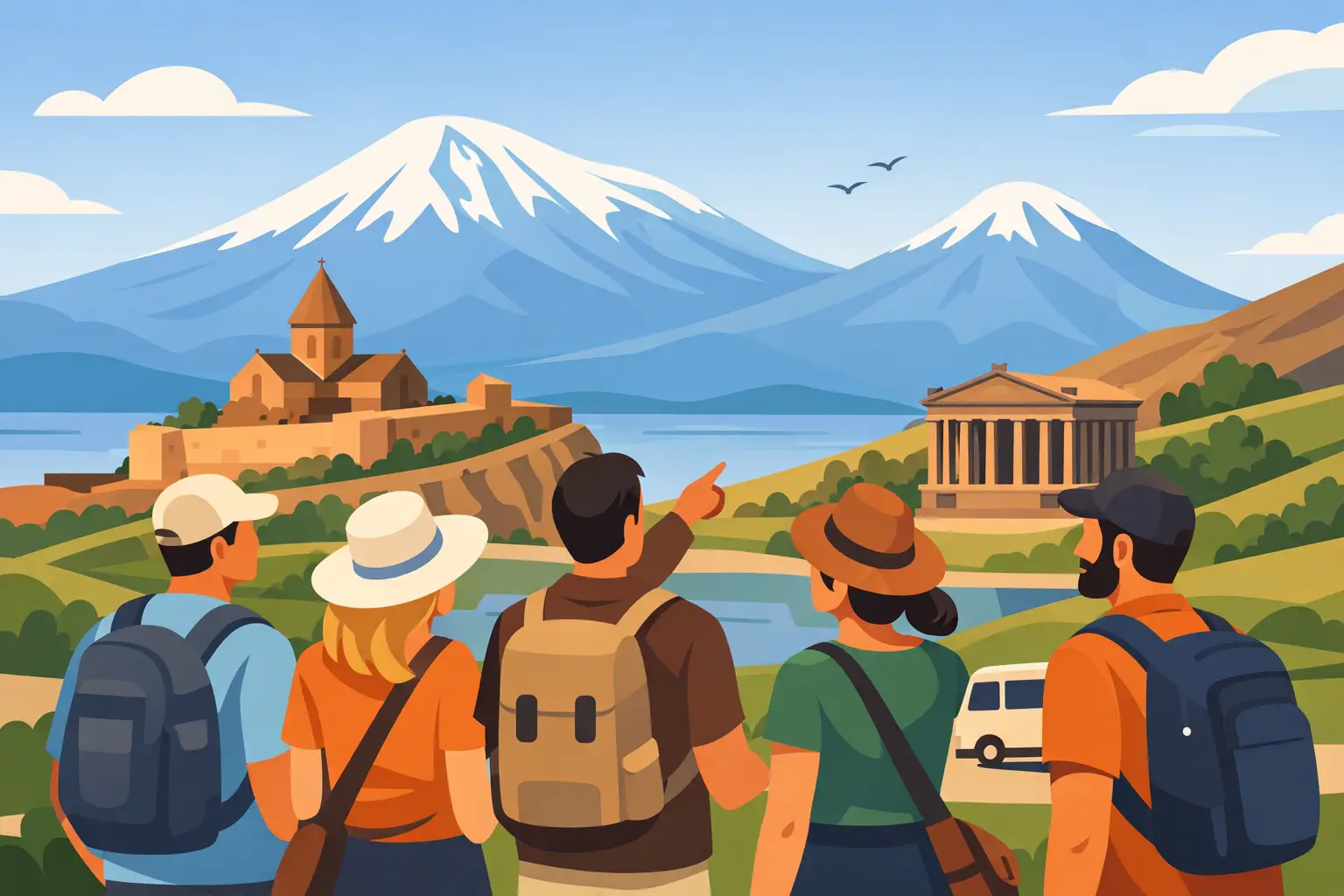
Some destinations are built for volume. Armenia is better appreciated through access, context, and human connection. Its appeal is not only in major landmarks such as Geghard Monastery, Garni Temple, Lake Sevan, or the Cascade in Yerevan. It is also in the quieter moments around them – roadside fruit stands, village bakeries, mountain scenery that changes by the hour, and stories that make ancient sites feel immediate.
That is why small group tours in Armenia often feel more rewarding than larger sightseeing programs. The country’s scale makes overland travel manageable, but the experience depends heavily on interpretation. A strong local guide can explain why one church matters architecturally, why another matters spiritually, and how Soviet history still shapes the modern landscape. Without that layer, travelers may see beautiful places without fully understanding them.
Armenia also attracts a certain kind of visitor. Many travelers come because they are curious, historically minded, or drawn to places that feel culturally distinct rather than overexposed. They want to engage, not just observe. Small-group travel matches that mindset well.
The balance between immersion and comfort
Independent travel in Armenia can absolutely be rewarding, especially for confident travelers with time to plan. But there is a trade-off. Once you begin arranging regional transportation, reliable drivers, hotel standards, timing between sites, and local interpretation, the trip can become more complicated than it first appears.
This is where a professionally organized small-group format has real value. You do not have to choose between depth and ease. The right itinerary handles the major logistics while preserving the feeling of discovery. That balance is especially useful for U.S. travelers who want cultural immersion but also want clear communication, dependable planning, and a sense that details have been handled properly.
Comfort, in this context, does not mean a detached luxury bubble. It means staying in well-chosen accommodations, moving efficiently between destinations, and knowing there is someone to turn to when questions come up. It also means traveling with people who are there for similar reasons. In a smaller group, the social dynamic tends to feel more relaxed and more compatible with a thoughtful travel experience.
What to expect from a strong itinerary
The best small group Armenia tours do not try to cram every possible stop into a single week. Instead, they focus on a well-paced route that combines headline sites with places that add texture. Yerevan usually anchors the trip, offering museums, cafes, markets, and a chance to understand contemporary Armenian life. From there, day trips or regional overnights reveal the country’s religious heritage, dramatic landscapes, and culinary traditions.
A strong itinerary will usually include Armenia’s signature landmarks, but the quality lies in how they are connected. Visiting Geghard and Garni is very different when the day also includes local food, historical interpretation, and time to absorb the scenery rather than rushing back to the vehicle. Lake Sevan can be a scenic photo stop, or it can become part of a wider story about geography, monastic life, and regional identity.
The pacing matters just as much as the sites. Too much free time can leave travelers doing the planning work themselves. Too little can make the journey feel mechanical. The best approach gives you guided depth where it matters most and enough personal time to enjoy Yerevan, take a walk, or sit down for an unhurried meal.
The role of local guides in small group Armenia tours
A great guide can change the entire trip. In Armenia, that is especially true because so much of the destination is carried through story, symbolism, and lived memory. Local guides do more than provide facts. They connect travelers to the emotional and cultural meaning behind the places on the itinerary.
In a small group, that connection tends to feel much more natural. You can ask about Armenian Christianity, regional cuisine, post-Soviet identity, family traditions, or current daily life without feeling like you are interrupting a lecture. The guide can respond to the group’s interests and adjust emphasis accordingly.
That is one reason premium small-group travel often feels worth the investment. You are not simply paying for transportation and hotel bookings. You are benefiting from curation, interpretation, and access that would be difficult to replicate on your own at the same level of consistency.
Who small-group travel is right for
This style of travel works particularly well for couples, solo travelers, and friends who want a richer experience without the stress of organizing every moving part themselves. It is also a strong fit for travelers who are comfortable traveling internationally but no longer want the friction of piecing everything together independently.
If your ideal trip means maximum independence and frequent plan changes, a guided format may feel too structured. That is the trade-off. But if you value cultural depth, efficient planning, and the reassurance of traveling with expert support, the structure becomes a benefit rather than a limitation.
Travelers who choose companies such as Atlas Global Tours are often looking for that exact middle ground. They want a journey that feels immersive and personal, but they also want professional planning, small group size, and the confidence that comes from a carefully managed experience.
How to judge whether a tour is truly small-group
Not every company uses the term the same way. Some tours advertise themselves as small-group while still operating at a size that changes the feel of the trip considerably. It is worth checking the actual cap, not just the label. A maximum of 10 travelers creates a very different environment than a group of 18 or 20.
It is also wise to look beyond group size alone. Ask how much of the trip is led by local guides, how much cultural context is built into the itinerary, and whether the route includes experiences that would be difficult to access on a standard large-coach program. The strongest tours are intentional in both design and delivery.
Armenia is a destination where that thoughtfulness shows. When the itinerary is built with care, the country does not feel like a string of monuments. It feels like a place with continuity – ancient, modern, resilient, and deeply welcoming.
If you are considering Armenia, choose the style of travel that gives the country room to speak for itself. In a small group, it usually does.