
You can stand in front of the Pyramids, take the photo, and leave with a checked box. Or you can understand how ancient beliefs shaped daily life along the Nile, share a conversation with a local guide who brings that history into the present, and leave feeling like Egypt became more than a landmark. That difference gets to the heart of what is immersive travel.
Immersive travel is a style of travel built around meaningful connection to a place rather than quick consumption of it. It prioritizes cultural understanding, local interaction, context, and a pace that allows experiences to register. Instead of moving rapidly from one attraction to the next, immersive travel creates room for travelers to engage with local food, traditions, neighborhoods, history, and people in a more genuine way.
That does not mean you have to rough it, travel without a plan, or skip major highlights. In fact, many travelers want the opposite. They want expert planning, strong logistics, and the reassurance of a well-run trip, but they also want to feel something deeper than a standard sightseeing itinerary usually delivers.
What Is Immersive Travel in Practice?
In practical terms, immersive travel is about how a trip is designed. The same destination can feel shallow or deeply engaging depending on the structure of the experience.
A conventional trip might focus on quantity – more cities, more monuments, more fast stops. An immersive trip tends to focus on quality. You still see the major sites, but you also understand why they matter, how they connect to local life, and what most visitors miss when they move too quickly.
That might mean spending time in a historic medina with a guide who explains the rhythms of daily commerce rather than simply pointing out architecture. It might mean learning why a religious site remains important to local communities today, not only what happened there centuries ago. It might mean sharing a meal in a setting where food becomes part of the story of the region.
Immersive travel is not defined by one activity. It is defined by depth.
The Difference Between Immersive and Traditional Tourism
Traditional tourism is not inherently bad. For many people, it is a practical entry point into a new destination. If you have limited time, a highlights-focused trip can still be enjoyable.
But there are trade-offs. Large coach tours often move on a rigid schedule, leaving little room for spontaneity, conversation, or meaningful local access. Independent travel can offer flexibility, but it also places the burden of planning, transportation, translation, and vetting entirely on the traveler. That can be rewarding, but it can also be exhausting, especially in destinations where logistics are complex.
Immersive travel aims for a better balance. It gives travelers structure without making the experience feel generic. It offers guidance without removing discovery. It replaces passive sightseeing with active understanding.
For many travelers, that balance matters more than ever. They do not want to feel herded through a destination, but they also do not want to spend precious vacation time solving every detail on the ground.
Why Immersive Travel Feels More Memorable
Most people do not remember a trip only by the number of landmarks they visited. They remember the guide who explained a tradition in a way that made it click. They remember the neighborhood bakery, the dinner conversation, the call to prayer echoing at sunset, the mountain village they would never have found on their own.
That is the emotional advantage of immersive travel. It tends to create stronger memories because it engages more than sight. You are not just looking at a destination. You are understanding its textures, rhythms, and perspectives.
This is especially true in places with layered histories and living traditions. In destinations across North Africa, the Middle East, Asia, and Europe, context changes everything. A ruin is more powerful when you understand the civilization behind it. A market is more interesting when you learn how it functions for locals, not just visitors. A regional dish means more when you know the geography, trade routes, or family customs that shaped it.
What Makes a Trip Truly Immersive?
Several elements tend to define immersive travel, and they are more specific than marketing language often suggests.
First, group size matters. Smaller groups generally allow for more flexibility, more conversation, and easier access to experiences that do not work well in a crowd. They also make it easier for travelers to ask questions, adjust the pace when appropriate, and feel personally supported.
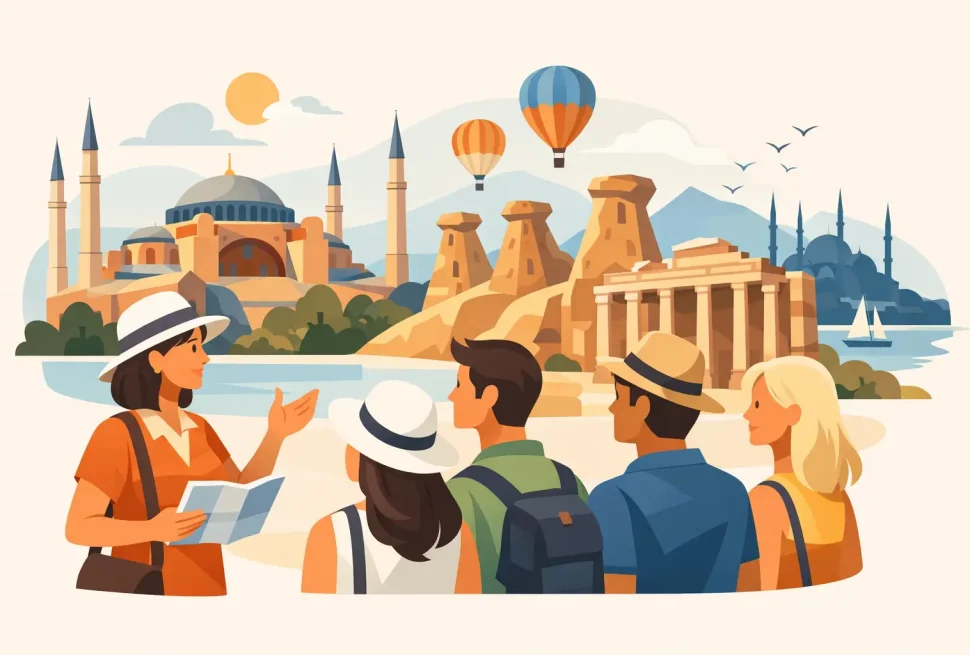
Second, local guidance matters just as much as the itinerary itself. A knowledgeable local guide does more than manage timing. They interpret culture, explain nuance, answer the questions you would not know to ask, and help bridge the gap between visitor and destination. That role can transform a trip from informational to genuinely personal.
Third, itinerary design matters. Immersive travel usually blends iconic sites with lesser-known places and builds in enough time for both. If every day is overpacked, there is little room for the kind of presence that immersion requires. On the other hand, if a trip is too loose, it may feel disorganized rather than meaningful. Good immersive travel is carefully paced.
Finally, authenticity matters, though this word can be overused. In real terms, it means experiences are chosen because they reflect the character of the place, not because they are easy to mass-produce for tourists.
What Immersive Travel Is Not
It helps to be clear about a few misconceptions.
Immersive travel is not the same as budget backpacking. You do not need to travel for months, sleep in hostels, or figure everything out as you go. Many travelers prefer comfort, strong organization, and clear communication. Those preferences do not make a trip less meaningful.
It is also not about avoiding famous places. Seeing Petra, Angkor, the Acropolis, or Kyoto’s historic districts can absolutely be part of an immersive experience. The question is whether those places are presented as photo stops or as part of a fuller cultural journey.
And immersive travel is not performative. It is not about collecting brag-worthy moments that look “local” on social media. Real immersion is quieter than that. It comes from attention, curiosity, and respectful engagement.
Why Small-Group Travel Works So Well for Immersion
For travelers who want depth without stress, small-group travel is often the strongest fit. It solves a problem many people run into when they try to travel meaningfully on their own: the desire for local access and cultural depth, paired with the need for reliability and comfort.
A well-run small-group tour can handle transportation, hotel coordination, timing, and on-the-ground support while still preserving the intimacy that immersive travel depends on. It becomes easier to enter local spaces respectfully, ask questions freely, and move through a destination without feeling rushed or anonymous.
This is where thoughtful tour design makes a real difference. Companies like Atlas Global Tours build around that middle ground – not mass tourism, not unstructured independent travel, but carefully curated journeys that combine major highlights with local perspective and personal attention.
For many U.S. travelers, that approach offers the best of both worlds. You can go deeper into a destination while still feeling that the trip is professionally managed from start to finish.
Is Immersive Travel Right for Everyone?
Usually, yes, but the ideal version depends on the traveler.
Some people want a highly active itinerary with constant movement and broad coverage. Others would rather spend more time in fewer places. Some love hands-on cultural experiences. Others prefer immersion through expert guiding, architecture, history, and food. There is no single formula.
The key is alignment. If your goal is simply to see as much as possible in the shortest time, immersive travel may feel slower than you want. But if you care about context, quality, and connection, it often feels far more rewarding.
It is also a strong choice for solo travelers and couples who want a richer experience without the friction of planning every step themselves. In destinations where language, distance, or logistics can be intimidating, immersive travel provides confidence without flattening the experience into something generic.
How to Recognize a Genuine Immersive Travel Experience
If a tour or itinerary claims to be immersive, look at the details rather than the label. Ask whether the group is truly small. See whether local guides play a central role. Notice whether the itinerary mixes well-known landmarks with regional texture. Check if the pace allows time to absorb what you are seeing.
Also pay attention to how the trip is described. If the focus is entirely on how many sites are covered, that is usually a sign that depth is secondary. If the language speaks to culture, context, local knowledge, and traveler support, that is often a better indicator.
A strong immersive experience feels intentional. Every part of the journey should help travelers connect more deeply with the destination rather than simply move through it efficiently.
Travel is a major investment of time, money, and trust. It is worth choosing experiences that stay with you after the flight home – not because you saw more, but because you understood more.