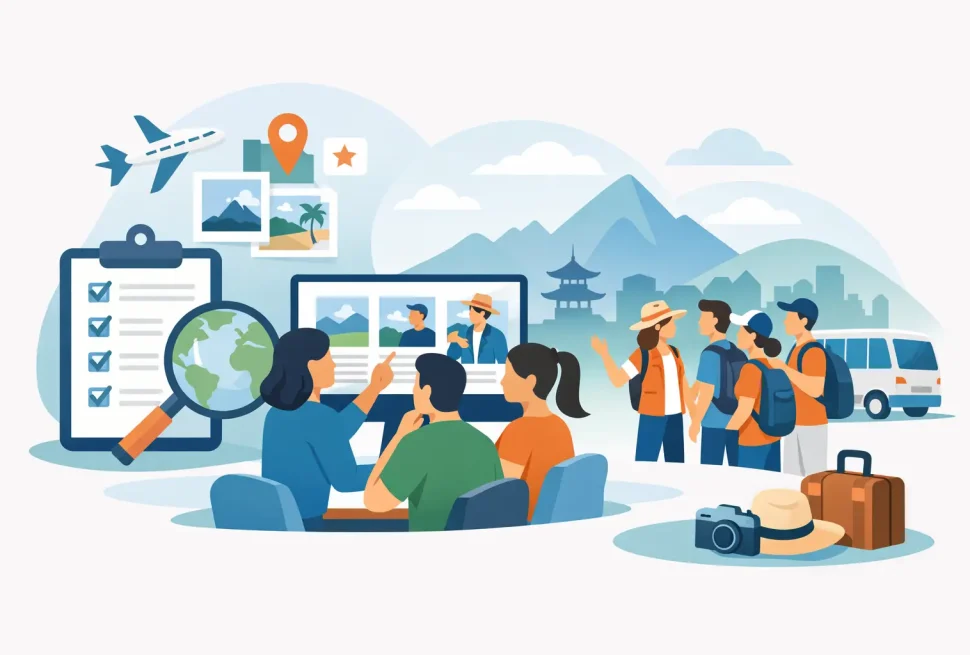

A well-planned journey can take you from the rose-red city of Petra to a family-run kitchen in rural Morocco without making you spend the trip deciphering train schedules, negotiating every transfer, or wondering what comes next. That is the appeal of understanding how small group tours work: the essential logistics are handled for you, while the experience still feels personal, culturally connected, and open to discovery.
Small group travel sits comfortably between independent travel and conventional large coach tours. You travel with a limited number of fellow guests, follow a thoughtfully organized itinerary, and benefit from local knowledge at every stop. The result is more time spent engaging with a destination and less time managing the mechanics of getting around it.
What Makes a Tour a Small Group Tour?
There is no universal industry definition, so the number matters. Some companies describe 18 or even 24 travelers as a small group. For a genuinely intimate experience, a much lower cap changes the character of the trip.
At Atlas Global Tours, groups are capped at 10 travelers. That size allows guides to learn names, answer individual questions, and adjust the day when conditions call for it. It also makes a practical difference: a group of 10 can enter a small restaurant, move through a historic neighborhood, or gather around a local artisan far more naturally than a full coachload.
You may travel as a couple, with a friend, or on your own. Solo travelers are part of the group from the first welcome dinner onward, while couples still have space for shared moments. The group itself often becomes part of the experience – a collection of curious people exchanging impressions over tea, at a market stall, or on the ride back from an extraordinary day.
How Small Group Tours Work From Booking to Departure
A small group tour begins long before the first airport transfer. The tour operator builds a route around the places, experiences, and practical connections that make a destination worth seeing. Accommodations, transportation, sightseeing, local guides, and key meals or activities are arranged in advance, then presented clearly so travelers understand the shape of the journey.
Once you book, you typically receive trip details that explain arrival information, what is included, required documents, packing considerations, and the activity level. This preparation is especially valuable in destinations where language, local transportation, entry procedures, or cultural customs may feel unfamiliar.
On the ground, a tour manager, local guide, or both helps coordinate the experience. Their role is much broader than pointing out monuments. A strong local guide provides context that turns a beautiful site into a meaningful one: why a temple was built, how a neighborhood has changed, what etiquette matters in a sacred space, or which dish is tied to a local celebration.
The best guides are also problem-solvers. If a road closes, a museum changes its hours, or weather affects the plan, they can respond quickly with local insight. That support offers peace of mind without making travelers feel managed every minute of the day.
A Typical Day on Tour
Most days have a clear rhythm. After breakfast, the group may visit a major landmark before crowds build, then continue with a cultural experience, scenic drive, or guided walk. There is usually time to pause for lunch, take photos, shop independently, or simply absorb where you are.
Afternoons may include a second visit, a hands-on activity, or time at the hotel before dinner. Not every hour needs to be programmed. Thoughtful itineraries balance iconic sights with room to breathe, because a meaningful trip is not a race through a checklist.
The pace depends on the destination. Exploring the medinas of Tunisia or Morocco may involve uneven streets and longer walks. A journey through Japan may include efficient train travel and full days in major cities. In Oman or Jordan, distances between landscapes can be part of the adventure. Before booking, review the itinerary carefully and ask about walking demands, drive times, and free time if those details affect your comfort.
What Is Usually Included – and What Is Not
One reason travelers choose a guided small group tour is that the major pieces are organized and priced in advance. Inclusions vary by itinerary, but they commonly cover hotels, in-destination transportation, guided sightseeing, entry fees for scheduled activities, some meals, and airport transfers at designated times.
International flights are often separate, which gives travelers more control over departure city, airline preferences, and frequent-flyer plans. Alcoholic beverages, personal purchases, optional activities, tips, travel insurance, and meals not listed in the itinerary may also be excluded.
This is not a drawback when the information is clear. In fact, knowing what remains at your discretion lets you budget realistically and choose how you want to spend free time. A good tour company will state inclusions and exclusions plainly rather than leaving travelers to uncover costs during the trip.
Why Local Guides Change the Experience
A destination can be visually impressive without being fully understood. Local guides provide the human context that makes travel more than sightseeing. They can explain daily life, history, faith, food traditions, regional differences, and the small details a guidebook rarely captures.
That connection also helps travelers approach a culture respectfully. You may learn when to dress more conservatively, how to greet a host, why a certain custom matters, or how to navigate a local market with confidence. These insights create richer interactions while helping you avoid treating communities as backdrops for photographs.
In some places, a tour may include different guides for different regions or specialized sites. This can be an advantage. A historian in Cairo, a food-focused guide in Istanbul, and a mountain guide in Nepal each bring knowledge shaped by the place you are experiencing.
Flexibility Without the Stress of Doing It All Yourself
Small group tours are structured, but structure does not have to mean rigidity. The itinerary establishes a dependable framework: where you will sleep, how you will travel, and which experiences are prioritized. Within that framework, smaller groups can often respond more easily to timing, weather, local opportunities, and the interests of the travelers.
Flexibility has limits, of course. A reserved site entry, domestic flight, or border crossing cannot simply be moved on a whim. Travelers who want complete control over every morning and every meal may prefer independent travel. But for many people, the better balance is having the complex details handled while retaining time to wander, choose a café, revisit a favorite street, or rest when needed.
Is a Small Group Tour Right for You?
Small group travel is especially well suited to travelers who want cultural depth with reliable support. It works beautifully for solo travelers who want companionship without needing to organize a group, couples who want to share an experience without planning every detail, and friends or family members with different travel-planning styles.
It can also be a smart choice for destinations where logistics are more involved. Crossing regions, arranging internal transportation, finding trusted local partners, and understanding local norms takes time and expertise. A well-designed tour turns those moving parts into a coherent journey.
The trade-off is that you share part of the experience with others and follow a planned route. For many travelers, that is a feature rather than a compromise. The right group adds conversation, reassurance, and unexpected perspective, while the right itinerary leaves enough space for the destination to feel like your own.
Before you reserve a place, look beyond the headline price. Ask about the group cap, hotel standards, physical activity, included meals, free time, guide expertise, payment policies, and support before and during travel. These details reveal whether a tour is built for genuine care or simply for moving people efficiently from one attraction to the next.
A small group tour should leave you with more than photographs of famous places. It should give you stories you could not have planned alone: a conversation with a local host, a quiet view after the crowds have gone, a meal that changes how you understand a culture. Choose a journey designed with those moments in mind, and let the planning create room for what travel is really for: connection.