Before the road bends toward Geghard or the cliffs rise around Noravank, Armenia already feels like a place where faith and landscape belong to the same story. This Armenia monastery travel guide is designed for travelers who want more than a quick photo stop: a thoughtful route through ancient sanctuaries, mountain villages, and the living traditions that give each site meaning.
Armenia’s monasteries are not isolated monuments arranged for sightseeing. Many remain active religious spaces, built where trade routes, royal ambitions, rugged terrain, and early Christian identity once met. Traveling well here means allowing time for the road, listening to local perspective, and understanding that the journey between monasteries can be as memorable as the stone churches themselves.
Why Armenia’s Monasteries Feel So Personal
Armenia was the first nation to adopt Christianity as a state religion, traditionally dated to 301 AD. That history is visible in churches carved into rock, manuscript traditions preserved in remote valleys, and khachkars – intricately carved stone crosses that carry layers of prayer, memory, and artistry.
Yet the appeal is not only historical. A small chapel may hold the scent of beeswax candles. Bells can carry across a canyon just as a shepherd moves along a distant hillside. At some monasteries, you may see families lighting candles or clergy preparing for a service. These moments create a different kind of travel experience, one that invites attention rather than a rushed checklist.
The best itinerary balances celebrated UNESCO-listed landmarks with quieter stops where the scale of the country becomes clear. Armenia is compact on a map, but mountain roads, weather, and the desire to linger can make distances feel longer than expected. A well-paced itinerary is worth far more than trying to see every monastery in one trip.
The Essential Armenia Monastery Travel Guide Route
Geghard and Garni: Stone, Water, and Pagan History
About an hour from Yerevan, Geghard Monastery is often a first highlight, and for good reason. Part of the complex is carved directly into the mountainside, its dark stone chambers shaped by acoustics, candlelight, and centuries of worship. The name Geghard refers to the spear traditionally believed to have pierced Christ’s side, once kept here as a sacred relic.
Pair Geghard with nearby Garni Temple, a first-century Greco-Roman temple that offers a revealing contrast to Armenia’s Christian heritage. The combination helps travelers understand Armenia not as a single-layered destination, but as a crossroads of older civilizations and enduring local identity. Allow time for the dramatic basalt formations of the Garni Gorge and a local lunch rather than treating this as a half-day dash from the capital.
Khor Virap and Noravank: Views of Ararat and Red Cliffs
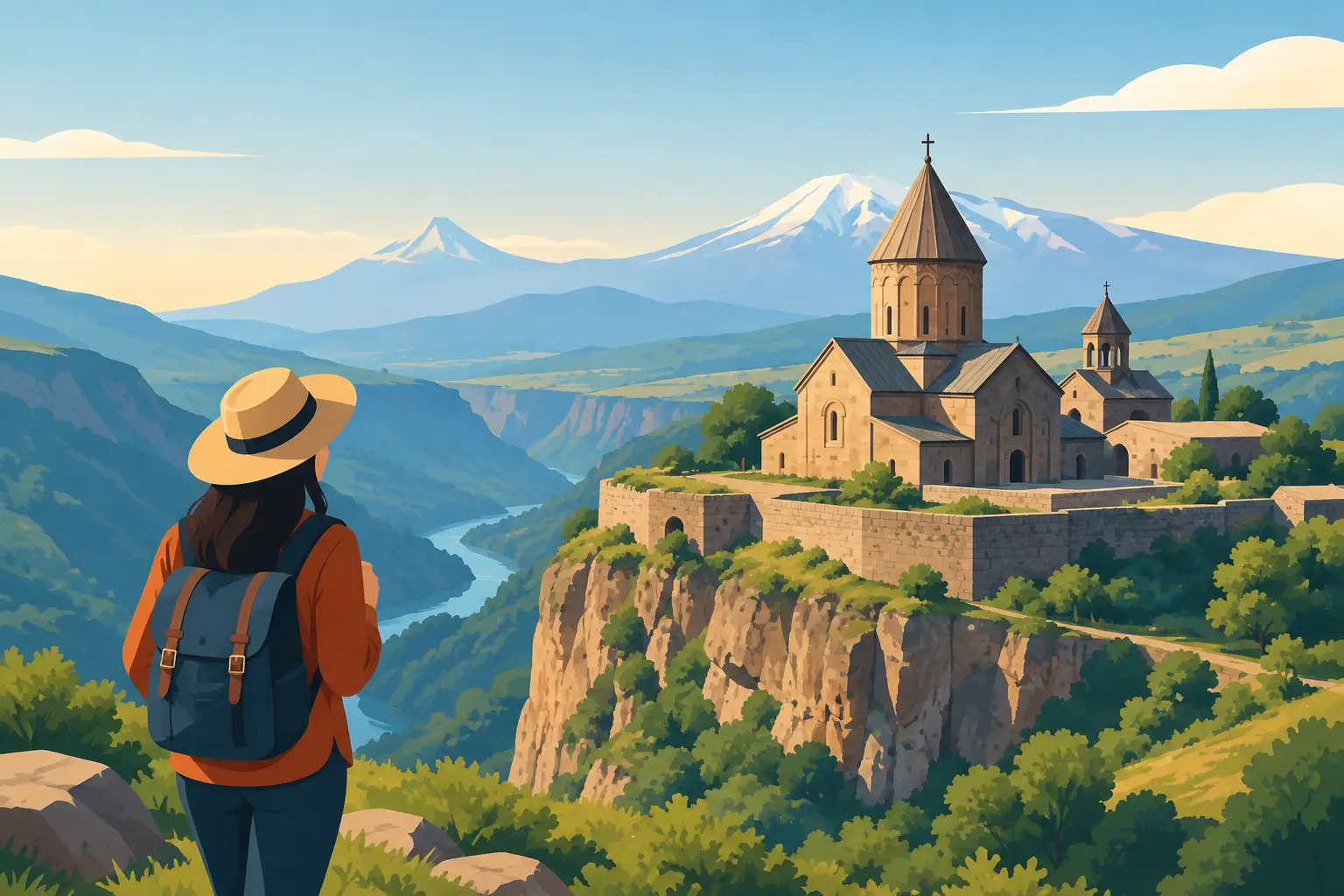
South of Yerevan, Khor Virap sits against one of the region’s most powerful backdrops: Mount Ararat. The mountain lies across the modern border in Türkiye, but it remains central to Armenian cultural memory. On a clear day, its snow-capped silhouette turns a visit to this modest monastery into an unforgettable moment.
Khor Virap is associated with Saint Gregory the Illuminator, who was imprisoned here before helping establish Christianity in Armenia. Visitors can descend into the small underground chamber connected to his story, although those uncomfortable in tight spaces may prefer to admire it from above.
Continue to Noravank for a completely different atmosphere. The monastery rises from a narrow canyon of red-orange cliffs, particularly striking in late afternoon light. Its two-story Surb Astvatsatsin Church has a steep exterior staircase, and the setting rewards travelers who move slowly, look closely, and stay through changing light.
Tatev: A Journey Worth the Distance
Tatev Monastery in southern Armenia requires commitment, but it is one of the country’s defining journeys. Perched above the Vorotan Gorge, the complex was once an important religious, educational, and cultural center. Its position is dramatic without feeling theatrical – a reminder that monasteries were often built in places offering both spiritual retreat and strategic protection.
Many visitors arrive via the Wings of Tatev aerial tramway, which crosses the gorge on a spectacular route. Weather and operating schedules can affect the experience, so flexibility matters. Travelers with limited time may be tempted to make Tatev a rushed day trip from Yerevan, but an overnight in the south creates a more comfortable rhythm and opens the door to village meals, regional wine, and less hurried exploration.
Haghpat and Sanahin: Medieval Learning in the North
In Armenia’s green northern highlands, Haghpat and Sanahin offer a quieter, more contemplative experience. These UNESCO-listed monastic complexes developed as major medieval centers of scholarship, where religious life existed alongside learning, manuscript production, and intellectual exchange.
Their setting in the Debed Canyon feels noticeably different from the dry, rocky south. Fog, rain, and cool air can add atmosphere, especially in spring and fall, but paths may be slippery. Good walking shoes and a light waterproof layer are practical choices. For travelers drawn to architecture, history, and rural landscapes, the north deserves more than a brief stop between destinations.
Sevanavank: A Small Monastery with a Vast Horizon
Sevanavank is easier to reach than many of Armenia’s remote monasteries and makes a rewarding stop when traveling near Lake Sevan. Its two dark-stone churches stand above one of the world’s largest high-altitude freshwater lakes. The site can be busy in summer, but the sweeping views make it worthwhile.
Visit earlier in the day if possible, then continue to a lakeside meal featuring local fish. This is a useful example of how Armenia’s cultural experiences fit together: a monastery visit, a changing landscape, and regional food are often part of one unhurried day.
How to Visit Respectfully
These are living sacred places, not museum sets. Dress modestly, with shoulders and knees covered when entering churches. Women may wish to carry a light scarf, as some churches provide coverings but availability varies. Speak softly indoors, avoid flash photography, and be mindful if a service or private prayer is taking place.
Photography rules are not always posted consistently. When in doubt, ask your guide or observe what local worshippers are doing. Respectful behavior is simple, but it changes the tone of a visit. It also gives you space to notice the details that are easy to miss: worn thresholds, faded frescoes, carved inscriptions, and the quiet choreography of daily devotion.
When to Go and What to Expect on the Road
Late spring and early fall are often the most comfortable seasons for monastery travel. May, June, September, and October generally bring pleasant temperatures, greener landscapes, and better conditions for exploring outdoor sites. Summer is lively and bright, though Yerevan and lower-elevation regions can become hot. Winter travel can be deeply atmospheric, especially around snow-covered monasteries, but road conditions in the mountains may limit access or slow the itinerary.
Private transportation or a carefully planned small-group tour makes a meaningful difference. Public transport can work for a few popular locations, but it is not the best fit for travelers hoping to connect several monastery regions efficiently. Roads vary, stops are spread out, and local context brings sites to life in ways a guidebook cannot.
A knowledgeable local guide can also help adjust the day around traffic, weather, religious events, and your group’s energy. That flexibility is especially valuable in Armenia, where an unplanned roadside fruit stand, family bakery, or village workshop can become one of the trip’s warmest memories.
Build an Itinerary That Leaves Room for Connection
For a first visit, plan at least six to eight days in Armenia if monasteries are a central priority. This allows time for Yerevan, the Geghard and Garni region, the Ararat Valley and Vayots Dzor, Lake Sevan, and either Tatev or the Debed Canyon. With 10 days or more, you can explore both the south and north without turning every morning into a long transfer.
The trade-off is straightforward: seeing fewer sites lets you experience them more fully. A relaxed lunch after Noravank, a conversation with a local guide about a carved cross-stone, or time to sit quietly at Tatev may stay with you longer than adding another hurried stop.
For travelers who value cultural depth alongside dependable planning, a small group creates the right scale for Armenia. Atlas Global Tours keeps groups intimate so guests can move comfortably through historic sites, ask real questions, and enjoy the personal touches that large coach itineraries often miss.
Come to Armenia with curiosity, good shoes, and room in your schedule for surprise. The monasteries will offer extraordinary architecture and history, but their lasting gift is often quieter: a sense of place shaped by stone, faith, hospitality, and mountains that make every road feel like part of the pilgrimage.