
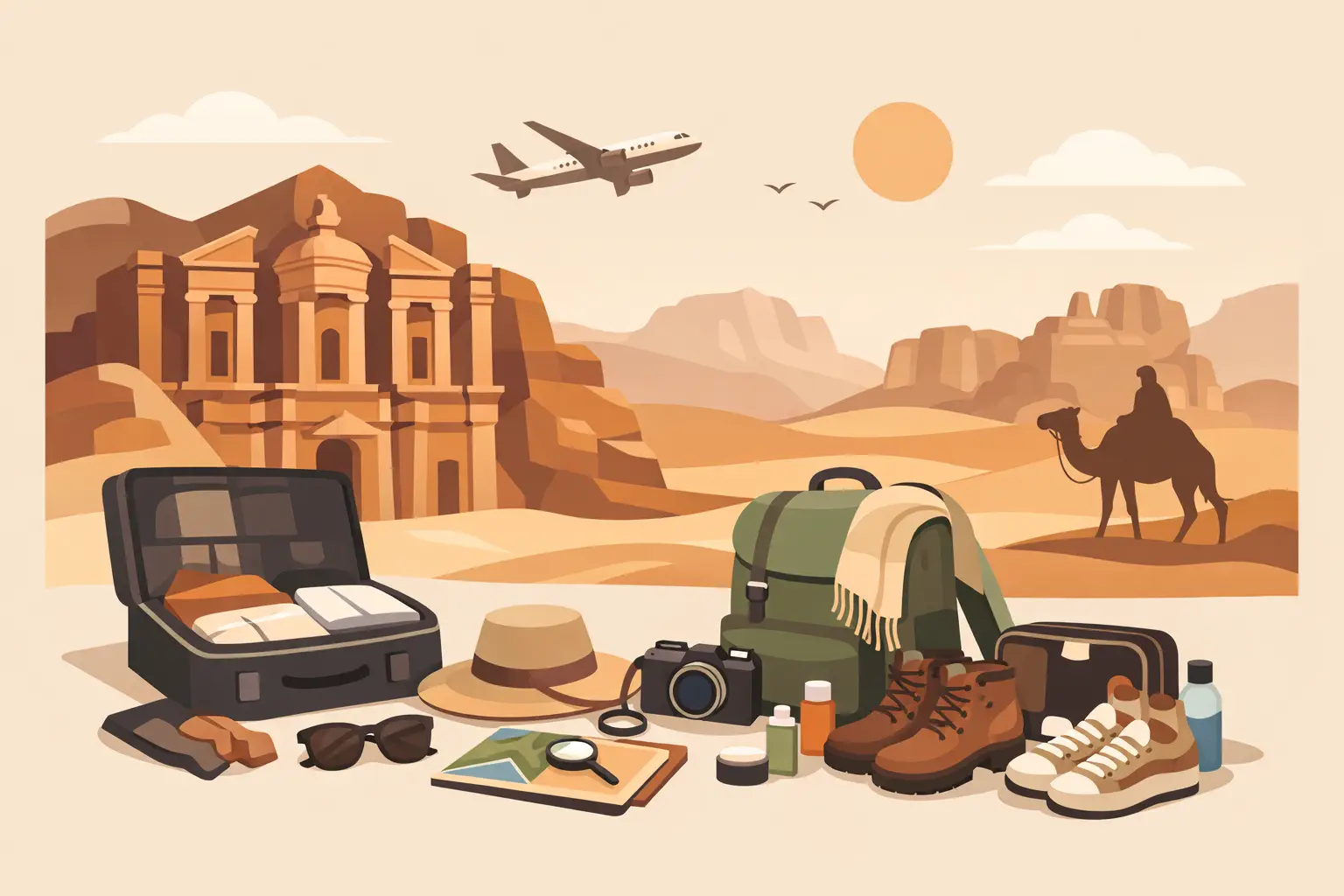
Jordan can take you from a cool Amman morning to the rose-red stone paths of Petra, a sun-drenched afternoon at the Dead Sea, and a remarkably chilly night in Wadi Rum – sometimes within the same week. Knowing how to pack for Jordan means preparing for those contrasts while dressing in a way that feels comfortable, respectful, and ready for genuine cultural connection.
For most travelers, the best strategy is not to bring more. It is to bring versatile layers, shoes that can handle uneven ground, and a few thoughtful essentials that let you focus on the experience rather than the logistics. Jordan is welcoming, modern in many settings, and deeply rooted in its traditions. Packing with that context in mind will help you feel at ease from city cafés to remote desert camps.
How to Pack for Jordan by Season
Jordan has distinct seasons, and the calendar matters more here than many first-time visitors expect. Spring, generally March through May, and fall, from September through November, are often the most comfortable times to travel. Days can be warm and bright, while mornings and evenings remain cool. Light layers are the answer: breathable shirts, a long-sleeve layer, a sweater or fleece, and a lightweight jacket.
Summer in Jordan is dry and intensely sunny. Amman can be manageable because of its elevation, but Petra, Jerash, the Dead Sea, and Wadi Rum may feel very hot in the middle of the day. Choose loose, breathable fabrics such as linen, cotton, or lightweight performance materials. A sun hat and refillable water bottle are practical necessities, not extras.
Winter, roughly December through February, requires a different approach. Amman can be cold, rainy, and occasionally snowy. Petra can be windy, and desert nights in Wadi Rum can dip close to freezing even after a pleasant daytime temperature. Pack a warm jacket, sweater layers, closed-toe shoes, and a compact rain shell. Your itinerary may include several climate zones, so avoid packing for the forecast in just one city.
Choose Respectful, Comfortable Clothing
Visitors do not need to dress in traditional Jordanian clothing, and there is no single dress code across the country. In Amman and major visitor sites, you will see a broad range of styles. Still, Jordan is a culturally conservative country, and modest, relaxed clothing is the most comfortable choice for travelers of all genders.
For women, this usually means tops that cover the shoulders and chest, and pants, skirts, or dresses that reach at least the knee. Loose-fitting trousers, midi dresses with sleeves, and breathable long-sleeve shirts work beautifully. A lightweight scarf is useful for sun protection, cooler evenings, and visits to religious sites. It is not generally necessary to cover your hair, but a scarf gives you flexibility when the setting calls for a little more coverage.
For men, lightweight long pants or well-tailored shorts at resort-style settings are appropriate, though long pants are the more versatile option. T-shirts and collared shirts are easy choices. Tank tops and very short shorts can draw unwanted attention outside beach or pool environments, so it is best to save them for those settings.
The goal is not to make your wardrobe overly formal. It is to show consideration for the places and people welcoming you. Clothing that offers coverage also helps protect you from powerful sun, dry wind, and dust on open desert landscapes.
Pack Shoes for Petra, Not Just Photos
Petra is a place to walk, climb, pause, and walk some more. Its main trail includes uneven stone, sand, staircases, and long distances, especially if you continue beyond the Treasury toward the Monastery. Comfortable, broken-in walking shoes with reliable grip are among the most valuable items in your suitcase.
You do not necessarily need heavy hiking boots. For many travelers, supportive trail shoes or athletic walking shoes are more comfortable and easier to pack. Boots make sense if you prefer extra ankle support or are traveling in winter, when trails can be wet. Whatever you bring, wear them before the trip. Jordan is not the place to discover that a new pair rubs after two miles.
A second pair of sandals is ideal for the Dead Sea, hotel downtime, and warmer evenings. Choose sandals that can get wet and are secure enough to walk in. The mineral-rich mud and salty water at the Dead Sea can be hard on delicate footwear, so leave your favorite leather sandals at home.
The Essentials That Earn Their Space
A few small items make a noticeable difference across Jordan’s archaeological sites, cities, and desert landscapes. Pack a compact daypack for water, sunscreen, a light layer, sunglasses, and your camera or phone. A crossbody bag or secure belt bag can be helpful in busy markets and airports, though Jordan is generally regarded as a comfortable destination for organized travel.
Bring sunscreen with high SPF, lip balm with sun protection, and sunglasses with good UV coverage. The dry air, strong light, and time spent outdoors can catch even experienced travelers off guard. A wide-brimmed hat is useful, but a baseball cap or packable sun hat works well if you prefer something less bulky.
For Wadi Rum, add a buff, bandana, or lightweight scarf. It can keep sand and wind off your face during a jeep excursion, and it provides welcome warmth after sunset. A small flashlight or headlamp is also worthwhile for desert camps, where pathways may be dimly lit.
Jordan uses Type C, D, F, G, and J-style electrical outlets, with 230V voltage. A universal adapter is the simplest solution for U.S. travelers. Bring a portable power bank as well. Long days at Petra or a full day between Amman and the desert can drain a phone battery quickly, particularly when you are taking photos and using it for translation or navigation.
What to Wear at the Dead Sea
The Dead Sea is one of Jordan’s most memorable experiences, but it calls for a few specific packing decisions. Bring a swimsuit you do not mind exposing to salt and mineral-rich mud. Darker colors tend to be more forgiving, and a simple suit is easier to rinse afterward.
Water shoes can help if the shore is rocky, although availability and need vary by access point. Do not shave immediately before swimming, and avoid wearing jewelry into the water. The salt can sting freshly shaved skin and may damage certain metals. Keep water away from your eyes, and pack a cover-up for walking between changing areas, pools, or your hotel.
A small zip bag for wet swimwear is useful, especially if your schedule continues to another destination that day. Rinse your suit and sandals with fresh water as soon as possible.
Keep Your Luggage Practical and Organized
For a multi-day Jordan itinerary, a medium checked suitcase or duffel plus a daypack is usually easier to manage than an oversized hard case. Hotels in Amman and Aqaba are straightforward, but desert camps, historic accommodations, and frequent hotel changes are more enjoyable when you can handle your own bag comfortably.
Pack clothing in a coordinated color palette so most pieces work together. Two or three bottoms, several tops, one warmer layer, and one outer layer can cover far more than travelers often expect. Laundry service may be available at some hotels, but it depends on the property and schedule, so do not build your entire trip around doing laundry.
Keep medication, a change of clothes, valuable electronics, travel documents, and any essential toiletries in your carry-on. A basic personal kit with blister bandages, pain reliever, stomach remedies, and hand sanitizer is sensible. Bring prescription medications in their original labeled containers, along with enough supply for your trip and a few extra days in case travel plans change.
Leave Room for the Journey
Jordan is a destination where the right packing choices create more room for presence. You can stay comfortable during Petra’s long walks, settle into a desert sunset without shivering, and step into local spaces with confidence and respect. That preparation supports the kind of travel that goes beyond checking landmarks off a list.
Pack light enough to move easily, dress thoughtfully enough to feel at home in varied settings, and leave a little room in your bag for the objects and memories you may bring back. The best souvenir from Jordan is often not something you planned to carry at all.