
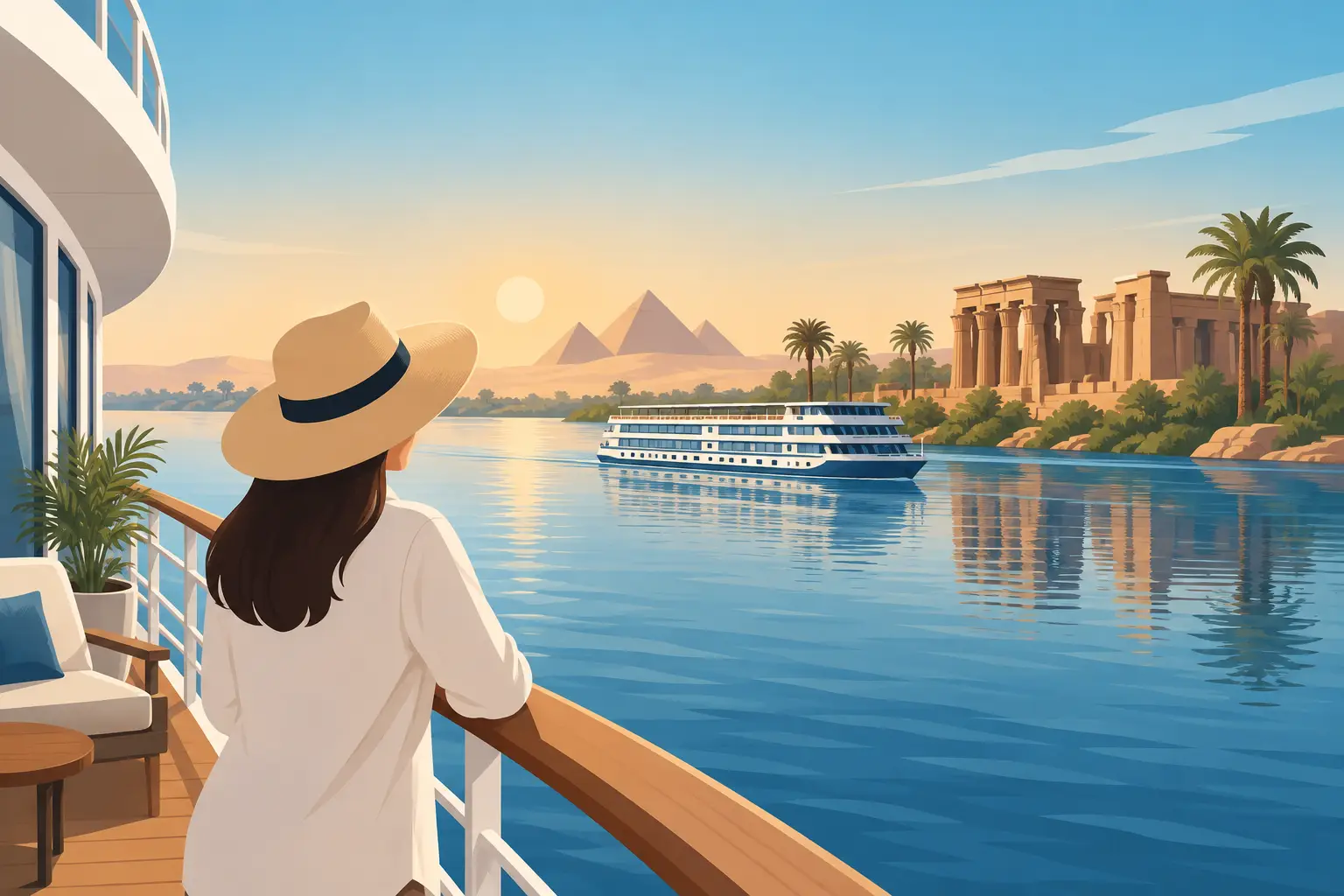
A Nile cruise is not simply a hotel that moves between Luxor and Aswan. It is a rare chance to watch Egypt’s daily life unfold from the water while some of the ancient world’s most remarkable temples appear exactly where they have stood for millennia. This Nile cruise tour review looks beyond polished deck photos to assess what the experience actually offers: comfort, cultural access, pacing, and the details that make the journey feel meaningful rather than rushed.
For travelers who want Egypt’s major sites without the strain of repeatedly packing, checking in, and navigating logistics alone, a well-designed cruise can be an exceptionally rewarding choice. The key is choosing an itinerary and group style that leave room for both the headline monuments and the quieter moments in between.
Nile Cruise Tour Review: What Makes It Worthwhile
The strongest reason to include a Nile cruise in an Egypt itinerary is simple: the route makes historical sense. Ancient settlements, temples, tombs, and trade routes were shaped by the river. Traveling between Luxor and Aswan by ship creates a clearer connection between the monuments than flying or driving from one isolated stop to the next.
Most cruises operate on the stretch between Luxor and Aswan, usually over three or four nights depending on direction and schedule. Days often begin early, especially when a major site is quieter and cooler. After a guided visit, travelers return to the ship for lunch, rest, and an afternoon of river scenery. Palms, fields, fishing boats, village minarets, and desert hills pass slowly by. That unhurried time is part of the value, not a gap in the itinerary.
A cruise also reduces the friction of a busy Egypt journey. Your room stays with you, meals are readily available, and the ship becomes a dependable base after full days in the sun. For couples, solo travelers, and friends traveling together, that consistency can make an ambitious cultural itinerary feel far more manageable.
Still, the experience is not for everyone. Travelers seeking nonstop independent exploration may find a ship’s schedule structured, while those expecting a remote wilderness voyage may be surprised by the proximity of other boats and towns along the river. A Nile cruise is best understood as a comfortable cultural journey with a floating hotel, not an expedition cruise.
The Temples Are the Centerpiece
No amount of onboard comfort can replace the quality of time spent ashore. A thoughtfully organized Nile cruise should place the emphasis on Egypt’s extraordinary archaeological sites, with knowledgeable local guidance that helps travelers understand what they are seeing.
In Luxor, the East Bank and West Bank offer entirely different perspectives. Karnak Temple’s forest of columns and sacred avenues reveals the scale of ancient religious life, while Luxor Temple becomes especially atmospheric near sunset. Across the river, the Valley of the Kings, the Temple of Hatshepsut, and the tombs of nobles bring visitors closer to the personal, political, and spiritual world of the pharaohs.
Further south, Edfu and Kom Ombo are often visited from the cruise route. Edfu’s Temple of Horus is remarkably complete, making it easier to picture how a functioning ancient temple once looked. Kom Ombo, dedicated to two gods and positioned above a bend in the Nile, offers a more intimate but equally fascinating stop. In Aswan, Philae Temple, traditional Nubian culture, and the river’s granite islands create a gentler change of pace.
What separates a memorable visit from a checkbox stop is interpretation. A skilled guide does more than identify a pharaoh or translate a relief. They explain why a temple was built in a particular location, how symbols communicated power, and how the Nile made an empire possible. Small groups have a real advantage here: travelers can ask questions, linger where interest is strongest, and hear context without being lost in a crowd of 40 people.
Life On Board: Comfortable, Social, and Unhurried
Most Nile cruise ships offer private cabins, air conditioning, en-suite bathrooms, a dining room, a lounge, and a sun deck with a small pool. Standards vary by vessel, so it is wise to view the cruise as comfortable and well-appointed rather than assume every ship delivers the same luxury level as a modern ocean liner.
Cabins are generally compact but practical. River-facing windows matter because the views are part of the experience. Noise can occasionally be a factor when ships dock side by side or run generators, and Wi-Fi may be inconsistent. For many travelers, these are reasonable trade-offs for waking up on the Nile, but clear expectations prevent disappointment.
Meals are typically served buffet-style or as set menus, combining international options with Egyptian dishes. The best moments are often the locally rooted ones: warm bread, grilled meats, fragrant rice, seasonal vegetables, tahini, and traditional desserts. Dietary needs can usually be accommodated with advance notice, though travelers with serious allergies should confirm arrangements before booking.
Evenings tend to be relaxed. You may enjoy tea on deck, a conversation with fellow travelers, a quiet drink, or a cultural entertainment night. This is not a late-night party cruise, and that is a strength for travelers who want to be rested for early temple visits. The pace encourages reflection, especially as the river changes color near sunset.
Why Small-Group Planning Changes the Experience
A cruise ship may carry many guests, but the touring group does not have to feel large. This distinction matters. When shore excursions are handled in a small group, moving through hotel lobbies, temple entrances, and security checkpoints is easier. More importantly, the experience becomes more personal.
With groups capped at 10 travelers, Atlas Global Tours can pair the ease of a Nile sailing with the attention that larger coach tours often lack. There is more room to adapt to a group’s interests, offer practical support, and create conversations with local guides that go beyond memorized facts. Travelers benefit from an organized plan while still feeling connected to the place and the people interpreting it.
This approach is especially valuable in Egypt, where logistics can feel complex to first-time visitors. Airport transfers, domestic connections, entry procedures, tipping customs, timing at popular sites, and transportation to and from the ship all require coordination. When those details are handled thoughtfully, travelers can focus on the temples, the river, and the stories around them.
The Trade-Offs to Consider Before You Book
A balanced Nile cruise tour review should acknowledge that the right itinerary depends on your travel style. The route is rich in ancient history, but it can involve early mornings, warm weather, uneven ground, and long days of sightseeing. Visitors with mobility concerns should ask specific questions about gangways, stairs, cabin access, and walking distances at each site.
It is also worth considering the rhythm of the schedule. A three-night cruise offers an excellent introduction, but a four-night sailing generally feels less compressed. Adding extra nights in Cairo and perhaps Aswan gives Egypt the breathing room it deserves. Cairo’s museums, bazaars, and pyramids deserve focused time, while Aswan offers a slower, more intimate perspective after the grandeur of Luxor.
Season matters as well. October through April typically brings more comfortable daytime temperatures and higher demand. Summer can be very hot, though smaller crowds and different pricing may appeal to travelers who tolerate heat well. Regardless of season, light layers, sun protection, comfortable walking shoes, and a reusable water bottle are sensible essentials.
Finally, do not judge a cruise solely by the ship’s photographs. Ask how much time is allocated at each site, whether guiding is included, how large the excursion groups are, and what support is available throughout the journey. The quality of the cultural program is often more consequential than an extra decorative feature in the cabin.
A Journey That Gives Egypt Room to Speak
The Nile rewards travelers who slow down. Between temple visits, there is time to watch farmers working near the water, hear the call to prayer drift across the river, and appreciate why this landscape has drawn people for thousands of years. Those quieter passages give the monuments emotional weight.
Choose a cruise that treats the river as more than transportation and the sites as more than photo stops. With attentive planning, a knowledgeable local guide, and a small group that leaves room for curiosity, the journey can become one of the most grounded and memorable ways to experience Egypt.