A well-paced Tunisia itinerary example should feel like more than a string of famous stops. This is a country where a morning among Roman columns can lead to an afternoon in a blue-and-white coastal village, followed by a dinner shaped by Andalusian, Ottoman, Amazigh, and Arab traditions. The challenge is not finding places to see. It is giving each region enough time to become meaningful.
For most first-time visitors, 10 days offers a rewarding balance: Tunisia’s historic north, the sacred interior, the edge of the Sahara, and a slower finish by the Mediterranean. This route favors cultural depth and sensible travel days over rushing from hotel to hotel.
Why This 10-Day Tunisia Itinerary Works
Tunisia is compact on a map, but its landscapes and cultural identities change quickly. Tunis and the northern coast reveal layers of Phoenician, Roman, and Islamic history. Kairouan introduces one of North Africa’s most important spiritual centers. South of the Atlas Mountains, the palette shifts toward salt lakes, palm oases, cave dwellings, and desert horizons.
The itinerary moves in a logical loop from Tunis to the south and back toward the coast. It includes several longer drives, because the desert cannot be experienced without covering some ground, but it avoids a nightly suitcase routine. A knowledgeable local guide adds particular value here: many of Tunisia’s most memorable stories are not obvious from a monument sign or a roadside viewpoint.
Days 1-3: Tunis, Carthage, and Sidi Bou Said
Day 1: Arrive in Tunis
Arrive in Tunis and settle in without overplanning the first evening. International flights can arrive at inconvenient hours, and a relaxed welcome dinner is a better introduction than an ambitious sightseeing schedule. Try Tunisian staples such as brik, a delicate pastry often filled with egg and tuna, or a shared selection of salads and grilled meats brightened with harissa.
A centrally located hotel makes the following day easier and offers reassuring access to restaurants, services, and the old city.
Day 2: Tunis Medina and the Bardo
Begin in the Tunis Medina, a UNESCO-listed maze of souks, carved doorways, historic mosques, and workshops. This is not a place to speed through with a checklist. A guided walk provides context for the medina’s neighborhoods, trade traditions, and architectural details while leaving time to notice daily life unfolding around you.
In the afternoon, visit the Bardo National Museum when its collection and opening schedule permit. Its Roman mosaics are among the country’s great artistic treasures, offering a vivid introduction to the scale of ancient Africa. Museum access and hours can shift, so a flexible itinerary is wiser than treating this stop as guaranteed at a fixed time.
Day 3: Ancient Carthage and Sidi Bou Said
Carthage deserves more than a quick photo stop. Once a major rival to Rome and later an important Roman city, its remains are spread across a residential hillside overlooking the Gulf of Tunis. The site requires imagination, but that setting is precisely its power: sea views, archaeological fragments, and the knowledge that this was once one of the Mediterranean’s defining cities.
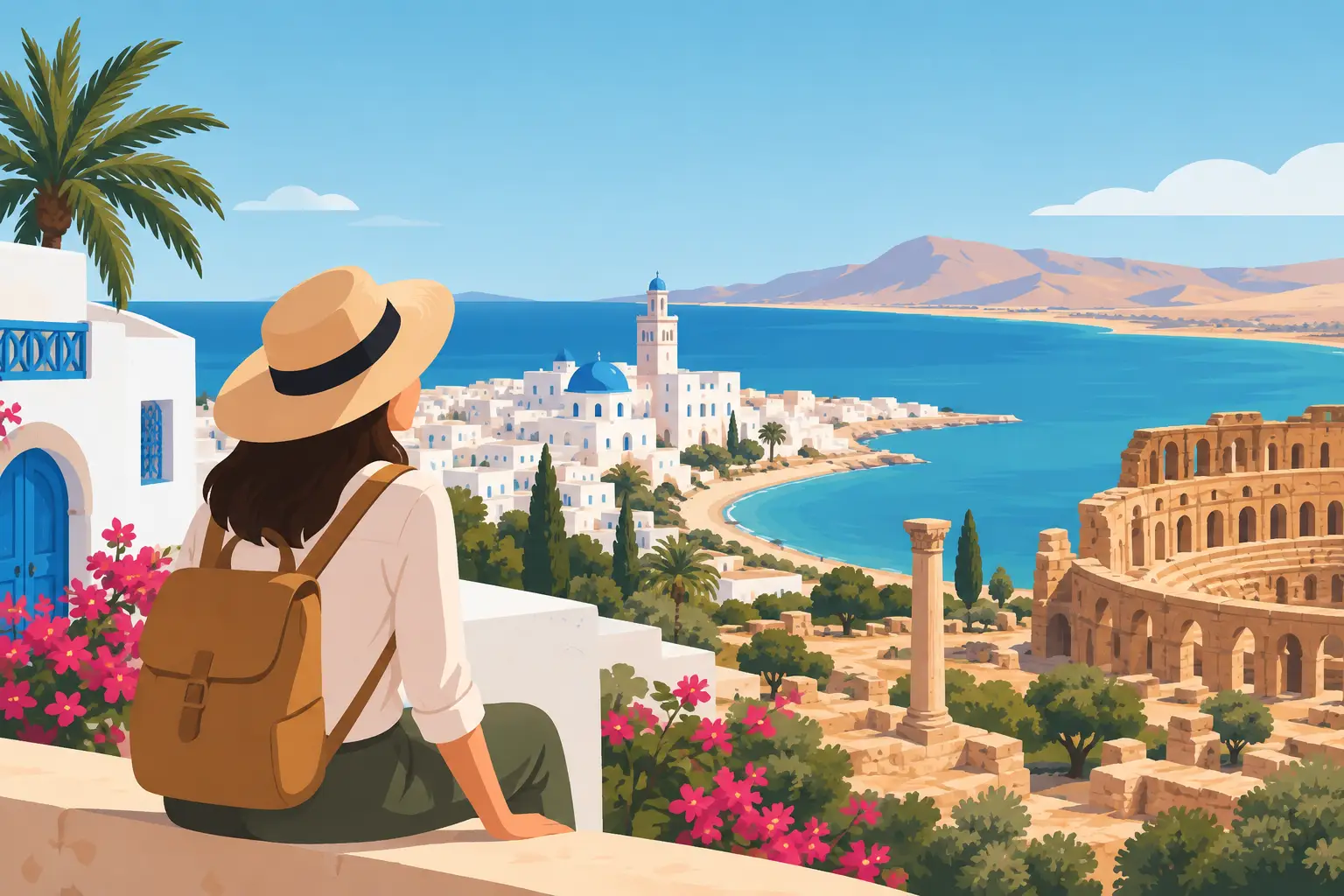
End in Sidi Bou Said, where whitewashed walls and cobalt-blue doors rise above the water. It is popular, and it can be busy, but a thoughtful visit still feels special. Go beyond the most photographed lanes, pause for mint tea, and stay near sunset if timing allows.
Days 4-5: Roman Tunisia and Kairouan
Day 4: Dougga and the Road South
Travel west to Dougga, one of North Africa’s most compelling Roman archaeological sites. Its hilltop setting and remarkably complete remains make it feel less like a museum exhibit and more like an ancient town paused in time. The Capitol, theater, temples, baths, and residential streets reveal how far Roman influence extended beyond Italy.
This is a longer day, so plan a comfortable overnight stop en route to Kairouan or in the surrounding region. The trade-off is worth it. Dougga provides a striking counterpoint to Carthage: one is historically monumental, while the other feels remarkably human in scale.
Day 5: Kairouan’s Sacred Heritage
Kairouan is one of Islam’s historic holy cities and a place where respectful pacing matters. Visit the Great Mosque of Kairouan, known for its imposing courtyard, minaret, and long religious legacy. The city’s medina has a quieter, more traditional character than Tunis, with craftspeople, carpet workshops, and pastry shops known for makroudh, a semolina-and-date sweet.
Cultural etiquette is simple but meaningful. Dress modestly at religious sites, ask before photographing people, and allow your guide to explain local customs. These small considerations create more genuine interactions than trying to see every landmark in one afternoon.
Days 6-8: Tozeur, the Chott, and the Sahara Edge
Day 6: Tozeur and the Chott el Jerid
Continue south toward Tozeur, a palm-filled oasis town with distinctive brick architecture. On the way, cross Chott el Jerid, a vast salt lake whose white, shimmering surface can feel almost otherworldly. Conditions vary by season, and mirages are part of the experience, not a promise of a perfect photograph.
Tozeur offers a welcome change of pace after the road. Walk through the old quarter, sample dates grown in the oasis, and enjoy an evening with fewer city distractions. The desert region is where Tunisia’s hospitality often feels especially immediate.
Day 7: Mountain Oases and Desert Landscapes
Use a capable local driver and vehicle for a day exploring the mountain oases near Chebika, Tamerza, and Mides. Water, palms, rocky gorges, and open desert meet in a landscape that seems designed to challenge assumptions about the Sahara. These areas are also tied to Amazigh heritage and to the practical ingenuity required to live in a dry environment.
Some travelers prefer a more active day with short walks near the gorges. Others favor scenic stops and a slower lunch. Both approaches work, but comfortable shoes, sun protection, and plenty of water are essential.
Day 8: Matmata and a Desert Overnight
Travel toward Matmata, where traditional troglodyte homes were carved into the earth to moderate extreme temperatures. These dwellings are famous to film fans, but their real interest lies in the ingenuity of the architecture and the communities that shaped it.
Depending on the season and road conditions, continue toward a desert lodge or camp near Douz or the gateway to the dunes. A desert overnight should be comfortable rather than performative: a warm meal, a sky full of stars, and time away from the noise of the city are enough. During cooler months, evenings can be surprisingly cold, while summer heat may make an early morning desert experience the better choice.
Days 9-10: Djerba and a Gentle Departure
Day 9: Djerba’s Layers of Culture
Finish on Djerba, an island connected to the mainland by causeway and ferry routes. Its whitewashed villages, olive groves, beaches, and creative traditions make a restorative end to a full itinerary. Visit Erriadh, known for its street art and historic character, and consider stopping at the El Ghriba Synagogue area with appropriate respect for its religious significance and current access conditions.
Djerba is also an excellent place to explore Tunisian food at a slower pace. Fresh seafood, couscous, bread baked in traditional ovens, and local olive oil are part of the experience. A meal in a family-run setting can be as memorable as any formal site visit.
Day 10: Depart From Djerba or Return to Tunis
If international flight connections allow, depart from Djerba via Tunis or another suitable gateway. Otherwise, build in a domestic flight or road transfer back to Tunis before your long-haul departure. This is one area where organized planning matters: flight schedules, seasonal service, and transfer times can change, and a tight self-built connection can add unnecessary stress to the final day.
Practical Planning for This Tunisia Itinerary Example
The best time for this route is generally spring or fall, when temperatures are more comfortable for medina walks, archaeological sites, and desert travel. Winter can be pleasant along the coast and cooler in the south. Summer brings intense heat, particularly around Tozeur and the Sahara, so the itinerary should start early and leave generous room for rest.
For a trip with multiple regions, small-group travel offers a meaningful advantage. You can share the experience with fellow curious travelers while still moving nimbly through narrow medina streets, family-run restaurants, and less-visited cultural sites. With groups capped at 10, Atlas Global Tours designs Tunisia journeys around that balance of personal attention, local insight, and dependable logistics.
The most memorable Tunisia trips leave space for the unplanned moment: a conversation over tea, the scent of bread from a neighborhood bakery, or the silence that arrives when the desert sun drops below the dunes. Choose an itinerary that protects room for those moments, because they are often what travelers carry home.