
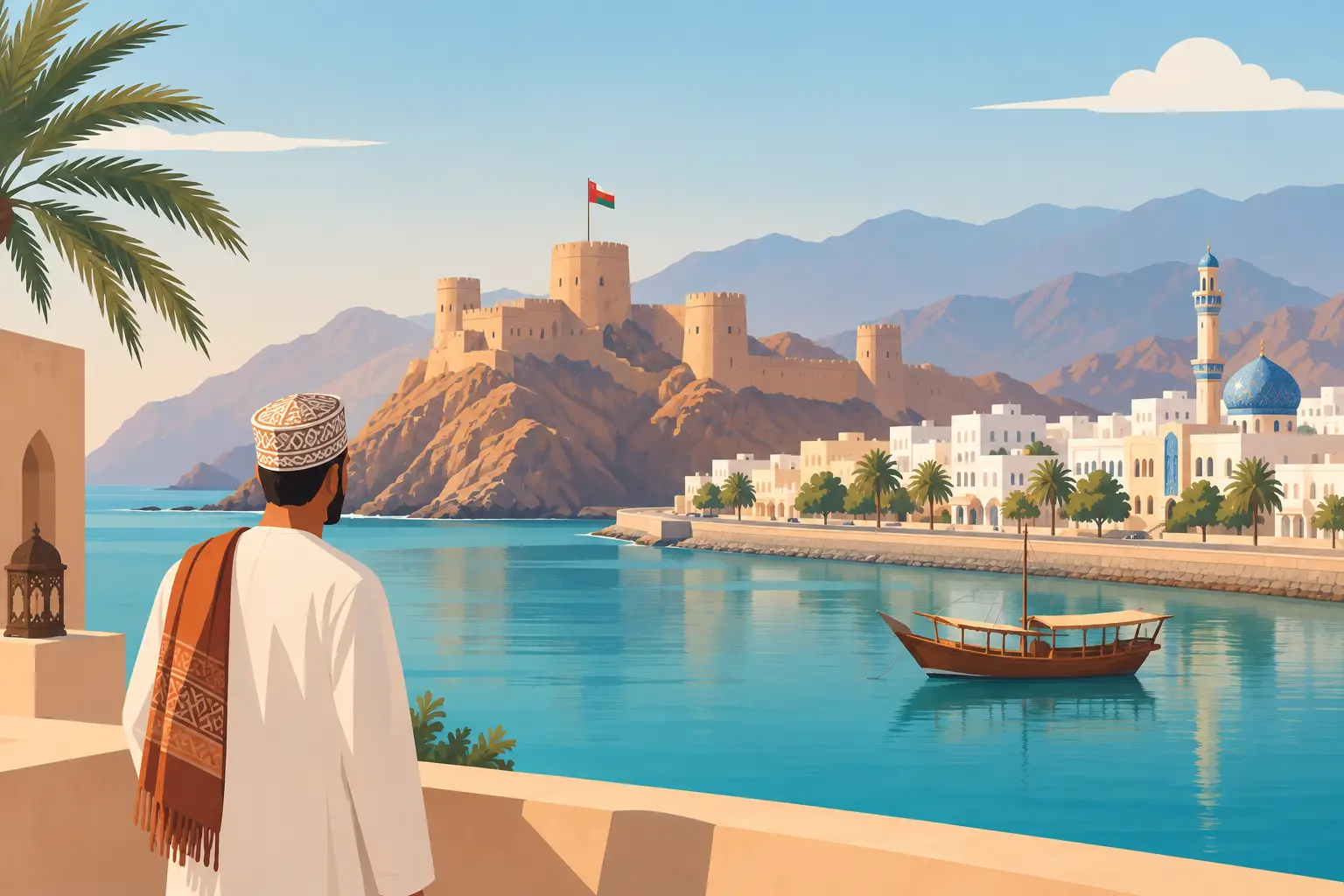
Oman does not reveal itself through a rushed checklist. Its most memorable moments often arrive quietly: the scent of frankincense drifting through a souq, coffee served with dates in a family home, a call to prayer carrying across a mountain village, or a local guide explaining why a fort was built exactly where it stands. This Oman cultural travel guide is for travelers who want those moments alongside the country’s celebrated landscapes and historic landmarks.
For culturally curious travelers, Oman offers an unusually rewarding balance. It is deeply rooted in tradition yet welcoming to visitors, with a strong sense of hospitality and a travel experience that feels calm rather than crowded. Thoughtful planning matters, however. Distances are longer than they look, customs deserve genuine respect, and the richest experiences are often easier to access with knowledgeable local guidance.
Start With Oman’s Living Heritage
Oman’s history is not confined to museum displays. It is present in the mud-brick watchtowers of Nizwa, the irrigation channels that still nourish date palms, the craft traditions of mountain towns, and the etiquette of receiving guests. A meaningful itinerary makes room for these living details rather than treating culture as a brief stop between photo opportunities.
Muscat is a natural introduction. The capital pairs modern order with a distinctly Omani character, from the whitewashed architecture set against rugged hills to the measured pace of its waterfront neighborhoods. The Sultan Qaboos Grand Mosque is among the country’s most significant cultural sites. Visitors should dress conservatively, remove shoes before entering prayer areas, and plan their visit around opening hours for non-Muslims. The experience is as much about observing a place of worship respectfully as it is about admiring its craftsmanship.
The National Museum and Bait Al Zubair provide useful context for Oman’s maritime history, tribal traditions, jewelry, dress, and domestic life. For travelers with limited time, a museum visit early in the journey can make later encounters feel more meaningful. You begin to recognize the silver khanjar dagger, the design of an old wooden door, or the importance of a frankincense burner with a deeper understanding.
Visit Nizwa for Forts, Crafts, and Conversation
Nizwa is one of Oman’s most compelling cultural centers. Its historic fort, completed in the 17th century, reflects the defensive and political importance of the interior. Climbing its broad circular tower offers views over palm groves, mosques, and the Hajar Mountains, but the fort’s interior details are equally revealing. Look for the narrow passages, storage rooms, and defensive openings that show how architecture shaped daily life and security.
The Nizwa Souq is best experienced with time to wander. It is known for silverwork, pottery, dates, spices, and traditional goods, but it is not a staged market built solely for visitors. Vendors and local shoppers come for practical reasons, particularly on the busy Friday livestock market. If your schedule allows, this market can be fascinating, though it is active, crowded, and best approached with patience and respect for the people conducting real business.
Nearby Bahla adds another dimension. Bahla Fort, a UNESCO World Heritage Site, stands beside an old settlement long associated with pottery and folklore. Its restored walls communicate the scale of Oman’s historic interior settlements better than a quick roadside stop ever could. Jabrin Castle, within easy reach, is often a favorite for its painted ceilings, carved doors, and more intimate sense of palace life.
Let Food and Hospitality Set the Pace
Omani hospitality is one of the country’s great cultural gifts, and accepting it graciously is part of the experience. A small cup of kahwa, lightly spiced Arabic coffee, is commonly served with dates. It may be offered in a hotel, shop, home, or desert camp. Receive it with your right hand when possible, and take your cues from your hosts.
Food in Oman reflects centuries of trade across the Indian Ocean. You may find Indian spices, East African influences, rice dishes, grilled seafood, and slow-cooked meats alongside local staples. Shuwa, meat marinated with spices and traditionally cooked slowly in an underground oven, is especially associated with celebrations and communal gatherings. It is not available in every restaurant on every day, which is part of what makes a well-timed local meal feel special.
In Muscat and coastal towns, fresh fish and seafood deserve attention. In the interior, dates, honey, flatbreads, and lamb dishes offer a different expression of regional life. Travelers with dietary requirements can generally be well accommodated in established hotels and restaurants, but clear advance communication is wise. A small-group journey with planned meals and local support can remove much of the uncertainty while still leaving room for discovery.
Make Time for Villages and Mountain Life
Oman’s mountain villages offer a powerful contrast to the coast. In places such as Misfat Al Abriyeen, stone homes climb the hillside above terraced gardens fed by the ancient falaj irrigation system. These channels are not simply scenic. They represent communal systems of water management that have sustained agriculture in an arid landscape for generations.
Walk gently in village areas. Dress modestly, keep voices low near homes and mosques, and ask before photographing people. Some communities welcome visitors warmly, while others understandably value privacy. The difference between observing and intruding often comes down to pace, guidance, and basic consideration.
Jebel Akhdar, meaning Green Mountain, is known for cooler temperatures, terraced farms, and seasonal rose cultivation. During the spring harvest, rosewater production offers a vivid example of local knowledge passing through generations. The drive into the mountains requires a suitable vehicle and an experienced driver. This is a good example of why cultural travel in Oman benefits from professional planning: the experience is rewarding, but logistics and conditions should never be treated casually.
Understand Customs Before You Arrive
Oman is welcoming, but travelers should arrive ready to meet the culture with respect. Modest clothing is appropriate throughout the country and especially important in religious sites, rural communities, and traditional markets. Shoulders and knees should be covered in most public settings. Women visiting mosques may need a head covering, and everyone should wear clothing that is loose and non-revealing.
Public displays of affection are best avoided. Always request permission before photographing individuals, particularly women, families, religious spaces, or military and government buildings. During Ramadan, visitors should be especially considerate about eating, drinking, or smoking in public during daylight hours.
These are not complicated rules meant to make travel restrictive. They are practical ways to signal respect and receive the warmth Omanis are known for. Travelers who approach local customs with curiosity rather than anxiety usually find the country remarkably easy to navigate.
Balance Cultural Depth With Practical Comfort
Oman rewards a measured itinerary. Muscat, Nizwa, the Wahiba Sands, and the mountains can all fit into one trip, but trying to cover every region too quickly can turn a reflective destination into a long series of drives. The best route depends on your available time, tolerance for road travel, and priorities.
For a first visit, a carefully paced journey might combine Muscat’s museums and mosque, Nizwa’s heritage sites, a mountain village stay or visit, and time in the desert. The Wahiba Sands offer more than dramatic dunes. With the right hosts, travelers can learn about Bedouin traditions, share an evening meal, and see how life adapts to this striking environment. Comfort levels vary between camps, so it is worth choosing accommodations that match your expectations rather than assuming all desert stays are alike.
Independent travel is possible for confident drivers, particularly with a 4WD vehicle for mountain and desert routes. Yet a skilled local guide adds context that maps cannot provide: which souq vendor is known for traditional craftsmanship, how to interpret a fort’s design, when a village path is appropriate to walk, and how to handle changing conditions with confidence. Small groups also create more flexibility than large coach tours, without placing every logistical decision on the traveler.
Travel With Curiosity, Not a Checklist
The strongest cultural experiences in Oman cannot always be scheduled to the minute. A conversation may run long over coffee. A market visit may become more interesting when a guide introduces you to a craftsperson. A mountain overlook may be less memorable than the farming village below it.
Atlas Global Tours designs small-group travel around this kind of meaningful access, combining major heritage sites with the local encounters that give a destination its texture. With groups capped at 10 travelers and experienced local guides alongside the journey, there is room for both reassurance and genuine connection.
Bring comfortable walking shoes, a respectful wardrobe, and enough unhurried attention to notice the details. In Oman, the most lasting souvenir may be the feeling of having been welcomed into a culture that has protected its traditions while meeting visitors with extraordinary generosity.