The moment you step from the airport into Morocco’s bright, energetic mix of Arabic, Amazigh, French, and coastal Mediterranean influences, the practical details should already be behind you. For most Americans joining a short cultural journey, visa requirements Morocco visitors encounter are refreshingly straightforward. Still, the details matter – especially when your itinerary includes multiple cities, a desert stay, or travel close to the 90-day limit.
For U.S. travelers, Morocco is generally a visa-free destination for tourism stays of up to 90 days. That does not mean arriving without preparation. Your passport, travel dates, and supporting plans should all align before departure so you can begin with confidence rather than questions at the border.
Do U.S. Citizens Need a Visa for Morocco?
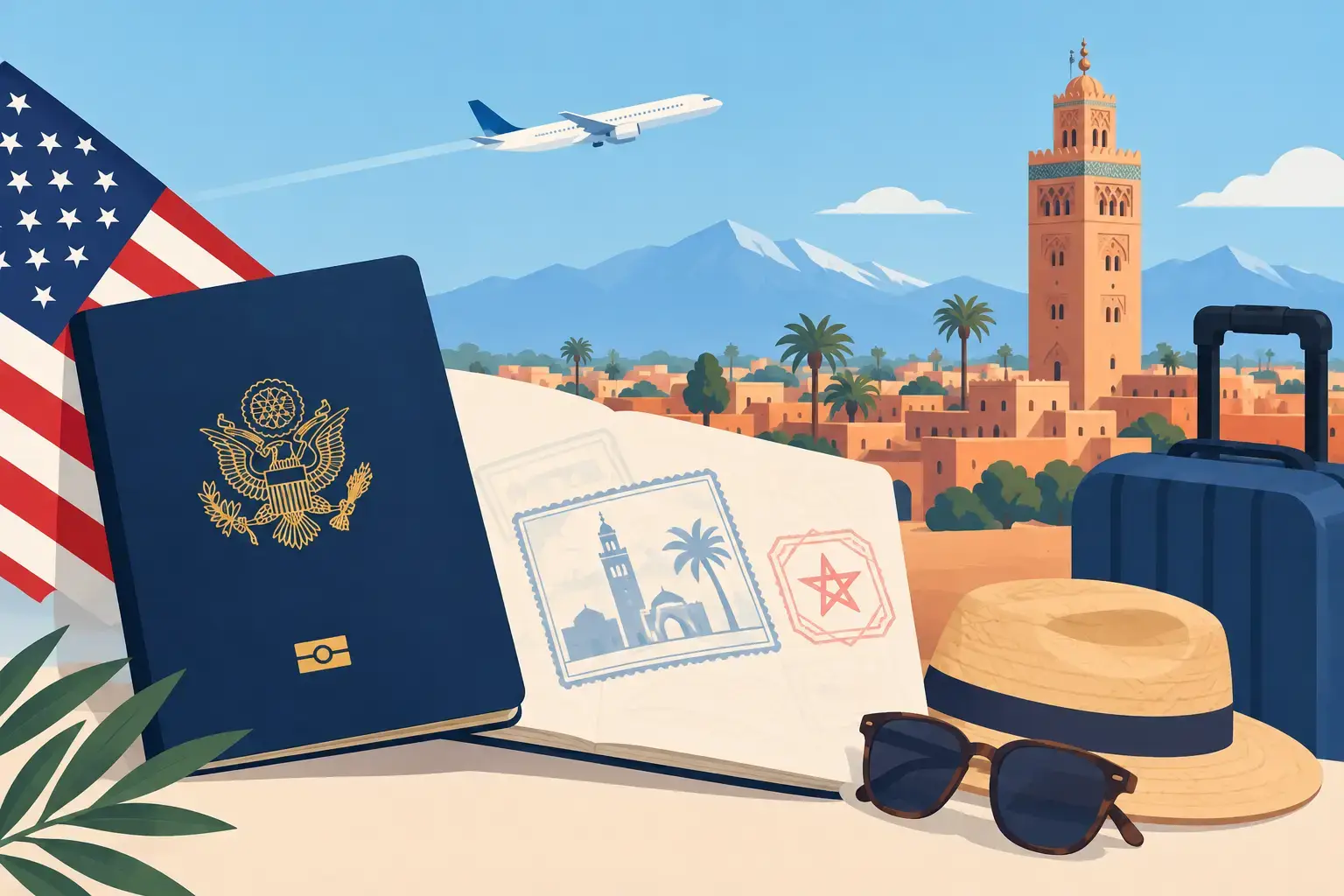
U.S. citizens generally do not need to obtain a visa in advance for tourist visits to Morocco lasting 90 days or less. Your passport is stamped on arrival, and that stamp establishes the period you are authorized to remain in the country.
This arrangement works well for most guided vacations, whether you are spending a week among Marrakech’s gardens and souks or taking a longer route through Fes, the Sahara, the High Atlas, and Casablanca. A thoughtfully paced tour is typically well within the permitted stay.
The 90-day allowance is not an open-ended travel permission. It is based on the date you enter Morocco, so count calendar days carefully if you plan to arrive early, remain after your tour, or combine Morocco with extended independent travel. Do not assume a quick crossing into a neighboring country automatically resets your permitted stay. If your plans are unusual or close to the limit, seek guidance directly from Moroccan consular authorities before you travel.
Passport Rules and Documents to Carry
For visa requirements in Morocco, your passport is the central document. It should be valid for your entire planned stay and have at least one blank page available for entry and exit stamps. While Morocco’s stated requirement may focus on validity through your stay, many experienced travelers prefer to depart with at least six months of passport validity remaining. It gives you a useful buffer if flights change, travel is delayed, or an airline applies its own boarding standard.
Before you leave the United States, check that the name on your airline reservation matches your passport exactly. A missing middle name is usually not an issue when an airline system does not require it, but spelling differences, expired passports, and last-minute changes can create avoidable stress.
Moroccan border officials may also ask for details that support your visit. Keep your return or onward travel information, accommodation details, and a basic itinerary available on your phone and, if you prefer, in print. Travelers on an organized itinerary should have their tour confirmation and the local arrival contact information readily accessible. These items are not always requested, but having them organized is part of traveling well.
When You Need a Moroccan Visa in Advance
A visa is generally required if you plan to stay beyond 90 days, and it may also be necessary if the purpose of your trip is not covered by visa-free tourism. Study, employment, long-term residency, journalism, formal research, and certain business activities can have different rules and documentation requirements.
If you are traveling on a passport other than a U.S. passport, do not rely on the U.S. exemption. Visa rules depend on nationality, not where you live. A U.S. green card, American driver’s license, or U.S. residence does not replace the visa requirements tied to your passport country.
Travelers with dual citizenship should decide which passport they will use for the full journey and make every booking consistent with that choice. If you enter Morocco on one passport and attempt to leave on another, the process can become more complicated. Carry both passports if appropriate, but present the same one at entry and exit unless an official instructs you otherwise.
Longer Stays and Extensions
If you want to remain in Morocco for more than 90 days, start planning well before your permitted stay ends. Extensions and residency matters are handled locally and can involve substantial documentation, appointments, and processing time. They should not be treated as a casual last-week errand.
Overstaying can lead to fines, delays at departure, or difficulties on future visits. The right path depends on why you need more time and your personal circumstances, which is why direct confirmation from the appropriate Moroccan authority is essential. Build flexibility into your plans rather than assuming the process will be immediate.
For most leisure travelers, the simpler option is to structure the trip comfortably within the 90-day window. Morocco rewards unhurried travel, but you do not need months to experience its depth. A carefully designed small-group journey can bring you from ancient medinas to family-run kitchens, mountain villages, and desert landscapes without turning the logistics into a full-time project.
Entry Details Beyond the Visa
A visa-free entry does not eliminate the normal responsibilities of international travel. Border authorities retain the right to determine admission, and airlines can deny boarding if your documents do not meet their requirements. Check your passport well before final payment deadlines, not the week before departure.
Health requirements can also vary based on where you have been before entering Morocco. Travelers arriving from or transiting through countries with yellow fever risk may need to show proof of yellow fever vaccination. Routine health planning is equally worthwhile: review current medical guidance, bring prescription medication in its original packaging, and carry enough supply for the journey plus a few extra days.
Families should pay special attention to documents for minors. A child needs their own passport, and a minor traveling with one parent, relatives, or another adult may benefit from a notarized consent letter from a non-traveling parent or guardian. Requirements and airline practices can differ, so confirm the details well before departure.
A Practical Timeline Before Your Morocco Trip
Six months before departure is an ideal time to inspect your passport, particularly if you have used it heavily or it expires soon. Renew it early if there is any question about its condition, blank pages, or validity. Passport processing times can change, and expedited service is better reserved for genuine surprises.
About one month before travel, review your flight confirmation, passport name, travel insurance information, and hotel or tour materials. Save key documents offline on your phone, since international data access is not something you want to depend on at an airport counter. A printed backup in your carry-on remains a smart safeguard.
In the final week, check for updated entry notices from official Moroccan and U.S. government sources. Requirements can change in response to security, health, or diplomatic developments. This is particularly valuable if you are adding your own pre- or post-tour nights, arriving from another country, or traveling with a non-U.S. passport holder.
How Guided Travel Simplifies the Arrival Experience
A visa exemption handles only one part of the journey. The more meaningful question for many travelers is what happens after the passport stamp: finding your transfer, understanding local customs, managing the pace of an unfamiliar place, and knowing whom to call if plans shift.
That is where a small-group experience can make a real difference. With Atlas Global Tours, travelers can focus on the anticipation of Morocco’s tilework, tea rituals, historic kasbahs, and generous hospitality while major itinerary details are carefully organized. Local guides provide context that goes beyond landmarks, helping turn an arrival into a genuine cultural connection.
Before you pack, take ten quiet minutes to confirm your passport validity, length of stay, and onward plans. It is a small investment in peace of mind – and it leaves more room for the moments Morocco does best: a call to prayer drifting over a medina, fresh bread from a neighborhood bakery, and a desert sky that makes every careful preparation feel worthwhile.