
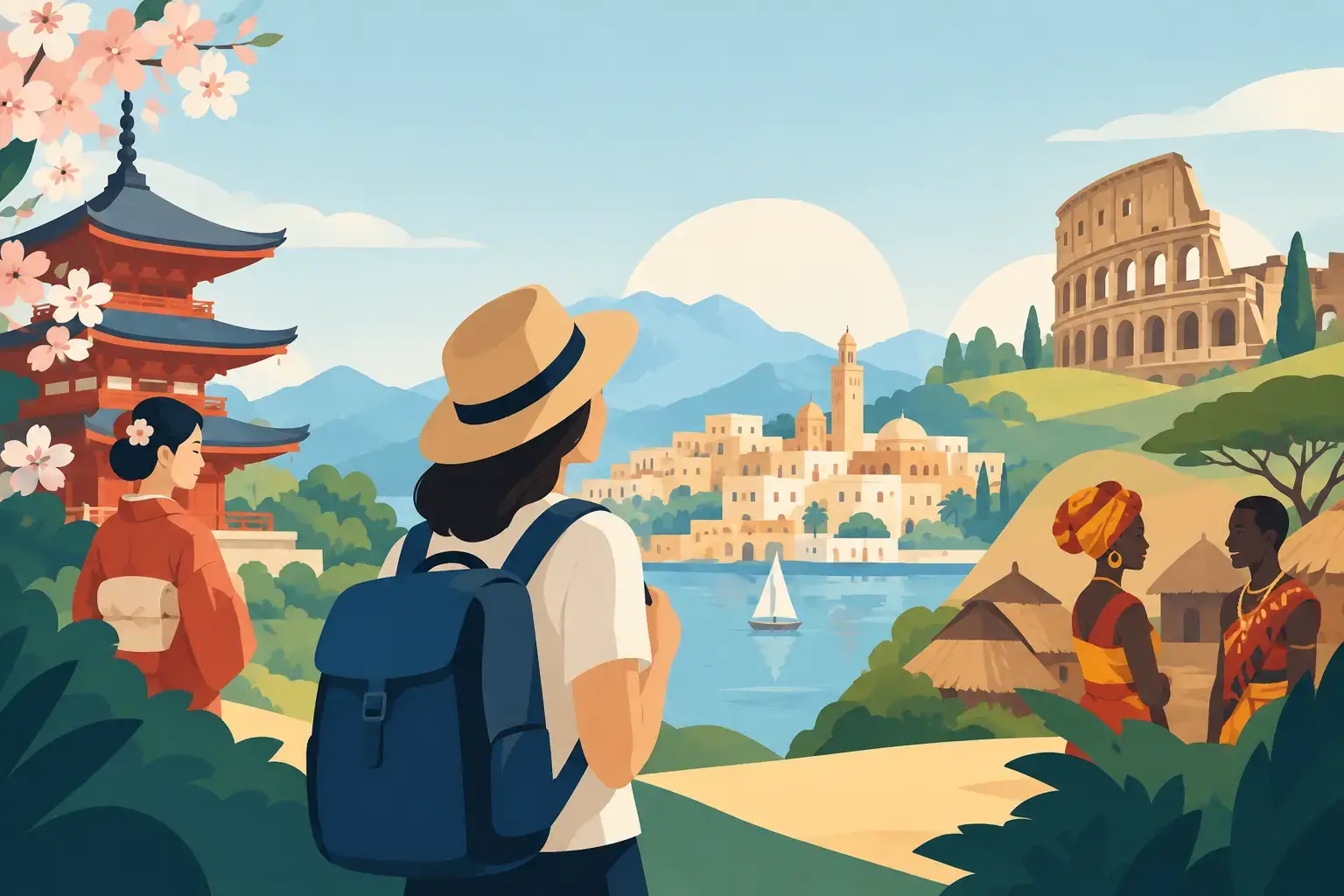
A sunrise over Petra, the first sip of cardamom coffee in an Omani home, a quiet conversation with a craftsperson in Morocco: these are the moments that give cultural journeys their lasting power. A famous monument may bring you to a destination, but understanding the lives, traditions, and stories around it is what makes the experience personal.
For travelers who have outgrown rushed coach stops and generic photo opportunities, cultural travel offers something more rewarding. It creates room to ask questions, share a meal, notice the details, and come home with a clearer sense of place. It also requires thoughtful planning. Real immersion should feel welcoming and well supported, not uncertain or performative.
What Makes Cultural Journeys Different?
A cultural journey is not simply a vacation that includes museums and historic sites. It is travel designed around context. You may walk through an ancient city, but you also learn how its architecture reflects faith, trade, climate, and changing empires. You may taste a regional dish, then hear why that dish belongs to a particular celebration, season, or family tradition.
The difference is often found in the space between scheduled highlights. It is the local guide who explains the etiquette of entering a temple. It is the neighborhood restaurant chosen for its regional cooking rather than its English-language menu. It is having enough time in one place to observe daily rhythms instead of checking off attractions from a bus window.
This does not mean every hour must be serious or structured. Great cultural travel leaves room for pleasure: a long lunch, an unplanned market purchase, a scenic train ride, or an evening at leisure. The goal is not to turn a trip into a lecture. It is to make the places you see more vivid and meaningful.
Why Small Groups Create Better Cultural Connections
Group size shapes the entire travel experience. A group of 40 travelers needs large restaurants, fixed schedules, and logistical compromises. A group of 10 can enter smaller spaces, sit around one table, and move with greater ease through a local market or historic neighborhood.
Small groups also make conversations better. Travelers have time to get to know their guide and fellow guests, while local hosts can share their knowledge in a more natural setting. Questions do not get lost in a crowd. A guide can adjust the pace when a site deserves more time or offer practical help when someone needs it.
There is a trade-off, of course. Small-group journeys may not offer the lowest possible price, and intimate hotels or locally owned restaurants can have limited availability. Yet for many travelers, the value lies in access, comfort, and attention. Rather than feeling processed through an itinerary, you feel cared for throughout it.
At Atlas Global Tours, groups are capped at 10 travelers for this reason. The smaller format supports the kind of personal, culturally rich experiences that are difficult to arrange on a large-scale tour while preserving the confidence of a professionally planned trip.
The Right Balance of Icons and Everyday Life
The world’s great landmarks deserve their reputations. Standing before the Pyramids of Giza, the Hagia Sophia, Angkor’s temple complexes, or Rajasthan’s palaces can be genuinely moving. Skipping these places in pursuit of being “off the beaten path” is not necessarily more authentic. The question is how you experience them.
A well-designed itinerary pairs essential sites with experiences that reveal the living culture around them. In Jordan, that might mean connecting the grandeur of Petra with a traditional meal and an evening under the wide desert sky of Wadi Rum. In Japan, it might mean balancing Tokyo’s energy and Kyoto’s celebrated temples with a carefully guided look at local food culture, craftsmanship, or daily etiquette.
Every destination has this duality. History and modern life coexist. Ancient traditions adapt. Cities that appear familiar from photographs become far more complex when a local expert explains what has changed, what has endured, and why it matters.
The most satisfying itineraries do not treat lesser-known experiences as decorative add-ons. They connect them to the larger story. A market visit becomes richer when you understand seasonal ingredients. A visit to a rural community carries more meaning when it is approached with respect, preparation, and a host who benefits from the exchange.
How to Travel With Curiosity and Respect
Meaningful connection begins long before arrival. Reading a little about a destination’s history, social customs, and current realities helps travelers move through a new culture with humility. You do not need to become an expert. You simply need to arrive ready to listen.
Local etiquette matters because it signals consideration. Dress expectations at religious sites, permission before photographing people, table manners, and appropriate greetings vary widely. A knowledgeable local guide can make these moments feel straightforward rather than intimidating, explaining not only what to do but also the cultural reasoning behind it.
It is equally valuable to resist the urge to judge every difference against home. A slower service style, a later dinner hour, a different approach to bargaining, or a quieter public atmosphere is not an inconvenience to be corrected. It is part of encountering another way of life. Curiosity creates better conversations than comparison.
Respect also means recognizing that local communities are not attractions. When visiting homes, workshops, villages, or places of worship, travelers should be present and appreciative. Buy directly from artisans when appropriate, follow the lead of hosts, and remember that hospitality is a gift, not an entitlement.
Planning Cultural Travel Without Giving Up Peace of Mind
Independent travel can be rewarding, especially for those with abundant time and deep destination knowledge. But in countries with complex transport networks, language differences, or rapidly changing entry requirements, coordinating every detail can distract from the experience itself.
A guided cultural journey offers a useful middle ground. You retain the pleasure of discovery while experienced planners organize transportation, accommodations, timing, and local logistics. The best tours do not over-schedule every minute. They create a dependable framework, then leave room for discovery within it.
When comparing guided options, look beyond the number of included sights. Consider who leads the experience, how many travelers are in the group, and whether local guides are central to the itinerary. Ask about hotel standards, free time, transportation, activity levels, and the level of support available before and during travel.
Clear communication is especially valuable when traveling far from home. Travelers should know what is included, what requires extra planning, and what to expect day by day. Thoughtful preparation does not make travel less adventurous. It gives you the freedom to focus on the experience once you arrive.
The Memories That Remain
Most travelers remember the major sights. Years later, though, it is often the smaller encounter that returns first: the scent of fresh bread in a Tunisian market, a guide’s family story in Armenia, the rhythm of a call to prayer heard from a hotel terrace, or the kindness of someone who helped you find the right words.
These memories stay with us because they are not interchangeable. They belong to a specific place and a specific moment of connection. They can also change the way we travel afterward. Instead of asking only, “What should I see?” we begin asking, “Whose story can help me understand this place?”
That is the quiet promise of cultural travel. Choose an itinerary with room for landmarks, local voices, and unhurried moments, then arrive ready to pay attention. The destination will offer far more than a collection of photographs.