A private driver waits outside a riad in Marrakech. A local guide knows which gate into Petra avoids the midday crush. A family-run kitchen in Hanoi has set aside a table. In moments like these, the question of custom travel versus packaged tours becomes less about labels and more about how you want to spend your time, energy, and attention once you arrive.
Both approaches can lead to an exceptional journey. The better choice depends on whether you want to build every detail yourself, hand planning to an expert, or find a thoughtful middle ground that preserves room for personal discovery.
Custom Travel Versus Packaged Tours: The Core Difference
Custom travel is designed around an individual traveler, couple, family, or private group. You choose the destinations, travel pace, hotel style, interests, and often the daily schedule. A custom itinerary may include a cooking class in Jaipur, extra nights in Istanbul, or a slower route through the villages of the Balkans because those details fit your particular vision.
Packaged tours follow a preplanned itinerary shared by a group. Transportation, accommodations, key experiences, local guides, and many meals or entrance fees are generally arranged in advance. The quality of those arrangements varies widely. A large coach tour moving quickly between major sights is very different from a carefully curated small-group journey led by local cultural experts.
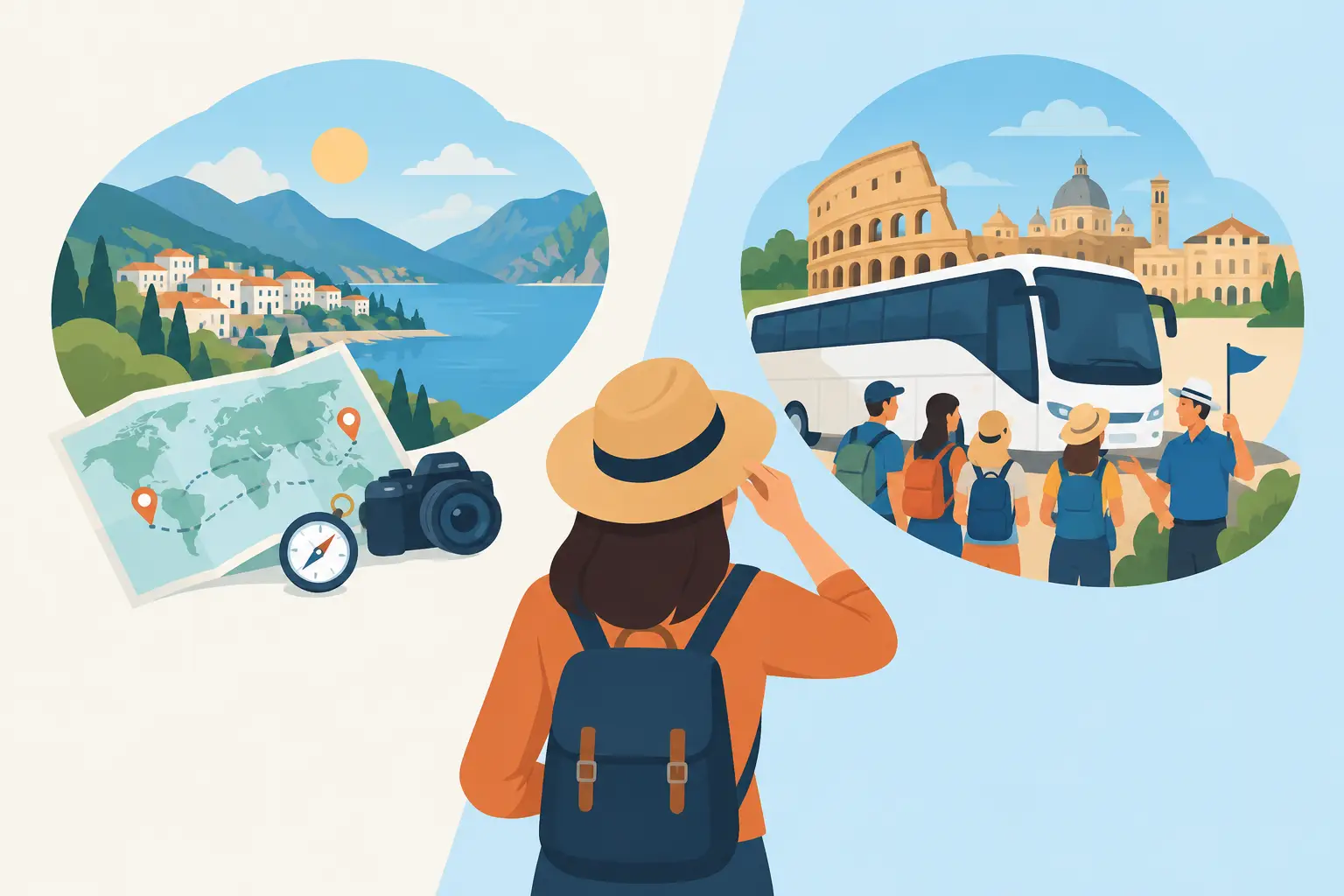
That distinction matters. A packaged tour is not automatically impersonal, just as a custom trip is not automatically more meaningful. What matters is the level of care behind the itinerary, the size of the group, the expertise of the people guiding it, and whether the experience leaves room for genuine connection.
When Custom Travel Is the Right Choice
Custom travel is particularly appealing when your dates, priorities, or travel companions do not fit a standard itinerary. Perhaps you are celebrating an anniversary and want several unhurried days on the Amalfi Coast after exploring Rome. Maybe you are traveling with parents who prefer shorter walking days, or you have a deep interest in Japanese ceramics, Jordanian archaeology, or Himalayan trekking.
The greatest benefit is control. You can devote more time to places that matter to you and bypass experiences that do not. You can choose your preferred accommodation category, arrange private guides, and set a pace that feels genuinely restorative rather than rushed.
That freedom comes with trade-offs. Building a multi-country trip involves more than reserving hotels. It means coordinating airport transfers, regional flights, rail schedules, museum closures, restaurant reservations, entry requirements, local guide timing, and realistic travel times. In destinations where language, infrastructure, or transportation can be complex, a loosely planned itinerary can leave travelers spending valuable vacation hours solving logistical problems.
Custom travel also tends to cost more when every service is private. A private vehicle and driver, one-on-one guide, and individually arranged excursions offer flexibility, but those services are not shared across a group. For travelers with a clear personal vision and the budget to support it, that investment can be worthwhile.
Why Thoughtful Packaged Tours Appeal to Experienced Travelers
A well-designed packaged tour replaces the burden of logistics with a reliable framework. You know where you will sleep, how you will get from one destination to the next, which experiences are included, and who to call if plans need to change. That reassurance is especially valuable in countries where local knowledge makes a meaningful difference.
It also allows travelers to focus on the part that cannot be downloaded from a planning spreadsheet: being present. Instead of comparing taxi options outside an airport or wondering whether a remote site is realistically reachable before closing, you can listen to a guide explain the layers of history beneath an ancient city, share a regional meal, or simply take in the view.
The group itself can be part of the reward. For solo travelers, a small group brings companionship without the pressure of arranging every meal or excursion with strangers. Couples often enjoy having built-in conversation and shared discoveries while still retaining time together. Many travelers return home with friendships formed over long drives, local wine, and the small surprises that make a journey memorable.
At the same time, not every packaged tour suits travelers seeking cultural depth. Large groups can move slowly, rigid schedules may feel confining, and generic sightseeing can turn remarkable places into checkboxes. Before booking, look beyond the word “tour” and ask how the trip is actually operated.
What to Look for in a Small-Group Tour
For travelers who want structure without feeling processed, group size is one of the clearest signals. A group of 30 or 40 requires a different kind of travel than a group capped at 10. Smaller groups can enter intimate restaurants, have more natural conversations with guides, move more easily through historic neighborhoods, and adapt more gracefully when weather or local conditions shift.
The itinerary deserves equal attention. A strong tour balances celebrated landmarks with experiences that reveal daily life and local perspective. Seeing the Pyramids of Giza or the Treasury at Petra should absolutely be part of the journey. But so should the quieter moments: tea with a host, a market visit guided by someone who knows its rhythms, or time in a neighborhood that most visitors pass by.
Ask how much free time is built in. Independent time is not a gap in an itinerary when it is intentional. It gives you space to revisit a gallery, linger in a cafe, shop for textiles, or rest before dinner. The best tours provide direction without scripting every minute.
Finally, consider who is responsible for the trip. Knowledgeable local guides do more than point out monuments. They add context, help travelers navigate cultural norms, recommend what to try, and make unfamiliar places feel welcoming. A U.S.-registered company with clear communication and dependable support can add another layer of confidence before departure and throughout the journey.
Cost: Compare Value, Not Just the Starting Price
Custom trips and packaged tours can both appear expensive or affordable depending on what is included. A lower headline price may exclude airport transfers, attraction fees, meals, internal flights, gratuities, or the services of a guide. A higher-priced itinerary may include many of those elements, along with carefully selected accommodations and experiences that would be difficult to arrange independently.
The most useful comparison is not simply the total cost. It is the amount of planning, uncertainty, and on-the-ground problem-solving that cost removes. It is also the quality of the experiences it makes possible.
A carefully curated small-group tour can offer value because transportation, guides, and certain activities are shared while the experience remains personal. It may not be the least expensive way to travel, but it can be a more comfortable and enriching way to use limited vacation time.
The Best Choice May Be a Blend
Many travelers do not need to choose one approach exclusively. You might join a guided small-group tour through Egypt and Jordan, where local expertise and coordinated transportation add enormous value, then stay a few independent nights in Amman or Cairo. You might take a structured cultural journey through India and add a beach extension afterward.
This blended approach works well for people who value both freedom and support. The guided portion handles the destinations with more moving parts, while the independent portion creates room for a personal detour, a special celebration, or a slower ending to the trip.
For travelers drawn to cultural immersion but unwilling to sacrifice peace of mind, this is often the sweet spot. Atlas Global Tours, for example, designs small-group journeys around iconic sites, local insight, and manageable group sizes, giving travelers a dependable structure without the feeling of traveling on a conveyor belt.
Choose the Travel Style That Lets You Be Most Present
Choose custom travel when your itinerary needs to reflect a highly specific wish list, travel pace, or private occasion. Choose a packaged tour when you want experienced planning, local guidance, and the ease of knowing essential details are already in capable hands. Choose a small-group experience when you want the social energy and value of a group without losing intimacy or cultural substance.
The right trip is not the one with the most stops or the fullest calendar. It is the one that leaves enough room to notice where you are, understand what you are seeing, and return home with stories that feel like your own.