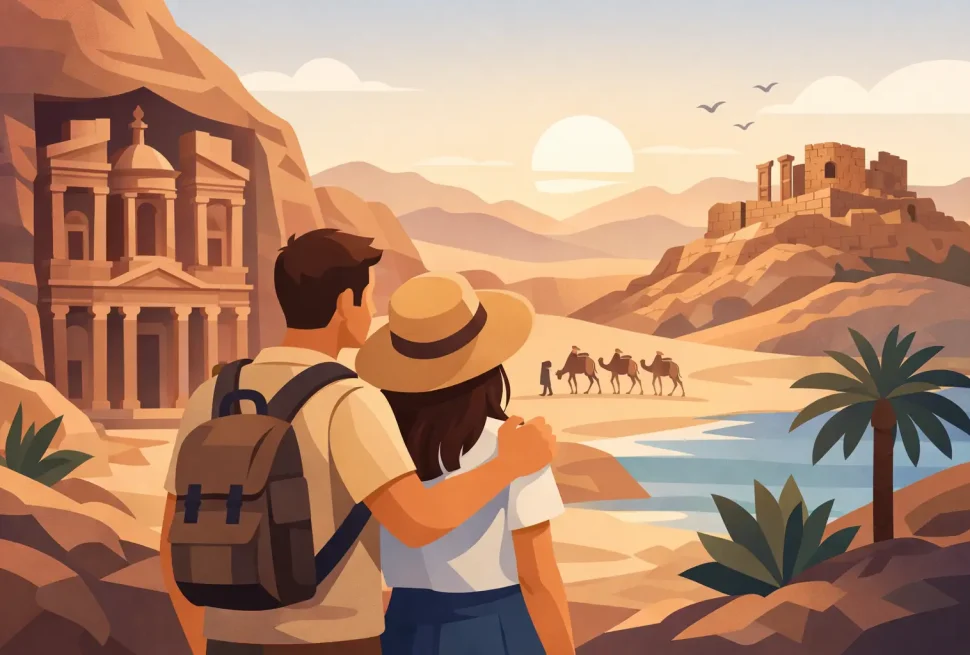
A sunrise over Petra, the call to prayer moving across an old city, cardamom coffee shared in a family-run café – a Middle East travel guide should prepare you for more than famous sights. This is a region where ancient history is part of daily life, hospitality is often deeply personal, and a well-planned itinerary makes the difference between simply seeing a place and genuinely connecting with it.
The Middle East rewards curiosity, but it also asks travelers to arrive thoughtfully. Countries, customs, climates, entry rules, and travel rhythms vary widely. Planning with care allows you to enjoy the warmth, beauty, and extraordinary cultural depth of the region with greater ease and confidence.
A Middle East Travel Guide Starts With the Right Destination
The phrase “Middle East” covers many distinct travel experiences. Jordan may appeal to travelers drawn to archaeological wonders, desert landscapes, and approachable cultural immersion. Egypt offers a powerful encounter with ancient civilizations, from the pyramids of Giza to the temples along the Nile. Oman is ideal for those who want dramatic mountains, wadis, coastlines, and a quieter pace, while Türkiye brings together Ottoman heritage, Byzantine landmarks, vibrant food culture, and landscapes that shift dramatically from one region to the next.
Rather than trying to see several countries in one short trip, choose a destination that matches your travel style. A first journey to the region is often more rewarding when it focuses on one country or a carefully paired route, such as Egypt and Jordan. You will have time to absorb the history, enjoy unhurried meals, and allow for the small encounters that tend to become the strongest memories.
Choose Depth Over a Checklist
It is tempting to fill every day with major landmarks. The region has no shortage of them. Yet a meaningful itinerary also leaves room for a walk through a market, a conversation with a local guide, a home-style lunch, or an evening watching the light change over the desert.
For most travelers, an eight- to 12-day journey offers a comfortable balance of discovery and breathing room. Long transfer days, early archaeological site visits, and climate considerations all deserve space in the plan. A smaller group can make that pacing more flexible, especially when a local experience calls for an extra hour rather than a rushed departure.
When to Go: Weather Shapes the Experience
Spring and fall are often the most comfortable seasons for much of the Middle East. From roughly March through May and September through November, daytime temperatures are generally more manageable for city walks, desert excursions, and visits to open-air ruins. These periods can also be popular, so booking early is wise for travelers who prefer specific departure dates or smaller groups.
Summer can be very hot in destinations such as Egypt, Jordan, Oman, and parts of Türkiye. It is still possible to travel well during this season, particularly with early starts, air-conditioned transportation, and a relaxed midday schedule. The trade-off is that time outdoors requires more planning and patience.
Winter brings cooler days and occasional rain in some areas, which can be especially pleasant for sightseeing. Desert nights can be surprisingly cold, however. If your journey includes Wadi Rum, the Sinai, Cappadocia, or mountain regions, pack layers even when daytime forecasts look mild.
Ramadan is another factor to consider. Traveling during the holy month can be a meaningful opportunity to witness a different rhythm of life, especially after sunset, when neighborhoods often become lively and communal. At the same time, business hours, restaurant availability, and sightseeing schedules may change. A knowledgeable local team can help travelers understand what to expect and move through the experience respectfully.
Prepare the Practical Details Before You Fly
Thoughtful preparation creates peace of mind once you arrive. Passport validity requirements, visas, travel insurance, health guidance, and entry rules can change, so verify current official requirements well before departure. Keep digital and printed copies of key documents, and make sure your insurance includes appropriate medical coverage and trip interruption protection.
For daily spending, carry a mix of payment options. Cards are widely accepted in many hotels, restaurants, and larger shops, but cash remains useful for smaller purchases, local markets, tips, and rural areas. Ask your bank about international use before you leave, and avoid relying on a single card.
Connectivity is usually straightforward in major destinations. An eSIM or local SIM card can help with maps, messaging, and staying in touch, though service may be limited during remote desert drives or mountain excursions. For travelers who value reassurance, a guided journey offers the added benefit of having local support close at hand when plans change or questions arise.
Cultural Awareness Makes Every Encounter Better
There is no single rulebook for the entire region, but modest, context-aware clothing is a good starting point. In religious sites and conservative neighborhoods, covering shoulders and knees is generally appropriate, and women may be asked to cover their hair at certain mosques. Carrying a lightweight scarf is useful for everyone – it can provide sun protection, warmth, or respectful coverage when needed.
Hospitality is central to many cultures across the Middle East. Accepting tea or coffee, learning a few greetings, and showing patience during conversation are small gestures that can lead to warmer exchanges. Ask before photographing people, especially in markets, villages, or places of worship. At major sites, photography rules may differ by room or monument, so follow local guidance.
Food is one of the region’s great pleasures. Enjoying a meal of mezze, grilled meats, fresh bread, dates, fragrant rice, or regional sweets offers a direct route into local life. If you have dietary needs, communicate them early and clearly. Experienced tour planners can often arrange suitable meals, but advance notice is essential in smaller towns and remote locations.
Why Local Guidance Changes the Journey
The most memorable parts of the Middle East are not always marked on a map. A skilled local guide can explain the significance of a mosque courtyard, introduce the stories behind a family recipe, help you understand etiquette in a souk, or put centuries of history into context at a temple or fortress.
That guidance also provides practical confidence. Local experts understand traffic patterns, site timing, regional customs, and how to adjust a day when weather or crowds intervene. This does not mean every moment needs to be scheduled. It means the structure is there so you can be present for the experience rather than managing logistics.
For travelers who prefer cultural depth without the impersonality of a large coach tour, small-group travel offers a particularly thoughtful middle ground. With groups capped at 10 travelers, Atlas Global Tours designs journeys that pair iconic sites with locally grounded experiences, while leaving room for personal attention and a more comfortable pace.
Pack for Respect, Comfort, and Changing Conditions
Packing light is useful, but packing strategically is better. You may move from polished city hotels to sandy archaeological sites, cool evening terraces, and desert camps within the same trip. Prioritize versatile pieces that layer easily and feel appropriate in varied settings.
Bring these essentials:
- Comfortable, closed-toe walking shoes with good grip for uneven stone paths and desert terrain.
- Lightweight, modest clothing that can be layered for warm days and cooler evenings.
- Sun protection, including a hat, sunglasses, and sunscreen, plus a refillable water bottle.
- A small day bag for tissues, hand sanitizer, medication, a power bank, and a scarf or light jacket.
- An outlet adapter and any prescription medications in their original labeled containers.
Leave room in your suitcase for meaningful purchases, too. Handwoven textiles, spices, ceramics, olive wood, perfumes, and local crafts can be wonderful reminders of a journey when bought thoughtfully from reputable artisans or shops.
Travel With Awareness, Not Anxiety
Travel conditions vary by country and can change. Before committing to a trip, review current government guidance, listen to experienced local partners, and choose an itinerary designed around destinations where tourism can be enjoyed responsibly. Good travel planning is not about ignoring uncertainty. It is about making informed choices, maintaining flexibility, and having reliable support.
Once on the ground, ordinary habits go a long way: keep valuables secure, use official transportation arrangements, stay hydrated, and remain aware of your surroundings in crowded areas. Most importantly, resist treating the region as a collection of headlines. The Middle East is made up of communities with their own histories, humor, traditions, and hopes. Traveling with respect allows those human realities to come forward.
A well-chosen journey here can stay with you long after you return home. Make space for the landmark that takes your breath away, but also for the quiet moment afterward: a shared meal, a local story, or a cup of tea offered with genuine welcome.