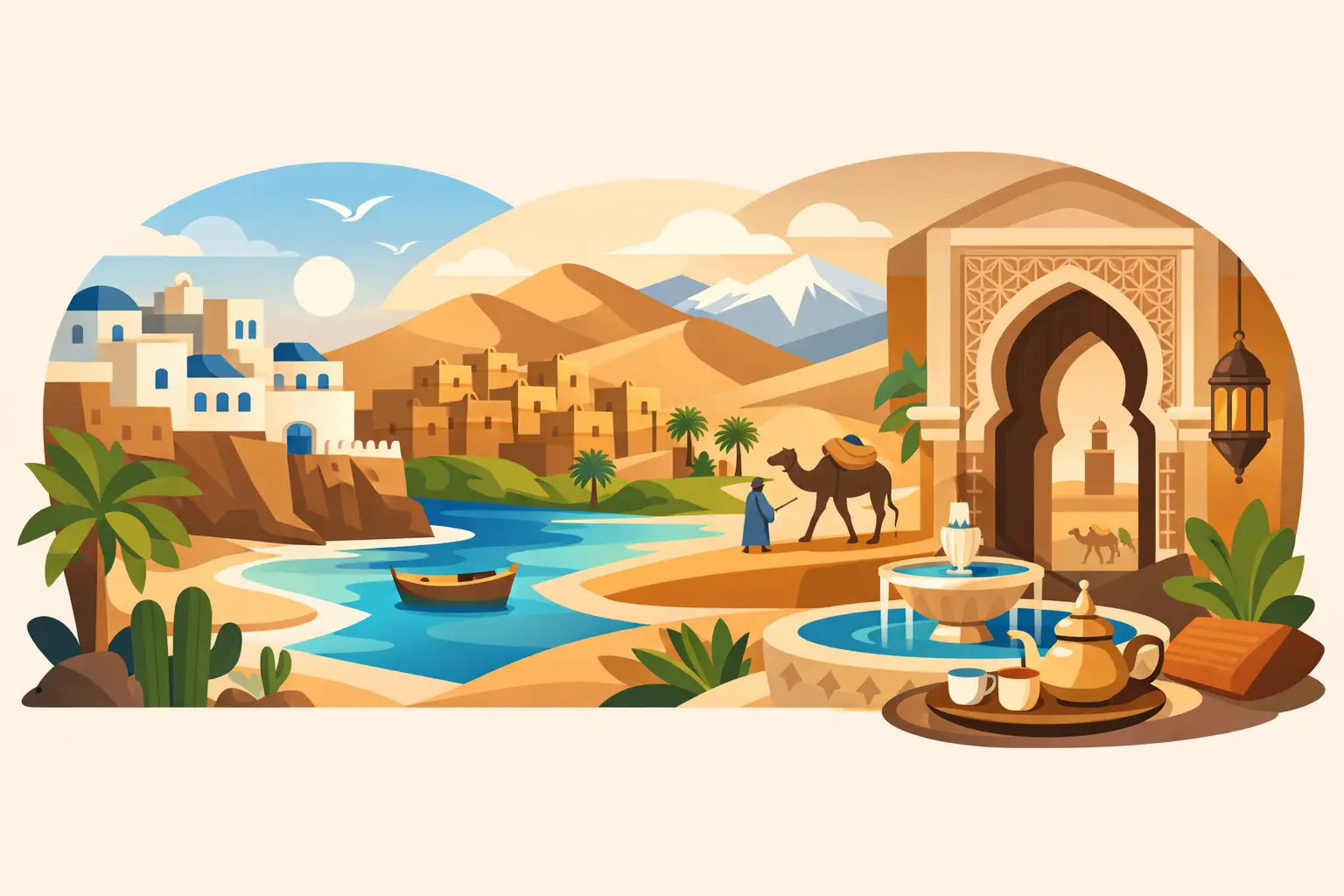
The most memorable moment in Morocco may not be in a famous square or behind a palace gate. It may be tea poured in a rose-filled valley, a quiet conversation with a carpet weaver, or the silence that arrives after sunset in the Sahara. A well-designed Morocco hidden gems itinerary makes room for those moments while still honoring the country’s essential landmarks. The key is not trying to see everything. It is choosing a route that moves with purpose, balances long drives with meaningful stops, and gives each place enough time to feel real.
For travelers who want cultural depth without the uncertainty of planning every transfer, Morocco is especially rewarding in a small group. Local knowledge changes the experience: which kasbah is worth entering, where to pause for lunch, when a mountain road is best avoided, and how to approach traditional communities respectfully.
Why a Hidden-Gems Route Needs Thoughtful Pacing
Morocco looks compact on a map, but distances can be deceptive. Roads through the High Atlas Mountains are scenic and slow, desert stretches require patience, and the best discoveries often sit beyond the most direct route. A rushed itinerary can turn extraordinary landscapes into views from a vehicle window.
This 10-day route connects Marrakech, the High Atlas, southern oases, the Sahara, and Fes. It includes celebrated sites such as Ait Ben Haddou and Fes, but places them within a fuller cultural story. Rather than treating lesser-known stops as quick photo breaks, it allows time to meet artisans, walk through palm groves, and understand the traditions that shape each region.
It is a strong choice for first-time visitors who want more than the standard imperial-cities circuit, as well as returning travelers ready to see Morocco beyond its most familiar highlights.
A 10-Day Morocco Hidden Gems Itinerary
Days 1-2: Marrakech Beyond the Main Square
Begin in Marrakech, where the rhythm of the medina can feel exhilarating and intense. Spend time with the city’s signature sights, including its historic gardens, architectural landmarks, and bustling souks, but leave room to wander smaller quarters where daily life continues beyond the main tourist pathways.
A thoughtful guide can add context that independent visitors often miss: the difference between a working fondouk and a souvenir shop, the social role of a neighborhood hammam, or the ingredients behind the spices piled high in the market. A traditional meal in a family-run setting offers a more personal introduction than choosing the busiest restaurant near Jemaa el-Fnaa.
The second evening is also a good time to reset before heading into the mountains. Morocco rewards travelers who arrive curious, but not over-scheduled.
Day 3: Telouet and Ait Ben Haddou
Cross the High Atlas via the Tizi n’Tichka pass, a dramatic road that climbs through changing terrain and Berber villages. Weather can affect mountain travel, particularly in winter, so this is one of the days when experienced local planning matters most.
Before reaching Ait Ben Haddou, stop in Telouet. Its former kasbah carries traces of Morocco’s complex political history, with ornate interiors that contrast sharply with its weathered exterior. It is less polished than major monuments, and that is part of its appeal. The place feels like a fragment of a changing kingdom rather than a perfectly staged attraction.
Ait Ben Haddou is better known, but an overnight nearby allows you to experience it at quieter hours. Early morning or late afternoon reveals the earthen architecture at its most atmospheric, after many day visitors have moved on.
Day 4: Skoura’s Palm Groves and Kasbah Life
Continue toward Skoura, an oasis region where palm groves stretch between mud-brick villages and old kasbahs. This is a gentler side of southern Morocco, shaped by irrigation channels, date palms, olive trees, and agricultural life.
Rather than simply checking off a historic building, take time to understand why kasbahs were built, who lived in them, and how families are working to preserve these fragile structures. A walk through the palmeraie offers a welcome change of pace after the mountain crossing. It also creates space for conversations that make a guided journey feel less like sightseeing and more like cultural exchange.
Day 5: Rose Valley and the Dades Gorge
Travel through the Valley of Roses, where fields and small distilleries are especially evocative during the spring bloom. Outside that season, the landscape remains compelling, and local producers can still explain the process behind rose water and other regional goods.
The Dades Gorge follows, with red rock formations, steep valley walls, and villages set against the mountains. This is a place for a relaxed walk or a scenic drive, not a race through every viewpoint. Accommodations in the valley can be simple compared with Marrakech, but the trade-off is meaningful: clear night skies, fresh mountain air, and a stronger sense of place.
Days 6-7: Erg Chebbi and the Sahara
The approach to the Erg Chebbi dunes near Merzouga is one of Morocco’s great transitions. Rocky desert gives way to rising sand, and the horizon suddenly appears almost unreal. Spend two nights in the region rather than treating the desert as a one-night detour. That extra time makes the experience more comfortable and far more rewarding.
One day can include a visit with a local Gnawa community, whose music reflects deep Saharan and sub-Saharan cultural roots. Depending on conditions and group preferences, there may also be time to meet families in nearby villages, explore fossil-rich terrain, or share tea with local hosts.
A desert camp should be chosen for care, not spectacle alone. Comfortable bedding, reliable operations, thoughtful food, and respectful environmental practices matter. Camel riding is optional and should never be presented as the only way to experience the dunes. Walking into the sand at sunset can be just as powerful.
Day 8: Erfoud, Ziz Valley, and Midelt
Leave the dunes through Erfoud, a town associated with fossil craftsmanship and date production. From there, follow the Ziz Valley north, where vast palm groves cut through arid terrain. The scale of the oasis is striking, particularly from high viewpoints along the route.
This is a longer travel day, so it benefits from well-timed stops and a comfortable overnight in or near Midelt. The town sits between the Middle and High Atlas ranges and offers a quieter, more practical pause before the final journey toward Fes. It may not appear on every glossy Morocco itinerary, but it helps the route feel humane rather than hurried.
Day 9: Cedar Forests, Azrou, and Fes
As the landscape becomes greener, pass through the Middle Atlas. Near Azrou, cedar forests and mountain communities offer a surprising contrast to the desert days before. Wild Barbary macaques live in parts of this region, though responsible viewing means keeping distance, avoiding feeding, and respecting their habitat.
Arrive in Fes with enough time to settle in before entering its famously intricate medina. After the open roads of the south, Fes feels wonderfully dense: narrow lanes, workshops, madrasas, bakeries, and centuries of scholarship layered into daily life.
Day 10: Fes Through a Local Lens
Conclude with a full day in Fes, focusing on craftsmanship and living tradition rather than trying to conquer every alley. Visit artisan workshops where appropriate, learn how zellige tilework or leather tanning fits into the city’s heritage, and pause for a meal that reflects the rich culinary identity of the region.
Fes can be overwhelming without guidance. Its medina is not simply a maze to navigate; it is a working historic city. A knowledgeable local guide helps travelers move confidently while understanding the customs behind what they see.
How to Make the Route Feel Meaningful, Not Busy
The difference between a memorable journey and an exhausting one often comes down to a few decisions. Avoid changing hotels every night when possible, and build in two-night stays in Marrakech and the Sahara. Choose locally rooted experiences over generic shopping stops. Most importantly, remain flexible. Road conditions, seasonal heat, religious holidays, and local events can all shape the best version of a day.
Travelers should also consider the season. Spring and fall offer generally comfortable conditions, though popular places can be busier. Winter brings crisp desert nights and possible snow in the mountains. Summer can work well for those prepared for heat, especially when the itinerary limits midday activity and uses well-chosen accommodations.
A small group is particularly well suited to this kind of route. With no large coach schedule to protect, there is more room for a longer conversation, an unplanned viewpoint, or a meal in a place too small for a crowd. At the same time, professional coordination provides reassurance across the country’s longer travel days.
Atlas Global Tours designs Morocco journeys around that balance: landmark experiences with the time, local insight, and attentive support needed to find the stories that are not printed on every postcard.
The best hidden gem is rarely a secret place with no other visitors. More often, it is a place experienced at the right pace, with the right context, and with enough time to let Morocco surprise you.