The right small group Egypt tour example is not a race from pyramid to temple. It is a thoughtfully paced journey that gives the Great Pyramids their proper sense of scale, makes room for an unhurried conversation over Egyptian coffee, and pairs iconic sites with the everyday culture that brings them to life.
Egypt rewards travelers who look beyond a checklist. Its ancient monuments are extraordinary, but the strongest memories often come from the moments between them: watching feluccas cross the Nile at sunset, hearing a local guide explain the meaning behind a family tradition, or sharing a meal with fellow travelers after a full day in Luxor. For travelers who want cultural depth without the stress of arranging every transfer, ticket, and hotel, a small-group format offers a reassuring balance of structure and personal space.
What a Well-Designed Small Group Egypt Tour Looks Like
A 10-day itinerary is often an ideal first introduction to Egypt. It gives travelers enough time to experience Cairo, Upper Egypt, and the Nile without spending every day packing and unpacking. A group capped at 10 travelers also changes the rhythm of the trip. Instead of moving through sites as part of a large coach convoy, guests can ask questions easily, adjust around a slower moment when possible, and enjoy more personal attention from their tour leader and local guides.
The itinerary below is a practical example, not a one-size-fits-all rule. Travelers with a particular interest in archaeology may want additional time in Luxor. Those drawn to Nubian culture may prefer a longer stay in Aswan. The best trip design leaves room for these priorities while protecting the essentials: reliable logistics, comfortable accommodations, knowledgeable local guidance, and time to absorb what you are seeing.
A 10-Day Small Group Egypt Tour Example
Days 1 and 2: Arrive in Cairo and Meet Ancient Egypt Face to Face
Most international flights arrive in Cairo late in the day, so the first evening should be deliberately easy. A pre-arranged airport welcome and transfer can make a major difference after a long flight. Travelers settle into their hotel, receive a clear overview of the days ahead, and rest before the journey begins in earnest.
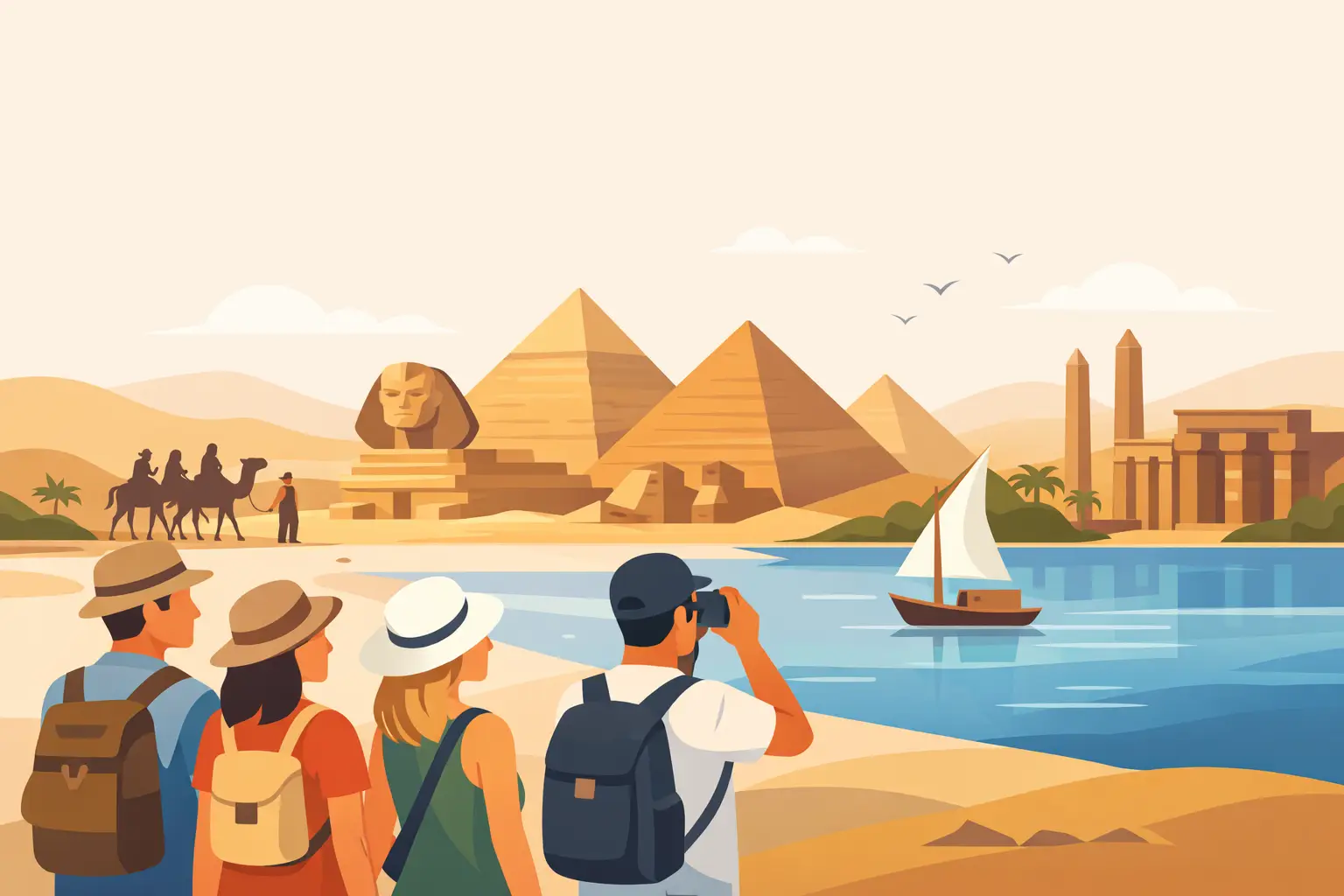
The following morning is for Giza. Standing before the Great Pyramids and the Sphinx is a defining moment, but an expert guide gives the experience context: how the pyramids were built, what remains debated, and why these monuments still command such wonder more than 4,000 years later. A well-paced day may also include time at the Grand Egyptian Museum, depending on current access and scheduling, where Egypt’s artistic and archaeological legacy becomes more tangible.
That evening, a welcome dinner offers more than a meal. It gives a small group the chance to get acquainted before the itinerary moves south, creating the easy camaraderie that makes shared travel so rewarding.
Day 3: Cairo Beyond the Pyramids
Cairo is not simply the gateway to ancient Egypt. It is a living, layered capital where medieval mosques, busy markets, elegant old neighborhoods, and contemporary city life exist side by side. A fuller day might include Islamic Cairo, the historic streets around Khan el-Khalili, and time to understand the city through its people rather than only its monuments.
This is where small-group travel has an advantage. Large groups tend to move quickly through crowded areas on fixed schedules. A smaller party can navigate with more ease, pause for a tea break, spend more time with a guide, and make room for the sensory experience of the city itself. The goal is not to avoid Cairo’s energy. It is to experience it with confidence and thoughtful support.
Day 4: Fly to Luxor, Ancient Thebes
A domestic flight from Cairo to Luxor saves substantial travel time and brings travelers to what was once ancient Thebes, one of the great capitals of the pharaonic world. Luxor is unusually rich in monuments, with the Nile dividing the East Bank and West Bank into landscapes of temples, tombs, fields, and villages.
After checking in, the afternoon can begin with Karnak Temple. Its monumental columns, sacred lake, and processional avenues are impressive in photographs, but they are far more powerful when explored with a guide who can explain how generations of rulers shaped the complex. A visit around late afternoon can also offer gentler light and a less hurried feeling than the busiest midday hours.
Day 5: Valley of the Kings and Luxor’s West Bank
The West Bank is where ancient Egypt’s rulers prepared for eternity. A carefully planned visit to the Valley of the Kings introduces the painted tombs of pharaohs, including tomb access selected according to availability and preservation needs. These interiors can be hot and crowded, so timing, clear guidance, and a sensible pace matter.
The day may also include the Temple of Hatshepsut and the Colossi of Memnon. Hatshepsut’s story is especially compelling because her reign challenges simplistic assumptions about power in the ancient world. A good guide does more than recite dates. They help travelers notice the politics, beliefs, artistry, and human ambition embedded in the stone.
A quieter evening in Luxor is valuable. This is a destination where travelers benefit from time to reflect, perhaps over dinner overlooking the Nile, rather than immediately moving on to the next major site.
Days 6 and 7: Travel the Nile Toward Aswan
A Nile cruise is not required for every Egypt itinerary, but it can be one of the most relaxing ways to connect Luxor and Aswan. The river was ancient Egypt’s lifeline, and seeing temple landscapes emerge along its banks offers a perspective that road or air travel cannot match.
As the boat sails south, stops may include the Temple of Horus at Edfu and the dual temple at Kom Ombo. Edfu is remarkably well preserved and offers a vivid sense of temple ritual and mythology. Kom Ombo, set close to the river, is known for its unusual dedication to two gods and its connections to ancient medicine.
Cruise accommodations vary, so travelers should look closely at what is included. A smaller vessel or carefully chosen ship may feel more intimate, while a larger ship may offer more facilities. What matters most is that the cruise supports the itinerary rather than turning it into a floating hotel schedule. There should be time to enjoy the river, not just sleep beside it.
Why Aswan Deserves More Than a Quick Stop
Day 8: Temples, Nubian Heritage, and the Nile at Dusk
Aswan has a calmer, warmer rhythm than Cairo and Luxor. It is a place to appreciate the Nile as a living landscape, framed by desert hills, islands, and sailing boats. A visit to Philae Temple, relocated stone by stone to protect it from flooding, reveals both ancient religious devotion and a remarkable modern preservation effort.
This is also the right place to seek a respectful introduction to Nubian culture. Depending on the itinerary, travelers may visit a Nubian community, learn about local customs, or enjoy a home-hosted meal. These experiences should never feel staged or rushed. They are most meaningful when arranged with care, respect for hosts, and enough time for genuine exchange.
A sunset felucca ride is a fitting way to end the day. It is simple, quiet, and distinctly Aswan: wind in the sail, soft light on the water, and the sense that Egypt’s history is inseparable from its river.
Day 9: Abu Simbel and a Final Evening in Cairo
An early excursion to Abu Simbel is often the most logistically demanding day of the trip, but the reward is significant. The temples of Ramses II and Nefertari stand near Lake Nasser, close to the Sudanese border. Their rescue and relocation in the 1960s remain one of the world’s great heritage preservation achievements.
After returning to Aswan, travelers typically fly back to Cairo for a final night. This is a sensible place in the itinerary for a farewell dinner and a chance to share favorite discoveries. By this point, the group has often moved beyond polite introductions into the kind of easy connection that comes from experiencing something remarkable together.
Day 10: Departure With the Details Handled
A final airport transfer may seem like a small detail, but it is part of what makes a guided journey feel dependable. Egypt is rich, busy, and occasionally complex to navigate. Knowing that the major arrangements are handled allows travelers to focus on the experience rather than the logistics.
The Difference a Small Group Makes in Egypt
Egypt’s major sites are popular for good reason, and no itinerary can make the Pyramids or Valley of the Kings private. Still, group size affects nearly every part of the experience. With 10 travelers or fewer, it is easier to hear your guide, move through hotel check-ins, choose a comfortable restaurant table, and tailor the pace around the group’s interests.
Small groups also make local interactions feel more natural. A guide can answer individual questions, explain cultural etiquette before a market visit, and help travelers feel comfortable when trying unfamiliar food or navigating a lively street. For solo travelers, the format offers built-in companionship without requiring them to manage a large, impersonal tour. Couples and friends gain the ease of independent travel with more support behind the scenes.
Atlas Global Tours designs journeys around this balance: meaningful local access, iconic landmarks, and the reassurance of a carefully managed itinerary. The purpose is not to see less. It is to experience more of what each place means.
Choosing the Right Version of This Itinerary
Before booking, consider what you want from Egypt beyond the headline sites. If you have mobility concerns, ask about walking distances, uneven ground, stairs inside tombs, and the pace of early-morning excursions. If your priority is photography, ask whether there is time at sites when light is best. If food and local life matter most, look for an itinerary that includes more than hotel buffets and quick shopping stops.
Also consider the season. October through April generally brings milder temperatures and high demand. Summer can be much hotter, particularly in Luxor and Aswan, yet it may suit travelers who prefer fewer visitors and are comfortable with early starts. There is no universally perfect month, only the season that best matches your comfort level and travel style.
Egypt is at its most memorable when the itinerary makes room for wonder without treating travelers like a moving crowd. Choose a journey with enough time to look up, ask another question, linger over the Nile, and let the country become more than a collection of famous names.