
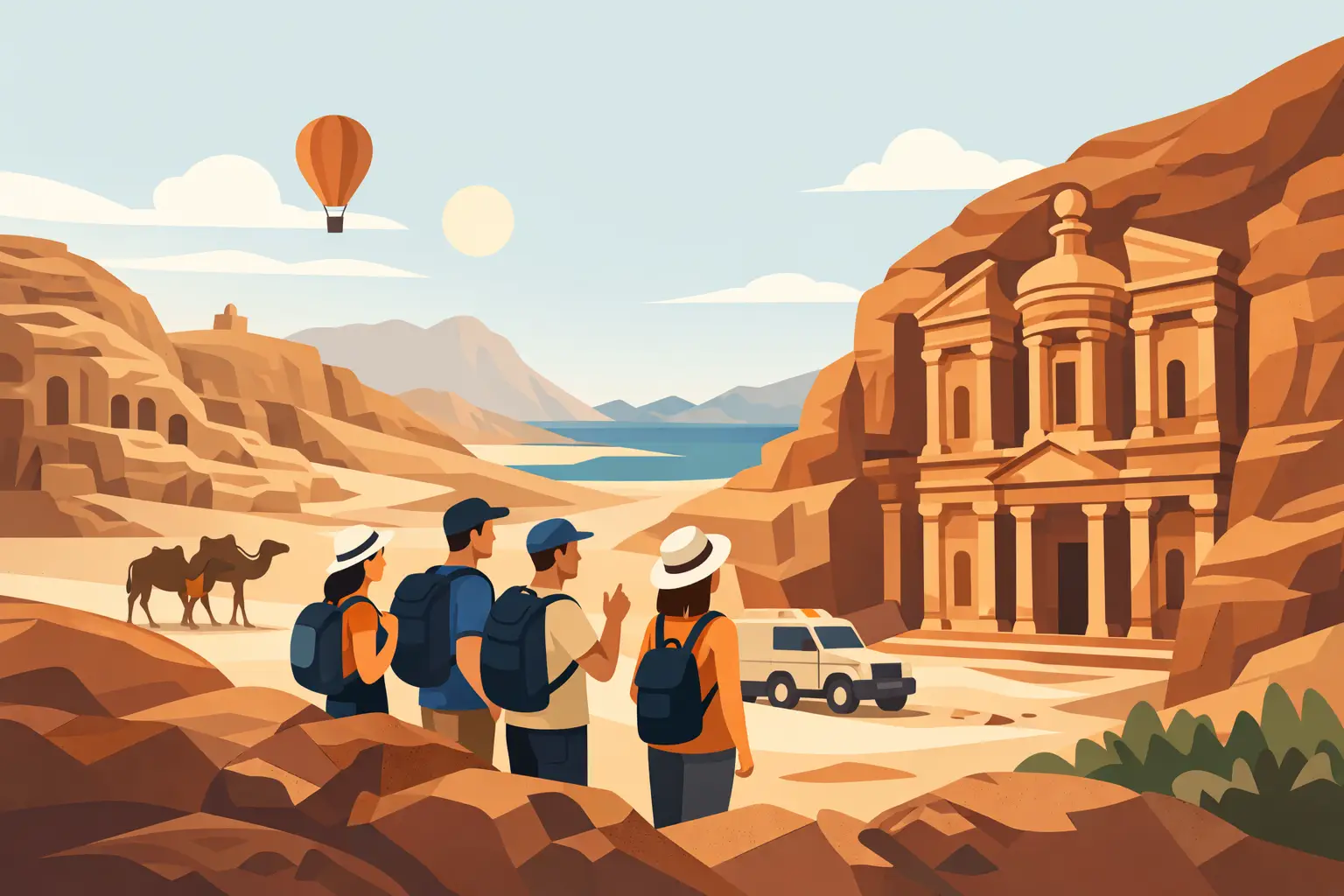
Jordan rewards travelers who pay attention. One hour you are walking through Roman streets in Amman, and the next you are standing in the silence of Wadi Rum, watching the light shift across sandstone. That contrast is exactly why small group Jordan tours appeal to travelers who want more than a checklist. In a destination layered with history, hospitality, and dramatic landscapes, group size shapes the entire experience.
A smaller group changes the pace, the conversations, and the quality of time on the ground. It becomes easier to ask questions, linger where it matters, and experience Jordan as a living culture rather than a series of crowded stops. For travelers who want expert planning without feeling swept along by a bus-sized itinerary, that difference matters.
What makes small group Jordan tours different
The biggest advantage is not simply having fewer people around. It is what that smaller number allows. When a group is capped at a more intimate size, travel feels more personal from the first day. Guides can adapt to the energy of the group, answer detailed questions, and create space for genuine connection with places and people.
In Jordan, that flexibility is especially valuable. Petra is not a place most travelers want to rush through. Some want to focus on Nabataean history. Others care just as much about the changing colors of the rock, the walk through the Siq, or finding quieter viewpoints beyond the Treasury. In a smaller group, there is room for those different interests to coexist without turning the day into a logistical exercise.
The same applies across the country. At the Dead Sea, some travelers want time to float and relax while others want context about the region itself. In Jerash, a guide can move beyond basic facts and explain how Roman urban planning still shapes the site. In Madaba or Mount Nebo, the experience can feel reflective rather than hurried. Jordan is compact enough to cover multiple highlights in one trip, but rich enough that it deserves a thoughtful rhythm.
Why Jordan is especially well suited to small group travel
Some destinations work fine on a large coach tour. Jordan is not one of them if your goal is depth. The country’s appeal lies not only in its headline sites, but in the transitions between them – shared meals, local conversations, roadside scenery, and the stories that connect ancient history to modern daily life.
That is where smaller-format touring shines. You are not spending your trip waiting for 40 people to load and unload, coordinating endless preferences, or moving through every site in a cluster. You can stay closer to the human side of travel. That might mean hearing your guide explain Bedouin traditions in Wadi Rum with enough time for follow-up questions, or enjoying a local meal where conversation still feels natural rather than staged.
Jordan also attracts a wide range of travelers. Some come for archaeology, some for biblical history, some for desert landscapes, and some for the chance to experience the Middle East in a welcoming, accessible way. A small group makes it easier to serve those overlapping interests without flattening the journey into something generic.
The experience at Petra changes with group size
Petra deserves special mention because it is the moment many travelers build the trip around. It is one of the world’s great archaeological sites, but it is also physically larger and more nuanced than many people expect. A rushed visit can reduce it to a single photo stop. A well-planned visit with a smaller group gives it room to unfold.
You notice more when logistics are smoother. Entering through the Siq feels more immersive when your guide can keep the group connected without shouting or rushing. Once the Treasury appears, there is time to absorb the scale of it. From there, the site opens up into tombs, facades, pathways, and stories that reward context.
Smaller groups also make practical decisions easier. Pace matters in Petra because not every traveler wants the same level of hiking. Some may choose a gentler route while others push farther. When the group is intimate and well managed, that kind of variation can be handled with far more ease and care.
Comfort and cultural depth are not opposites
Many travelers assume they must choose between comfort and authenticity. In Jordan, the best trips do not force that trade-off. Thoughtful small group travel blends both.
You can spend the day learning about ancient kingdoms, local customs, and regional cuisine, then return to comfortable accommodations and a well-organized plan. You can have immersive experiences without carrying the stress of arranging every transfer, timing every site entry, or wondering how to navigate language and logistics on your own.
That balance is a major reason many American travelers prefer this style. Jordan is very welcoming, but it is still a destination where experienced planning adds real value. Distances are manageable yet varied. Cultural context enriches every stop. And while independent travel is possible, having a knowledgeable local guide often turns a beautiful trip into a more meaningful one.
Small group Jordan tours and peace of mind
Trust matters when you are traveling internationally, especially in a region many Americans may be visiting for the first time. A well-run small group tour offers structure without making the experience feel rigid. That means airport coordination, reliable transportation, carefully selected hotels, and clear communication before and during the trip.
Just as important, it means support when travel does what travel sometimes does. Weather shifts. Energy levels vary. A site visit may need a timing adjustment. In a smaller group, those moments are easier to manage calmly and professionally.
This is not about removing spontaneity. It is about removing unnecessary friction. When the essentials are handled well, travelers can stay present for the parts that matter – the call to prayer echoing across a city, the warmth of Jordanian hospitality, the surprise of how green parts of the north can be, the stillness of the desert after sunset.
Who benefits most from this style of travel
Small group touring works particularly well for couples, solo travelers, and friends who want a shared itinerary without the impersonality of mass tourism. It also suits travelers who are curious and engaged but do not want the demands of building a complex trip from scratch.
For solo travelers, the format offers a strong middle ground. There is built-in companionship, local guidance, and logistical support, but still enough independence to enjoy the destination in your own way. For couples, it provides ease and enrichment without isolating the trip inside a private bubble. For seasoned travelers, it offers the chance to go deeper without spending months planning details.
This approach also tends to attract people who value conversation. When groups are smaller, fellow travelers often become part of the experience in a positive way. Shared wonder at Petra, a meal in a local setting, or a drive through shifting landscapes can create the kind of connection that larger tours rarely manage.
Choosing the right Jordan tour
Not all small group tours are designed with the same intention. Some are small in number but still rushed in spirit. The best ones are carefully paced and culturally grounded. Look for itineraries that balance Jordan’s iconic landmarks with time for context, local interaction, and rest.
It is also worth paying attention to group cap, guiding style, and how the company communicates. A true small-group operator does not just advertise intimacy. It builds the trip around it. That means thoughtful routing, enough time at major sites, and guides who act as cultural interpreters rather than just schedule managers.
For travelers seeking that balance of immersion, comfort, and confidence, companies such as Atlas Global Tours stand out by keeping groups intentionally small and prioritizing meaningful local experiences alongside dependable planning. That combination fits Jordan particularly well.
Jordan has a way of staying with people. It is the color of Petra at different hours, the quiet of the desert, the generosity of a shared meal, the feeling of walking through history that still has a human pulse. The right tour format does not distract from those moments. It gives them the space they deserve.