
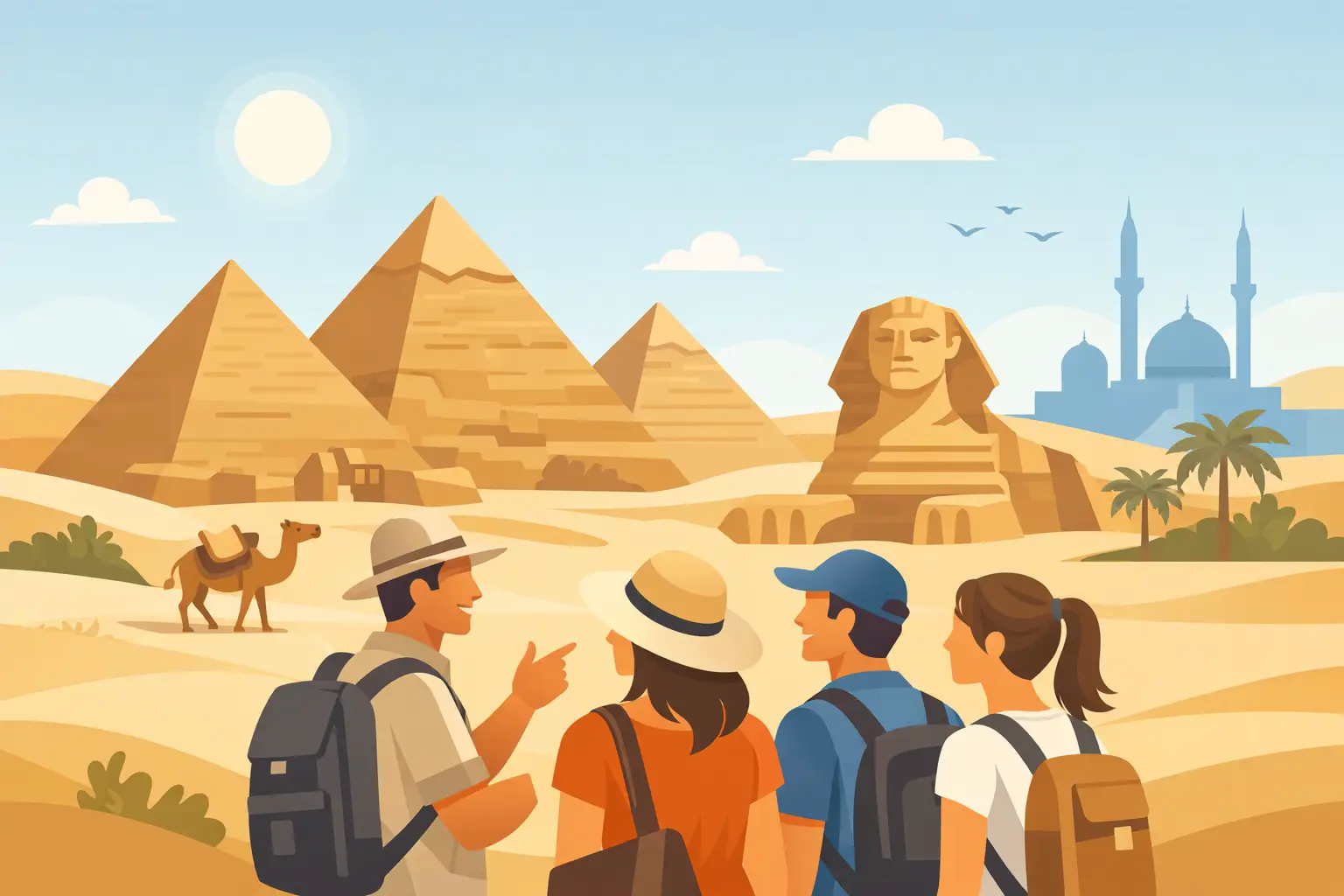
You can stand before the Pyramids with hundreds of other visitors and still feel like you barely touched Egypt. That is the difference good trip design makes. Small group Egypt tours are built for travelers who want more than a quick photo stop – they want context, conversation, and the kind of access that turns a famous destination into a lived experience.
Egypt rewards curiosity. Its best moments are not only the headline sites, but also the details around them – the story behind a temple relief, the rhythm of a local market, the perspective of a guide who can connect ancient history to modern life. In a smaller group, those moments are easier to reach and far easier to enjoy.
What makes small group Egypt tours different
Group size changes the entire feel of a trip. On a large coach tour, logistics often drive the day. The schedule has to move at the pace of a bigger crowd, questions can get lost, and the experience can feel more like processing people through landmarks than truly engaging with a place.
A small group creates room for a different style of travel. Moving through Cairo, Luxor, Aswan, and other major destinations is simply more manageable when the group is intimate. Hotel check-ins tend to be smoother. Transfers are less cumbersome. Guides can spend more time with each traveler instead of projecting to a crowd.
Just as important, the experience feels more personal. You are not one of forty people trying to hear a guide over traffic outside the Egyptian Museum or hurrying through Karnak Temple because the group needs to stay on a rigid timetable. You have more space to ask questions, absorb what you are seeing, and travel at a pace that feels thoughtful rather than rushed.
Why Egypt is especially well suited to smaller groups
Some destinations work well at almost any scale. Egypt is not really one of them. It is layered, busy, historic, and often most rewarding when interpretation is strong and logistics are handled carefully.
Cairo alone can be exhilarating and intense. Between traffic, museum visits, neighborhood contrasts, and the sheer density of history, it helps to have a guide who can tailor the flow of the day to the group rather than managing a crowd. Smaller groups can move more efficiently and stay more connected to the story of the place.
Upper Egypt offers another reason. Sites such as Luxor Temple, the Valley of the Kings, Philae Temple, and Edfu deserve more than a surface-level explanation. They become far more meaningful when travelers can pause, ask follow-up questions, and hear nuanced interpretation. In a small group, the guide can read the room – spending more time where interest is high and moving briskly when energy shifts.
Then there is the human side of the journey. Egypt is not only monuments. It is coffee shops, river views, crafts, family-run restaurants, and daily life unfolding around extraordinary history. Smaller groups tend to engage more naturally in these settings. They are easier to welcome, easier to accommodate, and less likely to feel detached from the places they visit.
The real benefits go beyond comfort
Comfort matters, but the biggest advantage of small group Egypt tours is depth. When a group is capped at a lower number, the tour can be designed around quality rather than volume.
That usually means stronger interaction with local guides. A knowledgeable guide in Egypt does much more than recite dates. They help travelers understand dynasties, religion, art, politics, and the living culture around the sites. In a smaller setting, those insights land differently because travelers can actually engage in a conversation instead of just listening from the back.
It also means greater flexibility within a well-organized framework. That does not mean an unstructured trip where plans change constantly. It means the day can breathe a little. If the group is especially fascinated by the tombs in the Valley of the Kings, there is often more room to lean into that interest. If everyone wants a slower lunch after an early temple visit, the experience can adapt without turning into a logistical headache.
For many travelers, there is also a social advantage. Small groups often strike the right balance between companionship and personal space. You have people to share the experience with, but not so many that the trip feels anonymous. That can be especially appealing for solo travelers and couples who want community without the intensity of a large, high-volume tour.
What to look for in small group Egypt tours
Not every small-group trip is designed the same way. A lower headcount helps, but it does not automatically guarantee a better experience.
Start with the itinerary. A strong Egypt itinerary should balance major landmarks with breathing room. If every day is packed from dawn to late evening, the trip may still feel exhausting even with a smaller group. Egypt has immense historical density, and that is exactly why pacing matters. Travelers need time to absorb what they are seeing.
Next, look at the quality of guiding. In Egypt, good guiding is not optional. The destination opens up when you are traveling with someone who can interpret sites clearly, answer real questions, and offer cultural context beyond the textbook version. The best tours are led by guides who feel like cultural ambassadors, not just schedule managers.
Pay attention to how the company handles practical details, too. Airport coordination, domestic transfers, hotel standards, communication, and day-to-day support matter in Egypt more than many first-time visitors expect. A thoughtfully run trip should remove friction without flattening the experience.
Group cap is another key detail. There is a meaningful difference between a tour that calls itself small at 16 people and one that keeps the group truly intimate. Atlas Global Tours, for example, caps tours at 10 travelers, which allows for a more attentive and flexible experience while keeping the social energy that many people enjoy.
Is a small group tour right for every traveler?
It depends on what kind of trip you want. If your main priority is getting the lowest possible price and you are comfortable with a faster, more standardized experience, a larger tour may work. Big operators can sometimes offer lower rates because they move more people at once.
But there is a trade-off. Lower cost often comes with less personalization, less flexibility, and less direct access to the guide. In a destination like Egypt, that can affect the quality of the trip more than travelers expect.
On the other hand, if you want independent travel with no set structure, even a very well-designed small group tour may feel too organized. Some travelers prefer building every day themselves. That approach can work, especially for experienced international travelers, but it requires far more planning and leaves less margin for support when things get complicated.
For many U.S. travelers, the sweet spot is a small-group journey with strong local guidance and clear planning behind it. You still get the ease of a fully arranged experience, but without the impersonality of mass tourism.
The kind of Egypt experience many travelers actually want
Most people do not go to Egypt only to check off the pyramids and move on. They want to feel the scale of ancient sites, understand what they are looking at, and come home with more than a camera roll of famous angles.
That kind of travel takes intention. It takes an itinerary that respects both the destination and the traveler. It takes guides who know how to make history vivid and present-day culture accessible. And it takes a group size that allows the experience to feel human.
Small group Egypt tours work well because they match the destination. Egypt is vast, emotional, historic, and often best understood through conversation and context. A smaller format gives travelers room to experience both the grandeur and the nuance.
If you are planning a trip to Egypt, it is worth asking a simple question before you book: do you want to see Egypt, or do you want to understand it a little better while you are there? That answer usually points you in the right direction.