
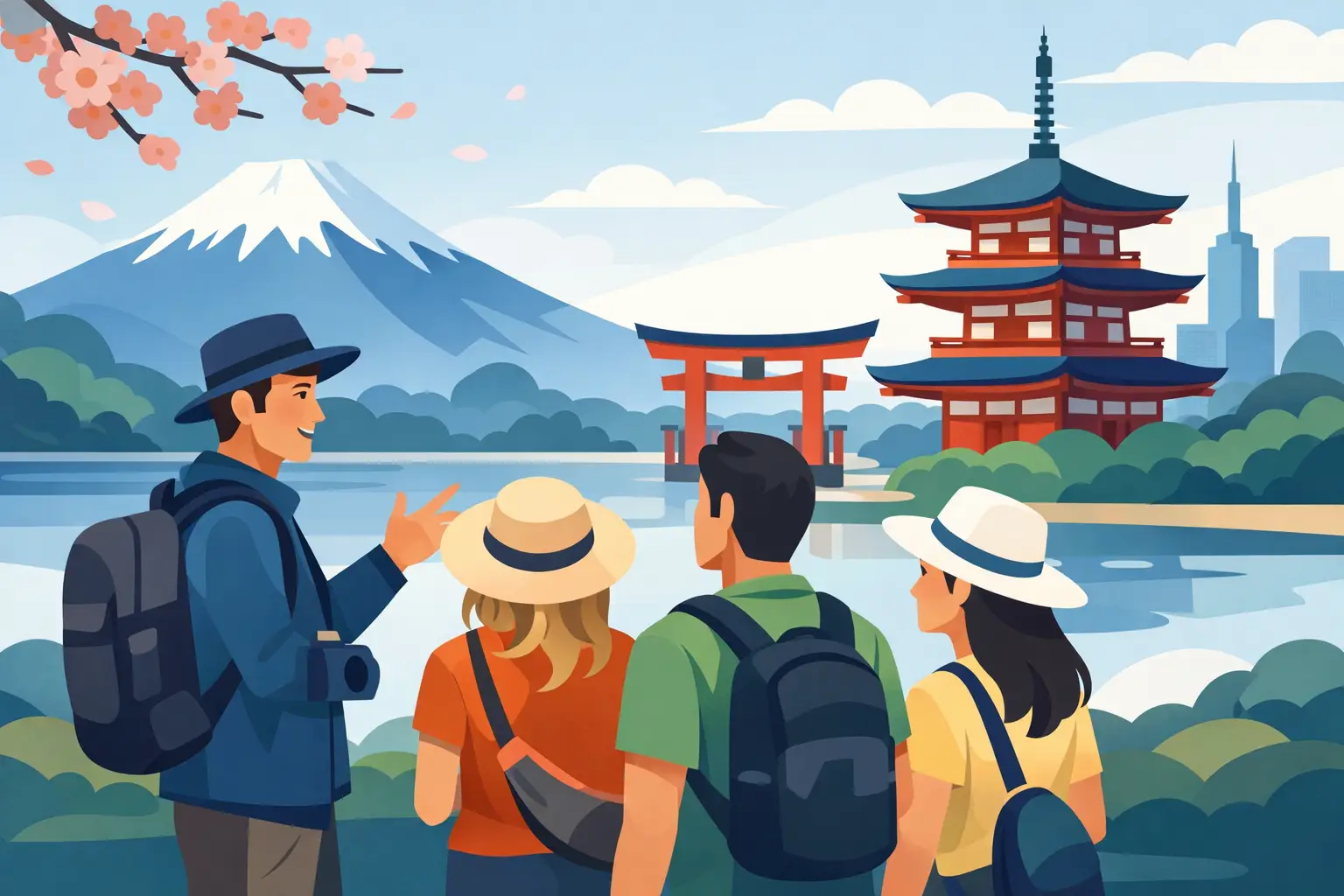
Japan rewards attention to detail. The best meals are often tucked above a train station, the most memorable neighborhoods reveal themselves slowly, and a temple visit can feel completely different when a guide explains what local worshippers are actually doing. That is exactly why small group guided tours Japan travelers choose tend to feel so different from large coach trips. You are not just moving efficiently from Tokyo to Kyoto to Osaka. You are understanding what you are seeing, and you have enough space in the day to actually feel it.
For many American travelers, Japan sits in a special category. It is deeply familiar in some ways and wonderfully disorienting in others. The trains run with astonishing precision, convenience stores are genuinely useful, and city streets can feel safer than almost anywhere. At the same time, etiquette, dining customs, shrine practices, and regional history all carry layers that are easy to miss when you travel independently or rush through with a crowd of 40.
Why small group guided tours in Japan work so well
Japan is one of the easiest countries in the world to admire and one of the easiest to misunderstand. You can absolutely visit on your own, but independent travel here often asks more from you than people expect. The rail system is excellent, yet station navigation in major cities can be overwhelming after a long flight. Restaurant culture is rewarding, yet there are social norms that are not always obvious to first-time visitors. Even choosing where to spend your limited time can become a project in itself.
A well-designed small group tour removes that friction without flattening the experience. Instead of spending your energy decoding logistics, you spend it on the destination. You notice the contrast between neon Tokyo districts and quiet temple towns. You have a local guide who can explain why one shrine feels Shinto in practice while a nearby temple reflects Buddhist tradition. You can ask questions in real time, which is often the difference between sightseeing and genuine cultural understanding.
Group size matters more in Japan than it does in many destinations. In a smaller group, entering a family-run restaurant is easier. Walking through a market is less disruptive. Checking into a ryokan feels calmer. You are more likely to hear your guide, move at a comfortable pace, and have room for spontaneous recommendations. That intimacy changes the tone of the trip.
What to expect from quality small group guided tours Japan offers
Not every small group tour is built the same. Some are essentially big-bus itineraries scaled down. Others are thoughtfully paced journeys designed around cultural immersion, not just transportation efficiency.
The strongest itineraries combine Japan’s headline destinations with places that give context. Tokyo matters, of course. So do Kyoto and Osaka. But Japan becomes richer when you also experience a quieter town, a traditional inn, a regional food scene, or a neighborhood that tourists do not always prioritize. The goal is not to avoid famous sites. It is to balance them with the kind of moments that make the country feel personal.
A good tour also respects the rhythm of Japan. That means understanding when an early start is worth it and when it is not. It means allowing time to absorb a garden, not just photograph it. It means knowing that a tea experience, a local market visit, or an evening food walk can reveal as much about the country as a major landmark.
The guide is central. In Japan, the best local guides act as interpreters of context, not just route managers. They explain etiquette before a shrine visit, help travelers navigate menu customs, clarify regional differences, and create a bridge between visitor curiosity and local life. That kind of guidance builds confidence, especially for first-time visitors who want to engage respectfully.
The trade-off between independence and support
Some travelers hesitate at the idea of a guided trip because they do not want every minute scripted. That concern is valid. Japan is a country where wandering can be deeply rewarding, and over-programming can make even a beautiful destination feel rushed.
The right small-group format should give you support where it matters most and freedom where it counts. That usually means major transportation, accommodations, cultural experiences, and key sightseeing are organized for you, while parts of the afternoon or evening remain open. You have the reassurance of a clear plan without feeling escorted from one photo stop to the next.
This balance is especially appealing for couples, solo travelers, and friends who want companionship without losing autonomy. You can share standout moments with like-minded travelers, then spend free time following your own interests, whether that means tracking down a ramen counter, browsing ceramics, or simply taking a slow walk through a neighborhood.
Who benefits most from a small-group format in Japan
Japan appeals to a wide range of travelers, but small group guided tours are particularly valuable for those who want both cultural depth and peace of mind. If you are curious about history, food, spirituality, architecture, or daily life, expert guidance adds a great deal. If you value structure but do not want to be herded through the country, a smaller group is often the sweet spot.
This format also works well for first-time visitors who want a confident introduction to Japan. The country is remarkably visitor-friendly, yet first visits can still involve decision fatigue. Where should you stay? How much time belongs in each city? Which experiences are genuinely worthwhile, and which are just social media staples? A carefully planned itinerary answers those questions before they become stress.
Even experienced travelers often find that Japan rewards guided travel more than expected. The issue is not whether you could do it alone. It is whether your time there will be richer with expert local perspective and a well-paced route. For many people, the answer is yes.
What separates a memorable Japan tour from a generic one
A memorable tour feels like it was designed by people who understand both Japan and the traveler. It does not rely only on famous stops. It considers transitions, downtime, meal quality, hotel location, and the emotional pacing of the trip.
For example, it matters whether your accommodation places you near a walkable evening district or on the edge of a city where free time becomes less useful. It matters whether your itinerary includes meals that introduce regional specialties rather than defaulting to convenience. It matters whether your guide has the time and group size to answer individual questions instead of delivering the same script to a crowd.
The best tours also acknowledge that comfort and authenticity are not opposites. You do not need to sacrifice organization to have meaningful local experiences. In fact, thoughtful planning often creates more room for them. When logistics are handled well, it becomes easier to focus on the conversation with an artisan, the atmosphere of a quiet temple precinct, or the rhythm of a backstreet food alley after dark.
Companies that specialize in intimate, culturally grounded travel tend to understand this balance best. A small-group approach with strong local guiding, clear communication, and carefully curated pacing can make Japan feel both accessible and deeply rewarding.
Questions to ask before you book
Before choosing a tour, look past the headline price and the photo gallery. Ask how many travelers are actually on the trip. There is a real difference between 8, 10, and 16 when you are boarding trains, entering restaurants, or moving through compact urban spaces.
Ask how much free time is built in and whether it is placed meaningfully. Free time is only useful if you are in a good location and have enough context to use it well. You should also ask who leads the tour and how much local expertise is included throughout the journey.
It is worth looking at the overall travel philosophy, too. Does the itinerary prioritize cultural understanding, or is it mostly a checklist of city names? Does the company communicate clearly and offer the kind of reassurance that matters when you are planning a long-haul international trip? For many U.S. travelers, that peace of mind is part of the value.
A company like Atlas Global Tours, with a small-group model and a focus on immersive travel, reflects what many travelers now want from Japan: not more movement, but more meaning.
Japan is at its best when you have enough structure to travel smoothly and enough breathing room to notice what makes the country extraordinary. Choose a tour that gives you both, and the trip stays with you long after the flight home.