A thoughtful Balkans tour review should tell you more than whether the scenery was beautiful. This is a region where Ottoman-era bazaars, Adriatic coastlines, mountain roads, Orthodox monasteries, and Austro-Hungarian city centers can all appear within one journey. The real question is whether a tour gives you enough context, comfort, and unhurried time to connect the places rather than simply collect them.
For travelers who want cultural depth without the pressure of planning every border crossing, hotel, meal, and local transfer, a small-group Balkans itinerary can be an exceptionally rewarding way to travel. But not every organized trip offers the same experience. Here is what makes the difference.
What a Balkans Tour Should Feel Like
The Balkans are not a single, uniform destination. Each country has its own language, cuisine, historical memory, pace, and character. A meaningful itinerary should respect those differences. It should make space for Sarajevo’s layered history, Montenegro’s dramatic landscapes, Albania’s evolving cultural scene, and the distinct traditions found across Serbia, Bosnia and Herzegovina, North Macedonia, Croatia, Kosovo, and beyond.
That variety is precisely why guided travel works well here. Independent travel is certainly possible, especially for experienced travelers with plenty of time. Yet a multi-country route asks for more coordination than a typical vacation: changing currencies, road conditions, local customs, border procedures, and the practical reality that the most memorable villages and viewpoints are not always connected by convenient public transportation.
A well-run tour removes that friction while keeping the experience personal. Instead of spending a morning working out logistics, you can share coffee in a neighborhood cafe, listen to a local guide explain a city’s complex past, or linger over a regional meal with fellow travelers.
Balkans Tour Review: The Small-Group Difference
Group size changes the tone of a trip. Large coach tours can cover considerable ground, but they often move on a fixed rhythm: scheduled photo stop, scheduled buffet, scheduled hotel arrival. That format may suit travelers focused on seeing as many landmarks as possible. It is less satisfying for those who want conversation, flexibility, and a genuine sense of place.
A group capped at 10 travelers creates a different kind of access. It is easier to sit together at a family-run restaurant, enter smaller local establishments, adjust the pace when a group is especially interested in a museum or market, and receive individual attention from the tour leader. Solo travelers can feel included without being absorbed into a crowd, while couples and friends still have room for their own moments.
Small-group travel also makes the cultural exchange more natural. A local guide is not simply reciting dates through a microphone. The best guides explain how history shapes everyday life, recommend dishes worth trying, answer sensitive questions with care, and help travelers move through unfamiliar settings with respect. In the Balkans, where recent history and identity can be deeply personal subjects, this perspective matters.
What Is Usually Worth the Time
The strongest Balkans itineraries balance recognizable highlights with experiences that would be harder to arrange on your own. Historic old towns and UNESCO-listed sites deserve their place, but they should not be the entire story.
Look for a journey that includes time to understand cities rather than just pass through them. Sarajevo is more meaningful when its multicultural heritage, wartime resilience, and coffee culture are explored with context. Kotor is more than a beautiful bay when you can appreciate the maritime history behind its stone lanes. In Albania, a visit becomes more memorable when ancient sites, local hospitality, and the country’s modern transformation are connected rather than presented as isolated stops.
Meals are another revealing detail. A good tour does not need to schedule every lunch and dinner. Free time is valuable, especially for travelers who want to follow a local recommendation or choose a quieter evening. At the same time, a few thoughtfully selected shared meals can introduce regional specialties and create the kind of relaxed conversation that travelers remember long after they return home.
The right balance depends on your travel style. If you want every evening planned and every meal included, ask detailed questions before booking. If you appreciate some independence within a carefully organized route, a tour with selected inclusions and meaningful free time may be a better fit.
Comfort Does Not Have to Mean Distance
The Balkans reward curiosity, but comfort still matters. Travelers should not have to choose between authentic experiences and dependable planning. Clean, well-located accommodations, clear transportation arrangements, responsive communication, and realistic driving days all shape how a trip feels.
This is especially relevant on a route that crosses several countries. A beautiful itinerary can become exhausting if it relies on rushed one-night stops or long drives with little opportunity to pause. An experienced operator builds breathing room into the schedule. That may mean spending two nights in a key city, choosing accommodations that allow for easy evening walks, or making a scenic transfer part of the experience rather than treating it as dead time.
There are trade-offs. The Balkans are not a destination where every road feels like a major American highway, and historic towns often involve cobblestones, hills, and steps. Travelers with mobility concerns should discuss their needs early. A trustworthy company will be transparent about the physical demands of the itinerary rather than promising a one-size-fits-all experience.
Questions to Ask Before You Book
A tour description can sound appealing while leaving out the details that determine whether it will suit you. Before committing, ask how many travelers are expected, which meals and entrance fees are included, how much free time is built into the route, and whether the trip uses knowledgeable local guides.
It is also wise to ask about the pace. How often will hotels change? What are the longest travel days? Is the focus primarily on capitals and major landmarks, or does the itinerary include smaller communities and local encounters? These answers reveal whether the trip has been designed for meaningful travel or merely assembled to cover a map.
For U.S. travelers, communication and support are equally important. International travel feels more enjoyable when you know who to contact before departure, what is expected at each stage of the trip, and how the company handles unexpected changes. Clear pre-trip information is not a minor convenience. It is part of the peace of mind that lets you arrive ready to experience the destination.
Who Will Enjoy a Guided Balkans Journey Most?
A Balkans tour is especially well suited to travelers who are fascinated by history, food, architecture, and the human stories behind a place. It works well for couples who want to share a complex destination without managing every detail, solo travelers who value companionship and security, and friends who would rather spend their energy experiencing the region than coordinating transportation.
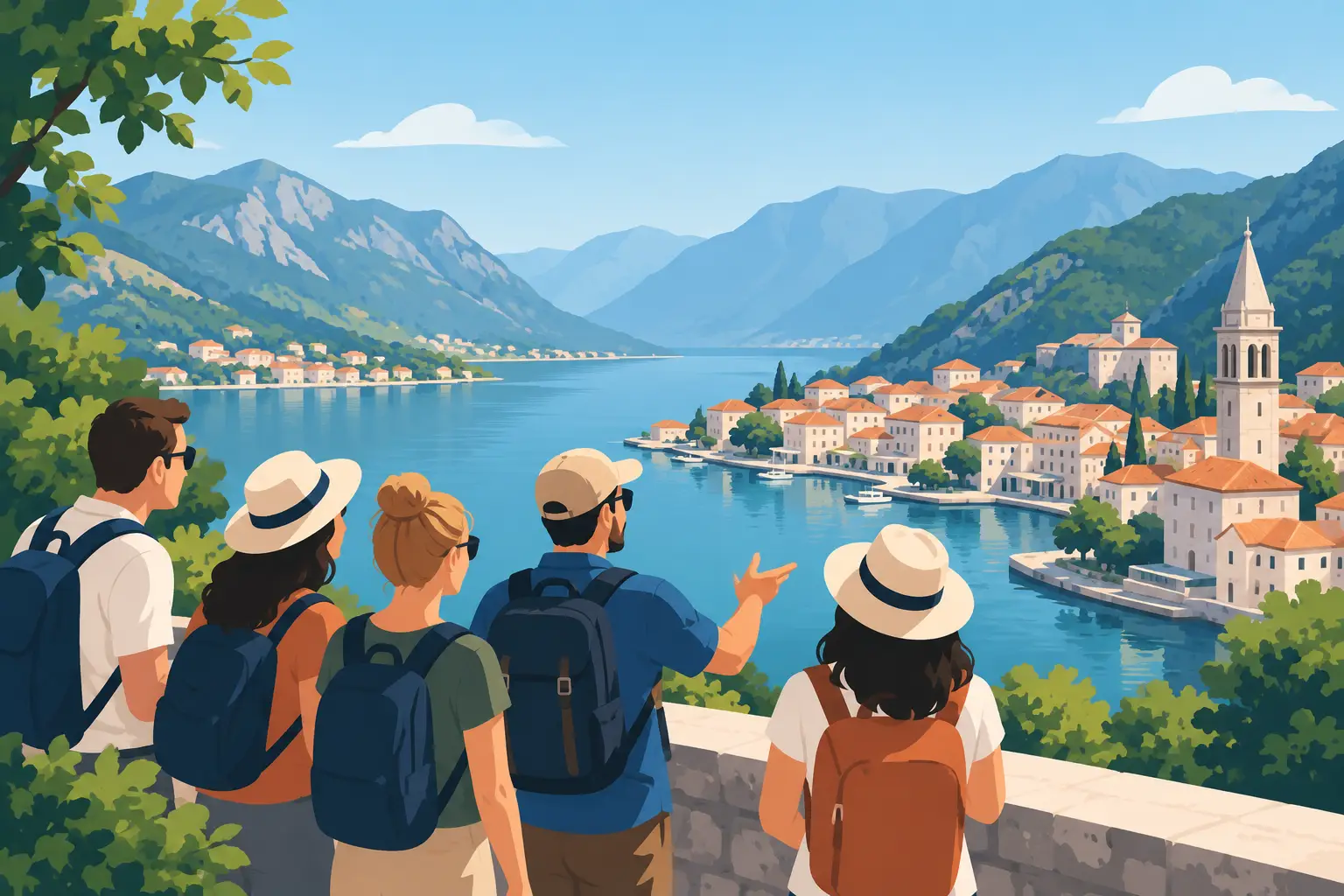
It may be less suitable for travelers who want to remain in one beach resort, design every day spontaneously, or focus only on nightlife. The appeal lies in movement, contrast, and discovery. You may begin a day in a grand old city square, stop for a regional lunch in the countryside, and end it looking over a mountain-framed bay. That variety is the point.
Atlas Global Tours approaches the region with this balance in mind: intimate groups, knowledgeable local perspective, and itineraries that leave room for both major landmarks and the smaller moments that give a journey its character.
The best Balkans trip does not ask you to rush from one postcard view to the next. It gives you time to hear the stories, taste the differences, and feel at ease in places that may be new to you. Choose a journey designed with that care, and the Balkans will stay with you far beyond the photos.