The difference between seeing Egypt and truly experiencing it often comes down to what happens between the famous sites. A thoughtful Egypt tour review should look beyond pyramid photos and hotel names to ask better questions: Who is guiding the day? How large is the group? Is there time to absorb what you are seeing? And does the itinerary create real connection alongside the must-see landmarks?
For travelers who want Egypt’s extraordinary history without the stress of coordinating every transfer, ticket, and domestic flight, a well-run small-group journey can offer a meaningful middle ground. You have the confidence of organized travel, but the experience feels personal rather than processed.
What an Egypt Tour Should Feel Like
Egypt is not a destination that benefits from rushing. The scale of its history can be overwhelming at first: ancient temples, royal tombs, Islamic architecture, bustling markets, and the everyday rhythm of life along the Nile. A strong itinerary gives each of these layers room to register.
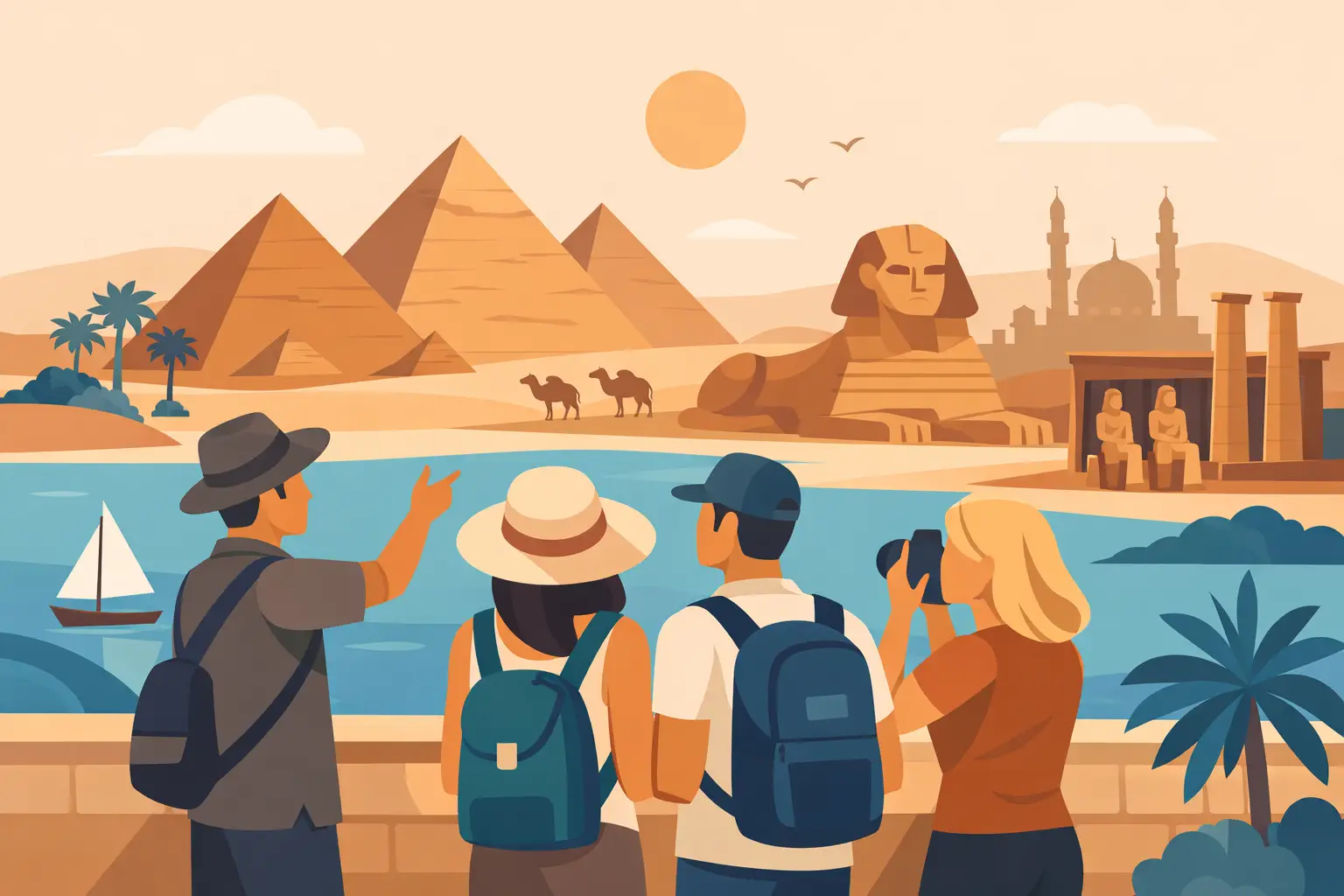
That starts in Cairo, where the Great Pyramids of Giza and the Sphinx deserve more than a quick stop between hotel check-in and dinner. With an expert local guide, these monuments become more than familiar silhouettes. You begin to understand the people, beliefs, engineering, and political ambition behind them. The best guides also know when to step back and let you simply take in the view.
The same principle matters in Luxor, often called the world’s greatest open-air museum. Karnak Temple, Luxor Temple, the Valley of the Kings, and the Temple of Hatshepsut are remarkable on their own. Visited with context and an unhurried pace, they become chapters in a story that spans thousands of years.
A worthwhile tour does not treat every day as a checklist. It balances major archaeological sites with quieter moments: a relaxed meal, time on the Nile, a conversation with a local guide, or an evening when you can choose how much energy to spend. That breathing room is not wasted time. It is what makes a full itinerary feel enriching rather than exhausting.
Egypt Tour Review: Why Group Size Changes Everything
Group size is one of the clearest indicators of the kind of trip you can expect. Large coach tours can be efficient, and they may suit travelers whose priority is seeing as much as possible at the lowest price. The trade-off is often a fixed pace, less flexibility, and a more distant relationship with the destination.
A group capped at 10 travelers creates a noticeably different dynamic. Boarding a domestic flight, checking into a hotel, entering a museum, or gathering for a meal all tend to move more easily. More importantly, you can hear your guide, ask the question that occurs to you in the moment, and receive attention when you need it.
Small groups also leave room for the unexpected. Perhaps the group lingers over a sunset on the Nile, takes a little longer at a site that has captured everyone’s interest, or receives a recommendation for a dish at dinner that would never appear on a standard tourist menu. Flexibility still has practical limits in a destination with timed visits and complex logistics, but a smaller group makes thoughtful adjustments more realistic.
For solo travelers, this format can be especially reassuring. You have companions for shared experiences and meals, without feeling absorbed into a crowd. Couples and friends often appreciate the same balance: a social atmosphere when they want it, with enough personal space to make the journey their own.
Local Guides Bring Ancient Egypt Into Focus
Egypt’s monuments are visually astonishing, but context is what turns a visit into understanding. A knowledgeable local guide can explain how a temple was used, interpret the symbols on a wall, and connect ancient dynasties to the Egypt you see today. That perspective is difficult to replicate with a guidebook or audio headset.
The most memorable guides are cultural ambassadors as much as historians. They help travelers navigate local customs with respect, explain practical details clearly, and share insights that make daily life feel more accessible. They may introduce the stories behind regional food, the etiquette of a market, or the meaning of traditions that are easy for visitors to overlook.
This matters because travel in Egypt can bring genuine contrasts. You may move from a grand archaeological complex to lively city traffic, then to the calm of a Nile-side evening. A guide who understands both the destination and the needs of international travelers provides a steady, welcoming presence throughout those transitions.
The Nile Is More Than a Scenic Transfer
A Nile cruise is often a highlight of an Egypt itinerary, but its value is not simply getting from Luxor to Aswan. It changes the tempo of the trip. After active days of temple visits and early starts, watching palm-lined riverbanks and villages pass by offers a quieter way to experience the country.
It is also a chance to see how geography shaped Egyptian civilization. The river was a source of transportation, agriculture, trade, and spiritual meaning. When you visit temples such as Edfu and Kom Ombo along the route, their location makes more sense in the broader landscape of ancient Egypt.
Cruise standards vary, so travelers should be clear about expectations. A Nile vessel can be comfortable and well-appointed without resembling a modern ocean cruise ship. Cabins are generally compact, schedules can be structured around docking times, and Wi-Fi may be inconsistent. For many travelers, those are reasonable trade-offs for waking up to the Nile outside the window and having the day’s logistics handled for them.
Comfort, Safety, and the Details That Build Confidence
An immersive trip should never require travelers to sacrifice peace of mind. Egypt has its own pace and practical considerations, from busy streets and airport procedures to warm weather and early sightseeing hours. Good planning makes these realities manageable.
Look for clear pre-departure communication, airport arrival support, quality accommodations, private transportation for touring days, and a team that can answer questions before and during the trip. Being U.S.-registered and responsive to travelers is meaningful, particularly when you are booking an international journey far from home.
It is equally useful to review what is not included. International airfare, visas, some meals, personal purchases, and gratuities may sit outside the package price. Transparency helps travelers budget accurately and prevents surprises. A lower advertised price is not always the better value if essential logistics, knowledgeable guiding, or reliable support have been stripped away.
Packing and pacing deserve attention, too. Egypt is best enjoyed in lightweight, modest clothing, supportive walking shoes, sun protection, and a willingness to start early when temperatures are lower and sites are quieter. The itinerary should be active, but it should not assume every traveler wants to be on their feet from dawn until late evening without pause.
Is a Guided Egypt Tour Right for You?
Independent travel can be rewarding for people who enjoy researching routes, negotiating transport, and adapting plans on the fly. Egypt is possible to explore that way, especially for confident travelers with time to spare. But coordinating major sites across Cairo, Luxor, Aswan, and the Nile requires real effort, and small mistakes can cost valuable vacation time.
A guided small-group tour is a strong fit if you want cultural depth without carrying the operational burden. It is particularly appealing for first-time visitors, solo travelers seeking reassurance, and experienced travelers who would rather focus on the place than on ticket queues and transfer schedules.
Atlas Global Tours builds its Egypt journeys around that balance: landmark experiences, local insight, intimate groups, and carefully managed details. The goal is not to race through Egypt with a camera in hand. It is to come home with a stronger sense of the country’s history, hospitality, and living culture.
Before choosing any Egypt journey, read the itinerary slowly. Notice the group cap, the pace between cities, the quality of local guiding, and whether there is space for the moments you cannot schedule. Egypt will give you more than enough to see. The right tour gives you the time and support to feel it.