The call to prayer rolling over an old medina, a table set with mint tea and warm bread, the hush of desert dunes after sunset – North Africa rewards travelers who make room for both landmark moments and the life around them. This North Africa travel planning guide helps you shape a journey that feels deeply connected without becoming an exhausting race between airports, museums, and hotel check-ins.
For many American travelers, the question is not whether North Africa is worth visiting. It is how to experience its remarkable history, hospitality, landscapes, and food with the right balance of independence, comfort, and local insight. Thoughtful planning makes that balance possible.
Choose Your North Africa Experience First
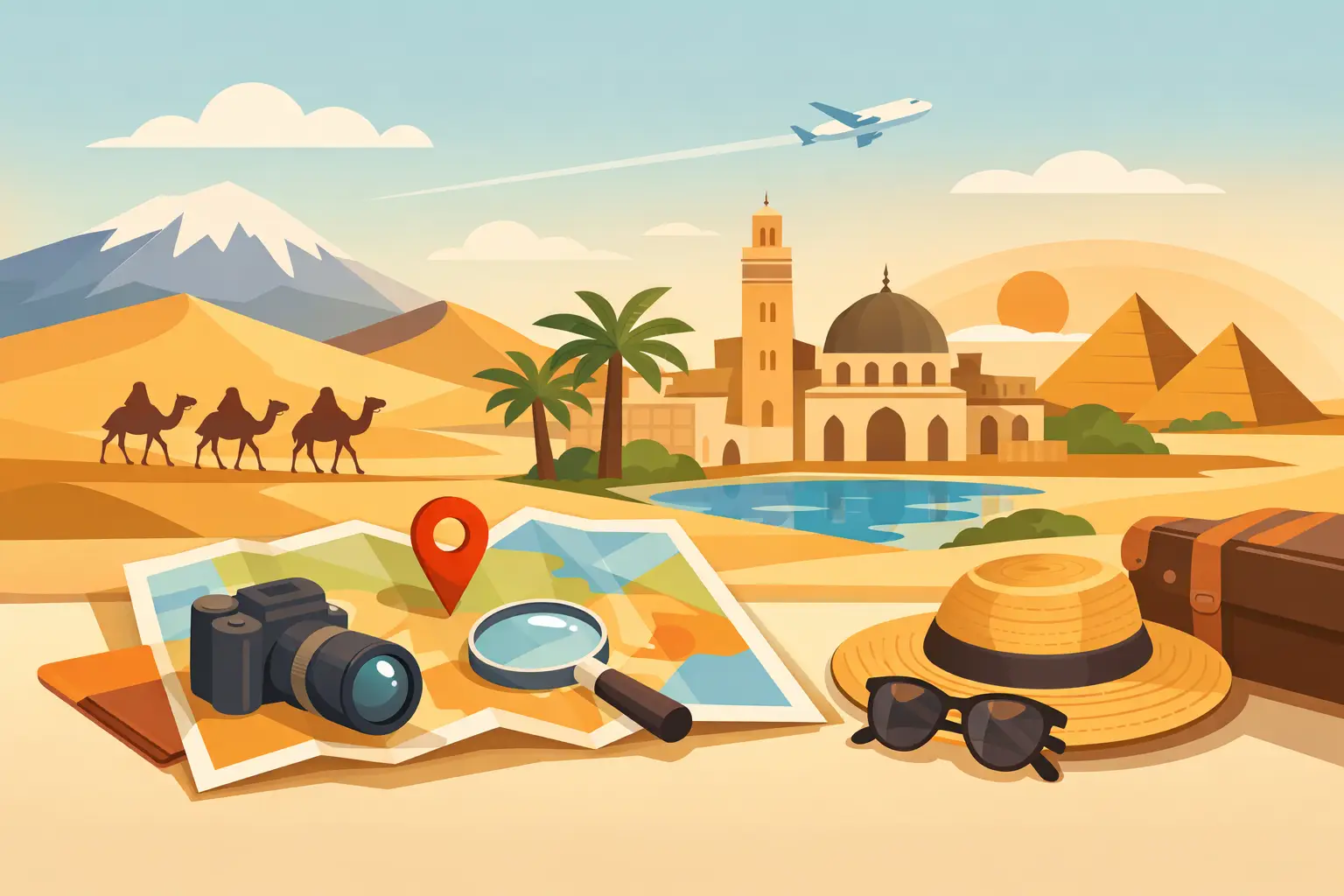
North Africa is not a single travel experience. Morocco may draw you in with imperial cities, mountain villages, Atlantic coastlines, and labyrinthine souks. Egypt offers an extraordinary concentration of ancient sites, from the pyramids of Giza to temples lining the Nile. Tunisia combines Roman ruins, Mediterranean character, Saharan scenery, and a more compact geography that can suit a first regional trip.
Start with the kind of memories you want to bring home. If you picture artisans at work, fragrant markets, and a night under desert skies, Morocco may be the natural fit. If you have spent years wanting to stand before the Great Pyramids and trace the story of pharaohs along the Nile, Egypt deserves more than a quick add-on. If you value layered history with time for coastal cafés and archaeological sites, Tunisia can be especially rewarding.
Trying to combine several countries in one short vacation can dilute the experience. Border crossings, flight schedules, and differing entry requirements take time. For a first visit, one country over eight to twelve days often allows a more relaxed and meaningful rhythm. A longer trip can pair destinations well, but only when the route leaves room to settle into each place.
Plan the Best Season for Your Route
Weather is one of the most practical decisions in North Africa travel planning. Spring and fall are often the most comfortable periods for sightseeing, with milder daytime temperatures and better conditions for walking through cities, visiting ruins, or spending time in the desert. These seasons are also popular, so appealing hotels and small-group departures may fill earlier.
Winter can be an excellent choice for Egypt and southern Morocco, especially for travelers hoping to avoid intense heat. Days may be pleasant, while desert evenings and mountain regions can turn surprisingly cold. Bring layers rather than assuming warm-weather packing will cover every stop.
Summer has trade-offs. Coastal areas can be enjoyable, but inland cities, archaeological sites, and desert regions may experience extreme heat. If summer is the only time you can travel, plan a slower pace, early starts, shaded breaks, and accommodations with reliable air conditioning. A well-designed itinerary matters even more when temperatures rise.
Religious holidays and major festivals can add wonderful cultural context, but they can also affect opening hours, dining schedules, traffic, and hotel availability. During Ramadan, for example, travelers are welcome, but daytime routines may feel different from usual. This is not a reason to avoid travel. It is a reason to arrive with respect and plan with local knowledge.
Build a Route With Breathing Room
The most memorable itineraries rarely try to see every famous place. They create a clear arc: a few major highlights, varied settings, and time to notice the details. In Morocco, that might mean balancing Marrakech with Fez, the Atlas Mountains, and the Sahara. In Egypt, it may mean Cairo, Luxor, and a Nile cruise rather than adding every possible city. In Tunisia, it could mean Tunis and Carthage, Kairouan, El Jem, and the southern desert landscapes.
Be realistic about travel days. A map can make distances look manageable, but winding mountain roads, city traffic, airport procedures, and desert drives change the pace. A five-hour transfer can be scenic and worthwhile, yet it still shapes how much energy you have for an afternoon visit.
Aim for no more than one major activity on most travel days, particularly after a long transfer or flight. Leave time for a meal that is not rushed, a stroll through a neighborhood, or a conversation with your guide. Those quieter spaces often become the parts of a trip travelers remember most clearly.
Prepare the Practical Details Early
Your passport should generally be valid for at least six months beyond your return date, and you should review current entry rules well before booking flights. Visa requirements can change based on destination, length of stay, and passport type, so verify details through official government sources rather than relying on outdated advice.
Travel insurance is equally worth arranging early. Look for coverage that fits your needs for medical care, trip interruption, delays, and lost baggage. If you have health concerns or take prescription medications, bring enough for the full journey in original labeled containers and keep them in your carry-on bag.
Cash remains useful for smaller purchases, tips, and some local shops, although cards are accepted at many hotels, restaurants, and larger businesses. Carry a modest amount of local currency, notify your bank of travel plans if needed, and use hotel safes appropriately. Avoid displaying large amounts of cash or expensive valuables.
For communication, confirm whether your mobile plan includes international data or plan to use a local SIM or eSIM. Download offline maps and keep digital and paper copies of key reservations, insurance information, and emergency contacts. These small preparations make unfamiliar places feel far more manageable.
Dress With Respect and Comfort
North Africa is diverse, and dress expectations vary by country, city, season, and setting. In major tourist areas, visitors will see a broad range of clothing. Still, modest, breathable clothing is a thoughtful choice for religious sites, traditional neighborhoods, and rural communities.
For women, loose pants or longer skirts, tops that cover the shoulders, and a lightweight scarf offer versatility. For men, lightweight trousers and shirts are often more useful than very casual beachwear away from resorts. Comfortable closed-toe shoes are essential for uneven medina lanes, ancient stone steps, and sandy terrain.
The goal is not to erase your personal style. It is to travel in a way that feels comfortable, practical, and considerate of the communities welcoming you. Your local guide can offer useful advice when a particular mosque, village, or dinner setting calls for a little more coverage.
Let Local Guides Add Context, Not Just Directions
A great guide does more than keep a schedule moving. They explain why a historic quarter is arranged as it is, help you understand the customs behind a shared meal, and know when a market is at its most inviting or a major site is least crowded. That context turns sightseeing into cultural connection.
This is particularly valuable in North Africa, where history is layered across Amazigh, Arab, African, Mediterranean, Islamic, Ottoman, Roman, French, and other influences. A monument can be visually impressive on its own. Its meaning becomes richer when someone can place it within the lives and traditions of the people around it.
Small-group travel also changes the experience. With fewer people, there is more flexibility to pause for a local specialty, ask questions, and enter places where a large coach group would feel out of place. Atlas Global Tours designs groups of no more than 10 travelers for precisely this kind of attentive, culturally grounded exploration.
Eat Curiously and Travel Considerately
Food is one of the clearest ways to understand a destination. Try regional dishes where they belong: tagine and pastilla in Morocco, koshari and fresh Nile-side specialties in Egypt, couscous, brik, and harissa-rich cooking in Tunisia. Ask about ingredients, accept hospitality with gratitude, and remember that meals may unfold at a more leisurely pace than at home.
Use normal food and water precautions, especially if you have a sensitive stomach. Choose busy establishments with freshly prepared food, stay hydrated, and follow local guidance on drinking water. You do not need to avoid street food entirely, but it is wise to choose vendors with a strong local following and good food turnover.
Photography also deserves care. Always ask before taking close portraits, particularly of women, families, craftspeople, or religious spaces. A respectful request can lead to a warmer exchange; assuming permission can close a door. The same principle applies in markets: bargain politely, buy intentionally, and value the skill behind handmade work.
Make Peace of Mind Part of the Plan
North Africa can feel wonderfully welcoming, but smart travel habits still matter. Stay aware in crowded areas, use reputable transportation, keep your belongings secure, and follow guidance from trusted local professionals. Avoid treating an entire country as uniformly safe or unsafe. Conditions vary by city, region, and current circumstances, which is why current advice and local expertise matter.
A thoughtfully organized journey removes much of the friction without removing the sense of discovery. When airport transfers, well-located accommodations, local guides, and realistic travel times are handled in advance, you can be fully present for the moments that cannot be scheduled: the first taste of a family recipe, the light on ancient stone, or an unexpected conversation over tea.
Give North Africa the time and attention it asks for. Travel with curiosity, pack patience alongside your essentials, and leave space in every day for the country to surprise you.