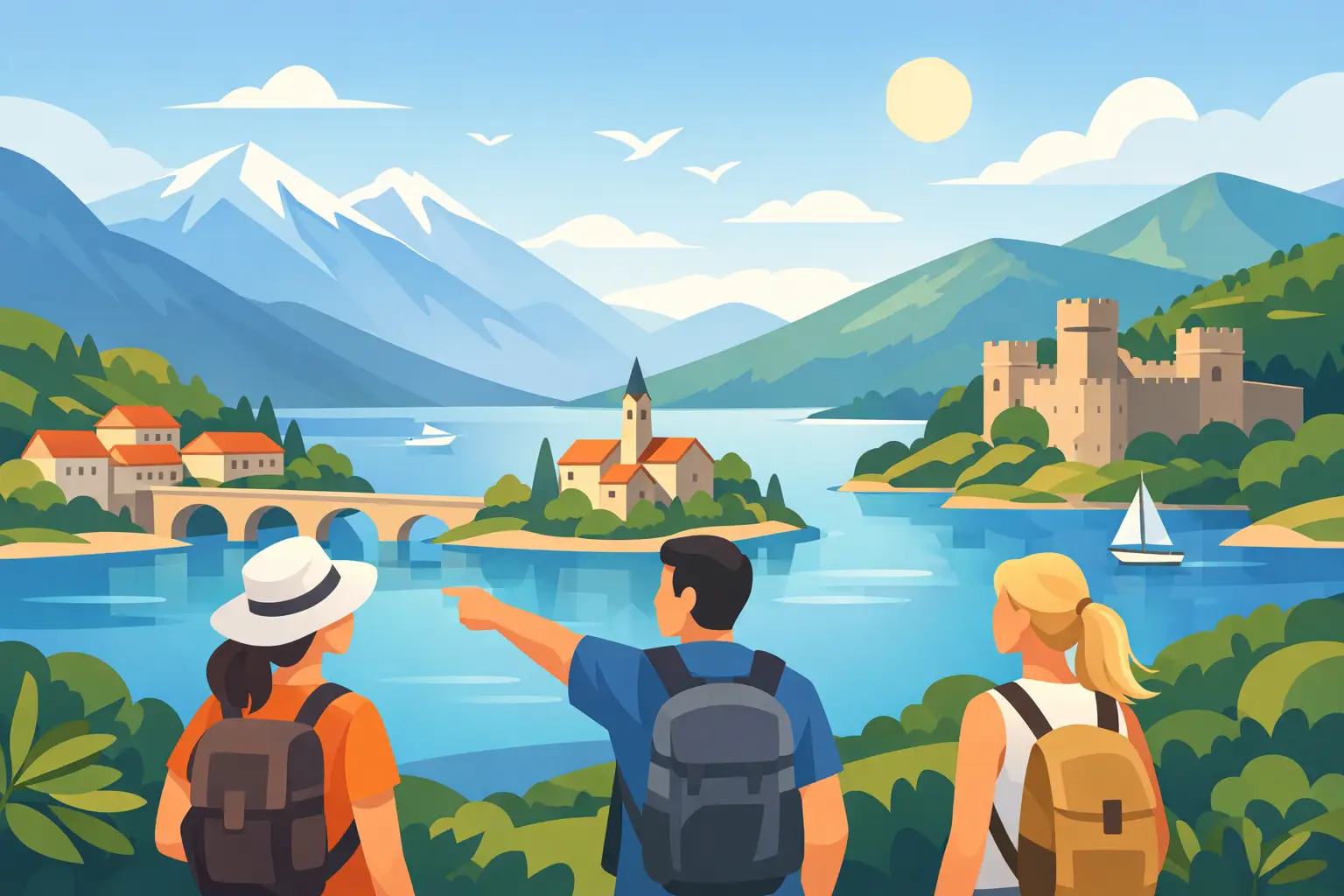
The Balkans are not a destination that rewards rushing. A morning in Dubrovnik can lead to an afternoon crossing into Montenegro, while a conversation over Bosnian coffee may reveal more about the region than a dozen museum labels. Balkans small group journeys create the space to take in those layers: the imperial history, changing borders, faith traditions, mountain villages, coastal food, and the everyday warmth that makes this part of Europe so memorable.
For travelers who want more than a fast-moving checklist, the right guided journey offers a rare balance. You can visit the places that deserve their reputation while having the confidence that transportation, hotels, border logistics, and local context are thoughtfully handled.
Why the Balkans Reward a Smaller Group
The Balkans are often spoken of as one region, but no two countries feel quite alike. Croatia’s Adriatic coast has a different rhythm from inland Bosnia and Herzegovina. Montenegro’s dramatic Bay of Kotor contrasts with the lively capital streets of Serbia or the Ottoman-influenced old towns found farther south. The pleasure is in noticing those changes, not simply collecting country stamps.
A smaller group makes that easier. Instead of waiting for a large coach to load and unload at every stop, travelers can move with greater ease through historic centers, family-run restaurants, markets, and narrow cobblestone lanes. There is more room to ask questions, adjust the pace when a place deserves extra time, and have real conversations with a local guide.
That intimacy matters especially in a region with a complex recent past. A knowledgeable local guide can offer historical perspective with care, explaining how different communities experienced the same events in different ways. This is not about turning a vacation into a lecture. It is about giving remarkable places the context they deserve.
What Makes Balkans Small Group Journeys Meaningful
A well-designed itinerary should pair celebrated landmarks with the experiences that make a destination feel lived-in. In Dubrovnik, that may mean understanding the city beyond its famous walls. In Sarajevo, it may mean seeing how mosques, churches, and synagogues exist within a compact historic center, then sitting down for a traditional meal that reflects the city’s crossroads identity.
The most memorable moments are often unplanned in feeling, even when they are carefully arranged. A local host explains the proper way to enjoy rakija. A guide points out the family recipes behind a regional dish. A scenic drive becomes more than a transfer because someone can explain the villages, valleys, and cultural shifts along the route.
This is where guided travel earns its value. Independent travel can be rewarding, particularly for travelers with ample time and a comfort level with changing plans. But multi-country Balkan travel involves practical details that can take attention away from the experience: border crossings, regional driving conditions, hotel locations, language differences, and knowing which stops are worth your limited time. A thoughtfully managed small-group tour removes much of that friction while preserving a sense of discovery.
The Difference Between Seeing and Understanding
The Balkans have no shortage of beautiful photographs waiting to be taken. Yet a view becomes more meaningful when you understand the story behind it. The bridge at Mostar is not simply picturesque. It reflects centuries of connection, conflict, loss, and restoration. The medieval lanes of Kotor are more than atmospheric. They reveal the strategic importance of a protected natural harbor.
Local guidance also helps travelers approach sensitive history respectfully. The region’s past cannot be reduced to a single narrative, and the best journeys do not pretend otherwise. They make room for nuance, invite thoughtful questions, and help visitors engage as guests rather than spectators.
The Comfort of Having the Details Handled
Cultural immersion should not require constant uncertainty. For many American travelers, the appeal of a small-group journey is knowing that the essential logistics are already organized without feeling herded from one attraction to the next.
That begins with a realistic route. The Balkans look compact on a map, but winding mountain roads, border procedures, and rewarding stops along the way can make travel days longer than expected. An itinerary that tries to cover too many countries too quickly can leave travelers spending more time in transit than in the places they came to experience.
A better approach gives major destinations enough breathing room and treats scenic travel as part of the journey. It includes centrally located accommodations when possible, reliable transportation, clear daily expectations, and support from people who understand the route. These details provide peace of mind, particularly when moving between countries with different currencies, languages, and travel customs.
At Atlas Global Tours, groups are capped at 10 travelers, allowing for personal attention without sacrificing the camaraderie that makes shared travel special. Couples, solo travelers, and friends can enjoy the reassurance of an organized trip while still having space to connect in their own way.
How to Choose the Right Balkans Journey
Not every small-group tour offers the same kind of experience. Before booking, look beyond the number of countries listed and consider how the itinerary is built.
First, examine the pace. A trip that visits fewer places well is often more rewarding than one that races across the entire peninsula. Look for time to wander, enjoy a long lunch, or return to a favorite square after the day’s guided exploration has ended.
Next, consider who will interpret the destination. A local guide should be more than someone who recites dates. The strongest guides make cultural connections, recommend what to try during free time, and help travelers feel comfortable in places that may initially be unfamiliar.
It is also wise to ask what is included and how the company communicates. Clear information about hotels, transportation, meals, activity levels, and optional experiences helps prevent surprises. For an international journey, dependable pre-departure support and a professional approach to on-the-ground operations are not extras. They are part of traveling with confidence.
Finally, think about the kind of memories you want to bring home. If your priority is only ticking off landmark photos, a large coach itinerary may be sufficient. If you want conversations with local hosts, time for regional food, guides who can answer the questions guidebooks cannot, and a group small enough to feel personal, a more intimate format is likely the better fit.
A Region Best Experienced With Curiosity
The Balkans are ideal for travelers who enjoy contrast. One day may bring Venetian architecture and sea air; the next, Ottoman-era streets, rugged mountain landscapes, or a quiet village meal. There are layers of Roman, Byzantine, Austro-Hungarian, Slavic, Ottoman, and Mediterranean influence, yet the region never feels like a history textbook. It feels immediate, generous, and alive.
Come prepared for variety. Menus, customs, road conditions, and rhythms can change quickly from one border to the next. That is part of the appeal, but it also calls for flexibility. A small-group setting offers the support to embrace those changes without feeling overwhelmed.
The best Balkan journeys leave room for the moments no itinerary can fully promise: an evening light falling across a stone square, a table that lingers long after dessert, or a local story that changes the way you see a place. Choose a trip with enough care behind it to make room for those moments. They are often the ones that stay with you longest.