At the entrance to a mosque, at a lively Cairo café, and beside the ancient columns of Karnak, the right outfit does more than keep you comfortable in the heat. It helps you move through Egypt with ease and respect. So, what should Egypt travelers wear? Think breathable layers, modest coverage for religious and local settings, and shoes that can handle uneven stone, sand, and long days of discovery.
Egypt does not require visitors to dress identically to locals, and travelers will see a wide range of styles in cities and resort areas. Still, clothing that is polished, practical, and culturally considerate will make temple visits, neighborhood walks, and conversations with local people feel more comfortable. The goal is not to disappear into the crowd. It is to arrive prepared and engaged.
What Should Egypt Travelers Wear in Cities and at Sites?
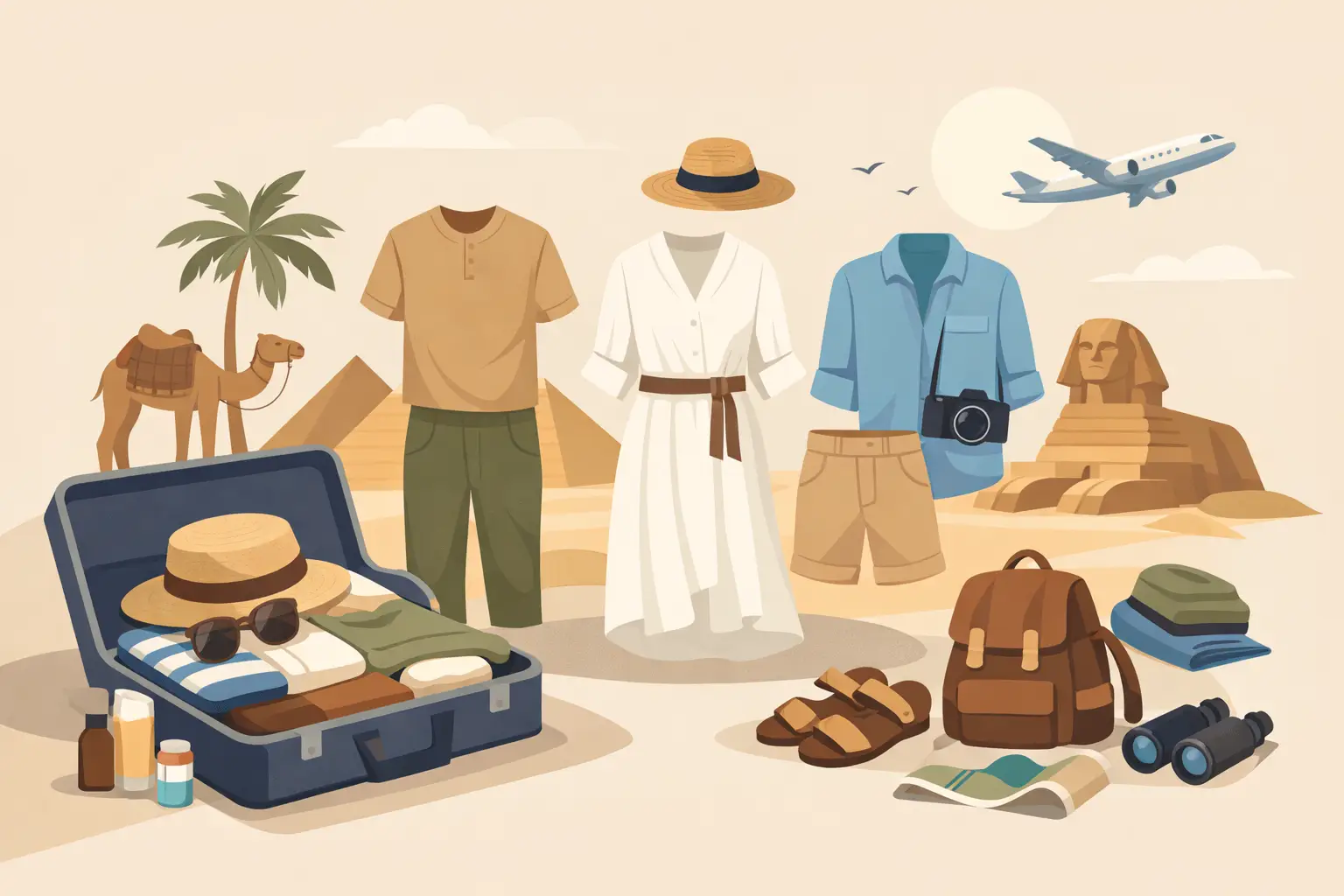
For most sightseeing days, lightweight, loose-fitting clothing is the best choice. Natural fabrics such as cotton and linen are popular, though moisture-wicking travel fabrics can be especially useful during warmer months. Choose pieces that cover your shoulders and reach at least to the knee. Loose pants, midi or maxi skirts, breathable dresses, and relaxed long-sleeve shirts offer welcome sun protection without feeling overly formal.
For women, a scarf or lightweight wrap is one of the most useful items to pack. It can cover shoulders, provide extra sun protection, add warmth in air-conditioned spaces, or be used when entering a mosque. You do not need to cover your hair in most places as a visitor, but some mosques may ask women to cover their hair before entering. A longer tunic over pants is an easy, comfortable option for busy touring days.
For men, short-sleeve shirts, polos, and lightweight button-downs pair well with chinos, travel pants, or tailored shorts in casual resort settings. In Cairo, Luxor, and Aswan, long pants are the more versatile choice for cultural sites, evening meals, and mosque visits. Very short shorts, sleeveless tank tops, and clothing with provocative slogans can draw unwanted attention and may feel out of place beyond the pool or beach.
At major archaeological sites, there is no strict dress code, but the sun and terrain deserve serious consideration. A breathable shirt with sleeves, light pants or longer shorts, a wide-brimmed hat, and sunglasses can make a substantial difference by midday. Ancient stone reflects heat, and there is often limited shade while exploring sites such as the Pyramids of Giza, the Valley of the Kings, or Abu Simbel.
Dressing Respectfully for Mosques and Local Communities
Mosques are active places of worship, not simply architectural stops. Dress modestly when visiting: shoulders, chest, and knees should be covered, and clothing should not be sheer or tight. Shoes are typically removed before entering prayer areas, so socks can be useful if you prefer not to walk barefoot.
Women should carry a scarf in case head coverage is requested. Men should wear long pants rather than shorts for mosque visits. Your local guide can advise on expectations at a particular mosque and help you understand when a visit is appropriate, especially during prayer times or religious holidays.
Outside religious spaces, Egypt’s cities are diverse, modern, and accustomed to international visitors. Even so, more covered clothing is generally the most comfortable and respectful approach in traditional neighborhoods and smaller communities. It can also reduce sun exposure and make street exploration feel more relaxed. Save swimwear for private hotel pools, cruise decks, and beach resorts.
Dress for Egypt’s Seasons, Not Just Its Reputation for Heat
Egypt is famous for sunshine, but packing only summer clothes can leave you chilly after sunset, on an early Nile cruise morning, or in a heavily air-conditioned museum. Conditions vary by season and region.
From roughly May through September, daytime temperatures can be intense, especially in Upper Egypt around Luxor and Aswan. Prioritize light colors, airy fabrics, sun coverage, and a refillable water bottle. A thin overshirt or linen layer is often more useful than another T-shirt because it protects your arms while remaining breathable.
From November through February, Cairo can feel surprisingly cool, particularly in the evening. Bring a light jacket, cardigan, or packable insulated layer, along with closed-toe shoes. Desert nights can be much colder than daytime temperatures, so travelers joining an overnight desert experience should pack a warmer layer even if the forecast looks mild.
March, April, October, and early November can be especially pleasant for touring, but layered clothing still matters. Sand and wind are possible at any time of year. A scarf, sunglasses, and a light wind-resistant jacket can turn a blustery afternoon into a comfortable one.
Nile Cruises and Red Sea Stays
A Nile cruise offers a more relaxed setting, but it is still wise to bring resort wear that feels refined rather than overly revealing. Sundresses, casual trousers, breathable shirts, and comfortable sandals work well on deck and for relaxed dinners. Pack a light layer for evening breezes along the river.
At Red Sea resorts in destinations such as Hurghada or Sharm El Sheikh, swimwear is normal at the beach and pool. When leaving the resort or walking through public areas, put on a cover-up, shirt, or dress. This simple shift respects the setting while keeping your day uncomplicated.
Shoes and Accessories That Earn Their Place in Your Bag
Egypt’s most memorable places are rarely experienced from a bus window. You may climb steps inside temples, walk across dusty paths, navigate busy sidewalks, or stand for long stretches while your guide brings history to life. Comfort should lead your shoe choices.
Bring broken-in walking shoes with good grip. Lightweight sneakers or supportive walking sandals are ideal for most itineraries. Closed-toe shoes offer extra protection from dust and uneven ground, while sandals can be welcome in hot weather and on a cruise. Avoid brand-new shoes, high heels, and flimsy flip-flops for full sightseeing days.
A few well-chosen accessories are equally practical: a sun hat that stays secure in the wind, polarized sunglasses, a compact day bag, and a scarf or wrap. Consider a crossbody bag or daypack that closes securely for crowded markets and city walks. Keep valuables minimal and close to you, rather than relying on bulky or flashy accessories.
A Small Egypt Packing List That Works Hard
Rather than packing a different outfit for every day, build a compact wardrobe around mix-and-match pieces. For a typical guided journey, these essentials cover most situations:
- Two or three breathable tops with shoulder coverage
- One lightweight long-sleeve shirt or overshirt
- Two pairs of comfortable pants or travel trousers
- A modest dress, skirt, or tunic if you enjoy wearing them
- Comfortable walking shoes and sandals
- A light jacket or warm layer for evenings and winter travel
- A scarf or wrap for sun, wind, and mosque visits
- Swimwear and a cover-up for cruises or resort stays
Choose colors you enjoy, but keep in mind that very pale fabrics can show dust quickly and dark fabrics absorb more heat. Neutrals with a few accent pieces travel well, look polished in photos, and make laundry or repeat wear easy. Egypt is a destination where practical clothing often looks effortlessly elegant.
What Not to Overthink
You do not need to buy a new wardrobe or wear traditional Egyptian dress unless you genuinely want to. Respectful travel is less about costume and more about awareness. Clean, comfortable clothes with reasonable coverage are appropriate in most settings, and a thoughtful guide can help you adapt when visiting a particular community or religious site.
It also helps to remember that comfort is personal. Some travelers prefer loose linen pants; others feel best in lightweight hiking trousers. Some women favor long dresses, while others choose tunics and sneakers. The right choice is the one that lets you focus on the call to prayer drifting over Cairo, the quiet of a tomb corridor, or a conversation over mint tea instead of worrying about your outfit.
Pack with respect, leave room for flexibility, and let Egypt itself be the most memorable part of what you carry home.